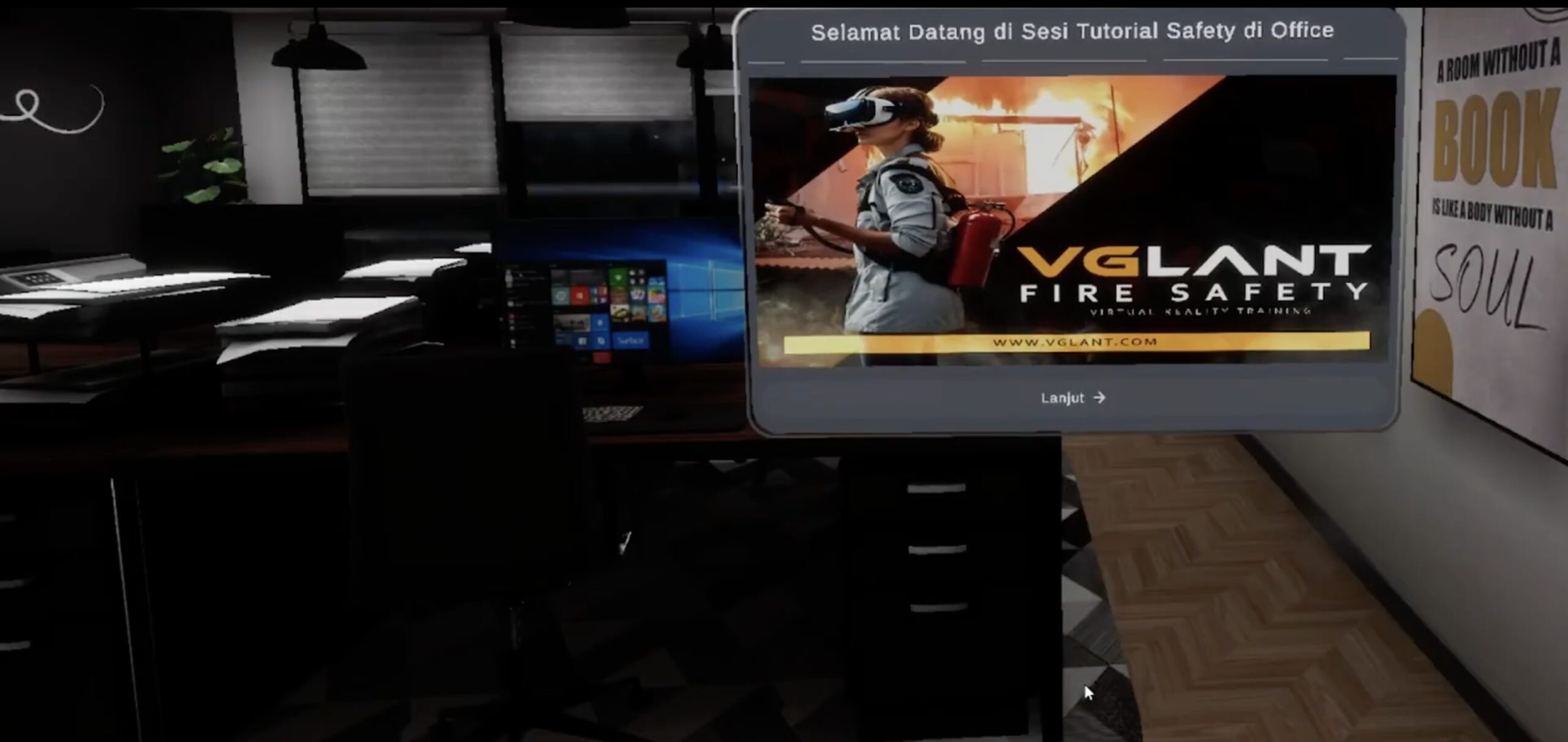


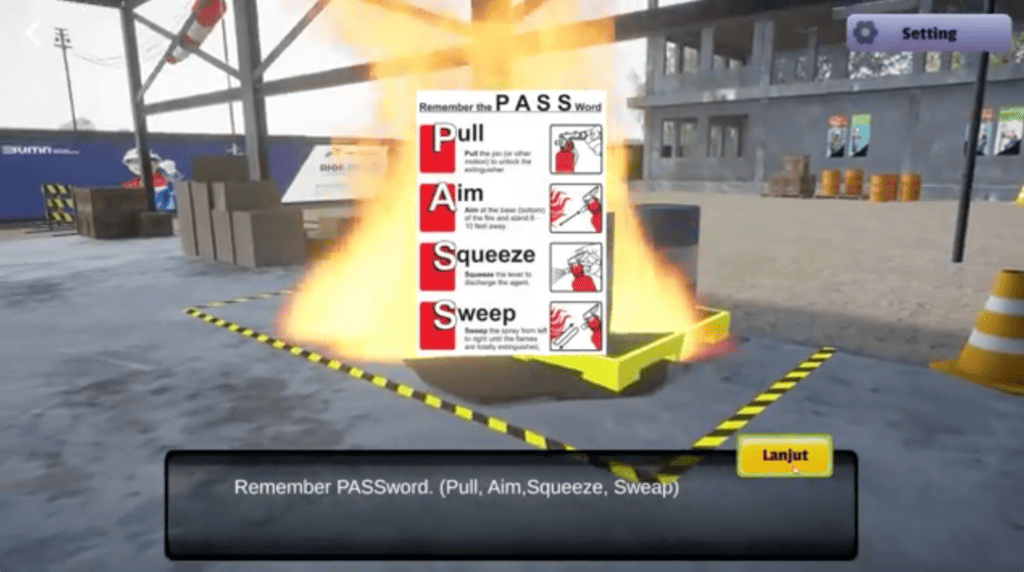
If you’ve ever had to grip a fire extinguisher (APAR) during a real emergency, you know it’s never as simple as “point-and-shoot.” The PASS procedure—Pull, Aim, Squeeze, Sweep—is the industry’s gold standard. But here is the problem: remembering an acronym while a fire is aggressively eating through a room is a completely different psychological reality.
Panic rewires human cognition. In a high-stress moment, having read a manual or sat through a classroom lecture means almost nothing. This is exactly why the shift toward immersive realism is mandatory for modern emergency response.
Beyond Memorization: The Psychology of the “Freeze”
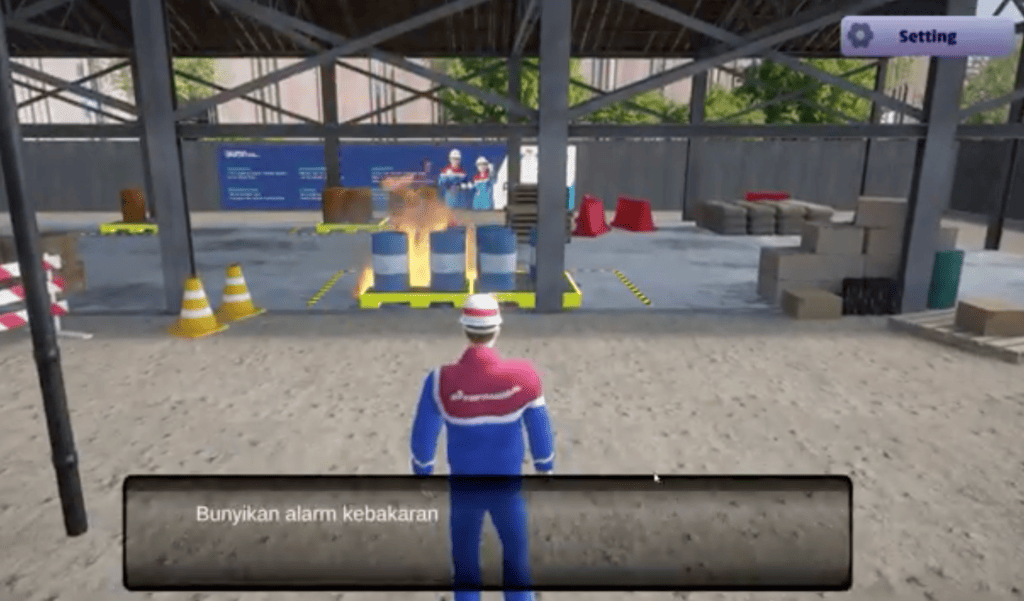
Effective fire safety training needs a contextual environment to prevent the “freeze” response. Trainees have to witness the visual progression of a fire in settings they actually recognize—daily public spaces like industrial kitchens or gas stations, or high-risk industrial zones like mining sites and factory floors.
In these active-learning scenarios, you aren’t trying to recall letters from a whiteboard. You have to evaluate the threat, pick the right extinguisher, and move. By executing the exact physical motions in a 3D environment, trainees build genuine muscle memory. This transitions the knowledge from the prefrontal cortex (slow, logical thinking) to the basal ganglia (fast, instinctive action).
Physicality and the “Tube VR” Hardware
Building a reflex requires more than just looking at a screen. To make the procedure feel authentic, we use portable setups like the All-in-One Pelican Case, which houses a high-spec PC and an integrated HD monitor. This ensures that even at remote mining concessions in Kalimantan or offshore rigs, the training quality remains consistent.
Wearing standard safety gear—hard hats, reflective vests, and harnesses—trainees use the Tube VR Control Set. This hardware is weighted and balanced to feel like a real fire extinguisher. The tactile sensation of pulling the pin and squeezing the trigger becomes ingrained in the nervous system. Because digital platforms allow for unlimited sessions, people can fail safely. If you mess up, you recalibrate and go again until the motion is automatic. Total safety, zero incidents.
High-Tech Telemetry: Moving Beyond “Check-the-Box”
A high-tech session also demands total focus. The visual frame is kept sharp and clean, utilizing a white, black, and orange brand aesthetic. The VGLANT logo stays in the top right corner to keep the main frame clear of distractions, ensuring the trainee’s eyes are focused solely on the hazard.
But the real edge is the telemetry. Every time a trainee executes the PASS method, the system logs the performance. Safety admins don’t have to guess if an employee is ready. Through Tracked Data Records on a dashboard, organizations monitor:
- Response Latency: How many seconds from fire appearance to first action?
- Targeting Precision: Did the spray actually hit the base of the fuel?
- Protocol Compliance: Was the safety check performed correctly?
Strategic Scalability for Indonesian Industry
For large-scale operations, the All-in-One Pelican Case eliminates the logistical nightmare of traditional fire drills. You no longer need to burn expensive chemical agents or recharge physical extinguishers just for practice.
VGLANT provides a scalable, data-heavy path to K3 (Keselamatan dan Kesehatan Kerja) excellence. We focus on the human impact, turning theoretical knowledge into the decisive, mechanical actions that save lives in the critical first 60 seconds of a disaster.