

How do you train an entire workforce to kill a fire without actually sparking one? For decades, the industry defaulted to live-fire drills. But that approach is a logistical anchor—it’s slow, expensive, and carries the exact physical risks it’s meant to mitigate. When the mission is prepping thousands of employees for high-stress chaos, you need a safe, high-velocity alternative.
Virtualizing the experience removes the physical danger entirely. The primary win: Zero safety incidents during the training itself. Whether it’s a web-based rollout for corporate staff or rugged hardware for a mining site, the goal is the same—delivering high-impact reps without putting the workforce in a hazardous spot.
The Problem: Why Traditional Drills Hit a Ceiling
Standard HSE training usually hits a “capacity ceiling.” Staging a live fire requires permits, specialized venues, and expensive recharges for extinguishers. Because of these costs, most employees only get one “practice” every 12 to 24 months.
That frequency is a joke when it comes to building a reflex. In a crisis, the brain defaults to its lowest level of training. If that training was a single 5-minute drill a year ago, you get “response paralysis.” VR changes the math. Since the marginal cost per session is near zero once deployed, Unlimited Sessions become the new baseline.
Portable Solutions for Remote Deployment
Scaling isn’t just software; it’s about getting gear into the field. For high-stakes zones like factories, construction sites, or remote mining concessions, the equipment has to survive the trip.
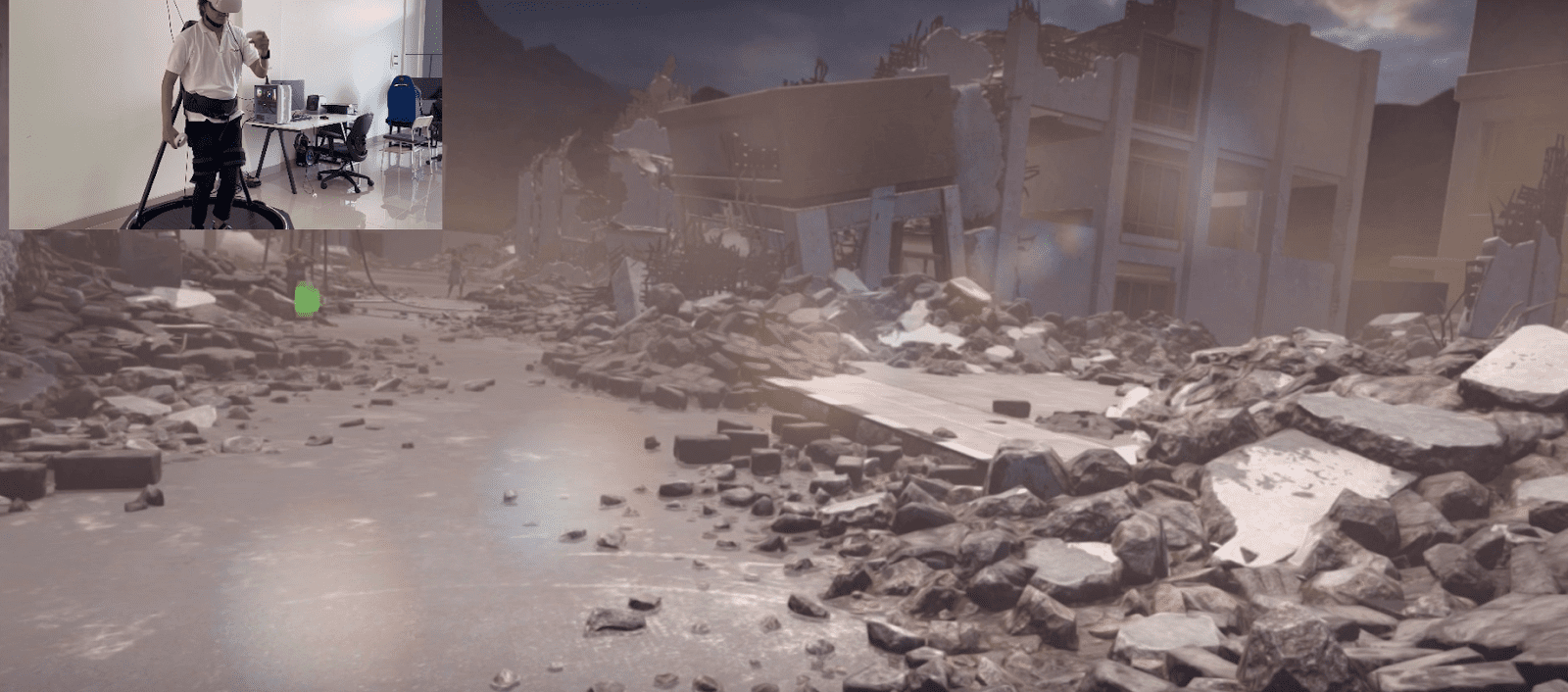
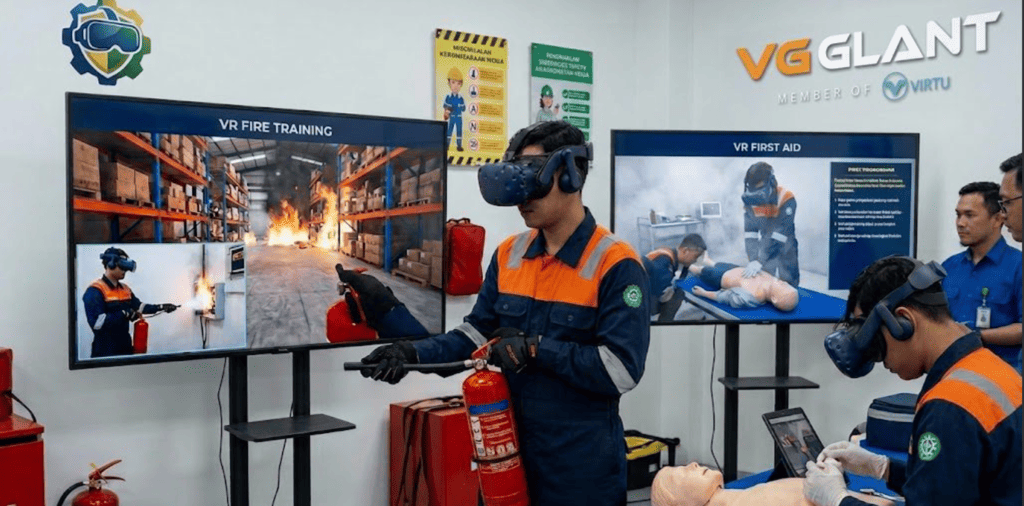
VGLANT solves this bottleneck with the All-in-One Pelican Case. This isn’t just a box—it’s a self-contained command center with a high-spec PC, built-in HD monitor, spatial audio, and a rapid charging station. It is “plug-and-play” for the most demanding environments. During these sessions, trainees are shown wearing VR headsets and holding the Tube VR Control Set—weighted to mirror a real fire extinguisher.
To reinforce protocol, participants wear actual safety gear: hard hats, reflective vests, and safety harnesses. This ensures the physical “feel” of the job isn’t lost in the virtual world.
Clean Interface, Rapid Onboarding
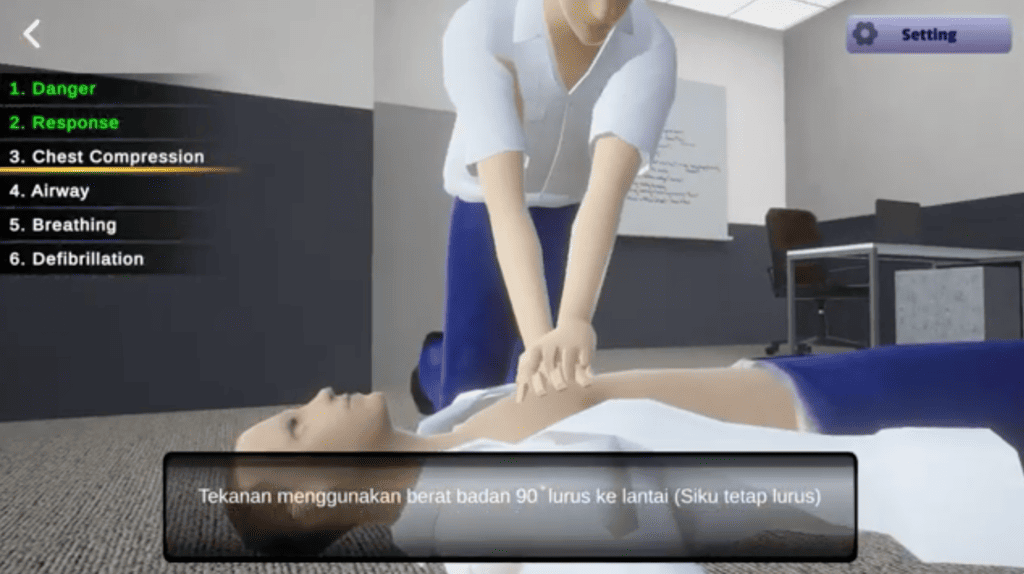
When you’re cycling hundreds of people through a program in a single day, the UI cannot be a distraction. It has to be intuitive. Trainees need to step into a clean digital environment and get straight to the mechanics of the drill.
The visual content is framed cleanly. We’ve stripped away the peripheral clutter and unnecessary backgrounds. The aesthetic is modern—strictly White, Black, and Orange. To anchor the experience and maintain standards, the VGLANT logo is positioned in the top right corner, staying clear of the tactical field of view.
Measuring Impact: Data Over Guesswork
Mass training is a logistical victory, but the real ROI is in the analytics. Scaling is a waste of time if you can’t prove the team is actually getting better. We’ve moved past simple attendance sheets.
Digital platforms now generate forensic Tracked Data Records for every user. Through an administrator dashboard, safety officers can audit granular metrics across different branches:
- Spraying Mechanics: Analyzing the exact angle and duration of the spray.
- Targeting Precision: Did they hit the fuel base or just the flames?
- Protocol Logic: Did they follow the safety sequence or skip the call for backup?
Creating a Proactive Safety Culture
By analyzing trends—like a recurring struggle with a specific hazard—management can modify SOPs before a real incident ever occurs. This is the shift from reactive to proactive safety.
At VGLANT, the mission is the human impact. We combine mass accessibility with hard data to turn safety theory into confident, life-saving action. By removing the logistical barriers, we ensure every worker, regardless of geography, has the muscle memory to protect their colleagues.