

Fire safety is arguably the most critical pillar of industrial management. Every year, thousands of workers face fire-related crises; many are exacerbated by poor training. The core dilemma is persistent: how do you prepare a crew for a life-threatening disaster without actually putting them in harm’s way?
Virtual Reality is now the definitive answer. With platforms like VGLANT, companies can drop employees into hyper-realistic fire scenarios—from high-rise corridor blazes to chemical plant surges—without lighting a single real flame. This isn’t just a tech upgrade; it’s a strategic shift in survival training.
The Problem: Traditional Training is “Cognitively Thin”
Traditional fire safety training usually consists of PowerPoint slides, paper manuals, or the occasional annual evacuation walk-through. While these might satisfy a regulatory audit, they fail the “stress test” of real-world preparedness.
The numbers are blunt. Passive learning—watching a video or reading a PDF—results in retention rates as low as 10%. When smoke is filling a hallway and every second counts, that 10% isn’t enough. Furthermore, live drills are a logistical and financial drain. They require fire extinguisher consumables, safety personnel, and significant downtime. For large, multi-site organizations, scaling this is a nightmare.
Then there is the psychological reality. A person who has never felt the disorientation of a smoke-filled room or the pressure of a blocked exit is not truly prepared. Classroom training simply cannot simulate the “Adrenaline Spike” that dictates how a human actually behaves in a fire.
How VR Re-Engineers the Safety Reflex
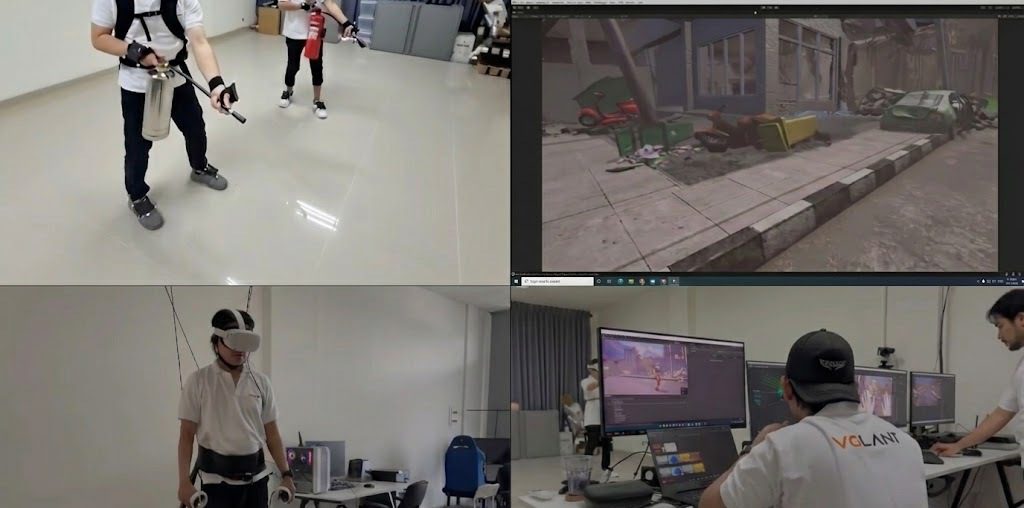
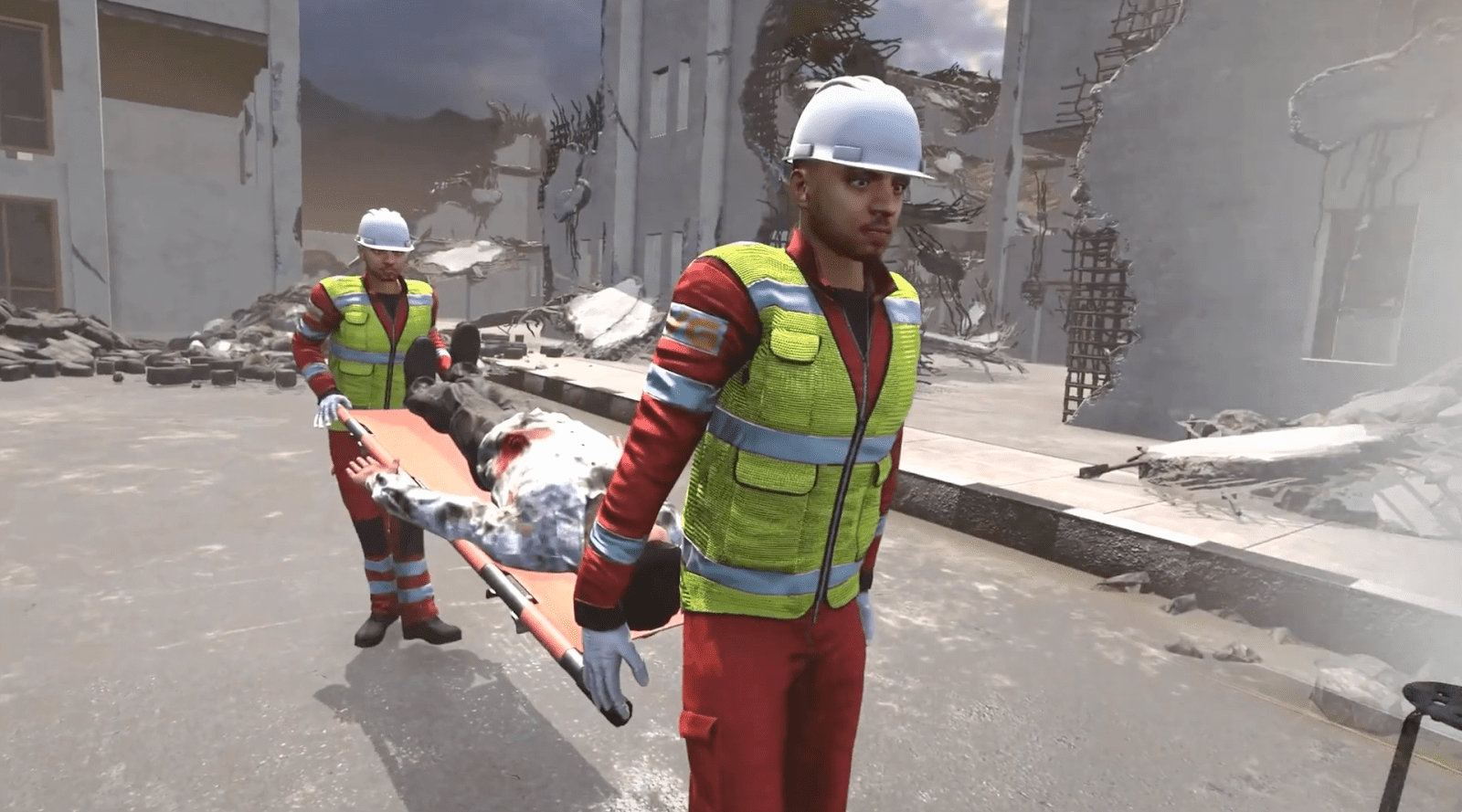
VR addresses these gaps by shifting from observation to active participation. VGLANT, an Indonesian-developed VR ecosystem, places users inside a fully interactive, 3D fire theater.
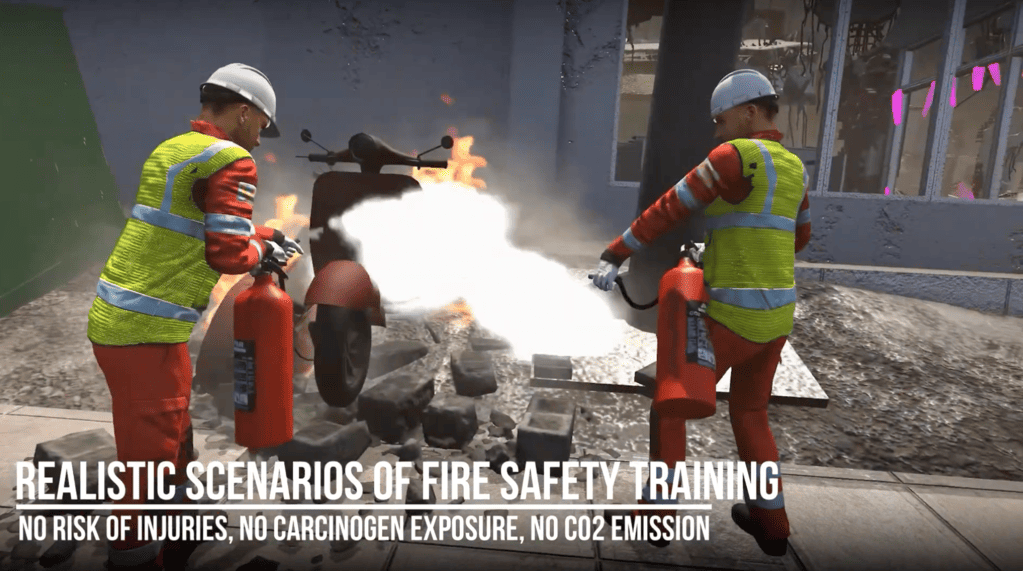
When a trainee dons the headset, they aren’t looking at a screen; they are “in” the emergency. They see flames spreading according to real physics, smoke accumulating at the ceiling, and alarm lights flashing. They hear the roar of the fire and the chaos of the sirens.
Unlike a lecture, VR demands a response. The trainee must identify the hazard, choose the correct APAR (Fire Extinguisher), and execute the PASS technique—all in real-time. Research confirms that this “learning by doing” in VR boosts retention rates up to 75% higher than classroom instruction.
Key Operational Benefits
- Zero Physical Risk: Employees experience an emergency stress response with zero chance of injury. Mistakes become data points, not disasters.
- Seamless Scalability: Whether training 10 or 10,000 workers, the quality remains identical across every branch or remote site.
- Granular Telemetry: Every move is tracked. Managers get an objective look at who is ready and who needs more reps.
- OPEX Efficiency: Once the hardware is in place, you stop paying for consumables and travel. Unlimited sessions mean safety becomes a reflex.
- Audit-Ready Reporting: Digital logs are generated automatically, making K3 (Keselamatan dan Kesehatan Kerja) compliance transparent and fast.
VGLANT: Tailored for the Indonesian Landscape
Developed by PT Virtu Digital Kusuma, VGLANT is Indonesia’s frontline response to modern safety needs. Based in Bandung and Jakarta, the platform is built for the specific rigors of our industrial sector—from oil and gas facilities to massive manufacturing plants.
What separates VGLANT is its commitment to Fire Science. The simulations don’t just “look” like fire; they behave like it. Flames spread based on environmental variables, and smoke behaves according to fluid dynamics. For companies looking to strengthen their safety culture and meet K3 regulations, VGLANT is the most effective tool on the market.
The Verdict: Instinct Over Instruction
Fire safety is too high-stakes for outdated methods. In an era where we can simulate an emergency with photorealistic detail and track every performance metric, a PowerPoint presentation is no longer acceptable.
VGLANT is making workplaces safer by transforming dry knowledge into instinctive, life-saving action. Don’t wait for a real fire to find out if your training actually worked.