

Conversations about corporate VR tend to swing between two extremes: excessive optimism on one side, and blanket skepticism that dismisses the technology as a gimmick on the other. The reality on the ground is usually simpler. Some changes are genuinely happening, others are still in the exploration stage, and many of the bold predictions made last year have moved more slowly than expected.
This article covers five trends already visible in the Indonesian market heading into and during 2026 — not speculative forecasts, but shifts that are observable in active client deployments. Some are significant. Others will need more time before their impact spreads widely.
1. Standalone Headsets Are Becoming the Default for Corporate Procurement
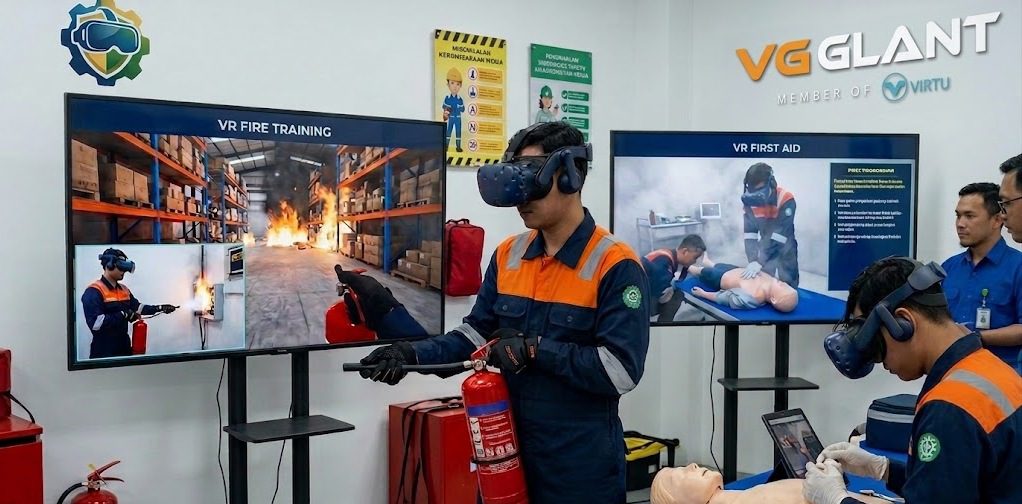
A few years ago, corporate VR setups still typically required a high-end PC as the supporting backbone. Today, most new deployments in Indonesia run on standalone headsets — primarily the Meta Quest 3 and Pico 4 Enterprise.
The driving factors are practical. Standalone units have no cables, no PC requirement, and are far easier to distribute across multiple branches. For basic safety training such as fire safety, evacuation drills, or light hazmat handling, the graphics capability of standalone headsets is already adequate.
Worth noting: tethered VR (the kind connected to a PC) hasn’t disappeared. For simulations demanding high-fidelity graphics or complex physics — heavy equipment operation training with multi-sensor inputs, for instance — PCVR still wins. But for the majority of corporate use cases, especially in occupational safety training, standalone has become the default choice.
The implication for companies: corporate VR procurement today can begin with a lighter investment than it did three years ago, without needing a dedicated room full of high-powered PCs.
2. Local Indonesian Content Modules Are Slowly Expanding
The actual situation a few years back was fairly limited. Most VR safety training modules on the market were built by overseas vendors, with visual context, language, and procedures that didn’t always match working practices in Indonesia. Many companies ended up commissioning expensive customizations or settling for modules that felt slightly off.
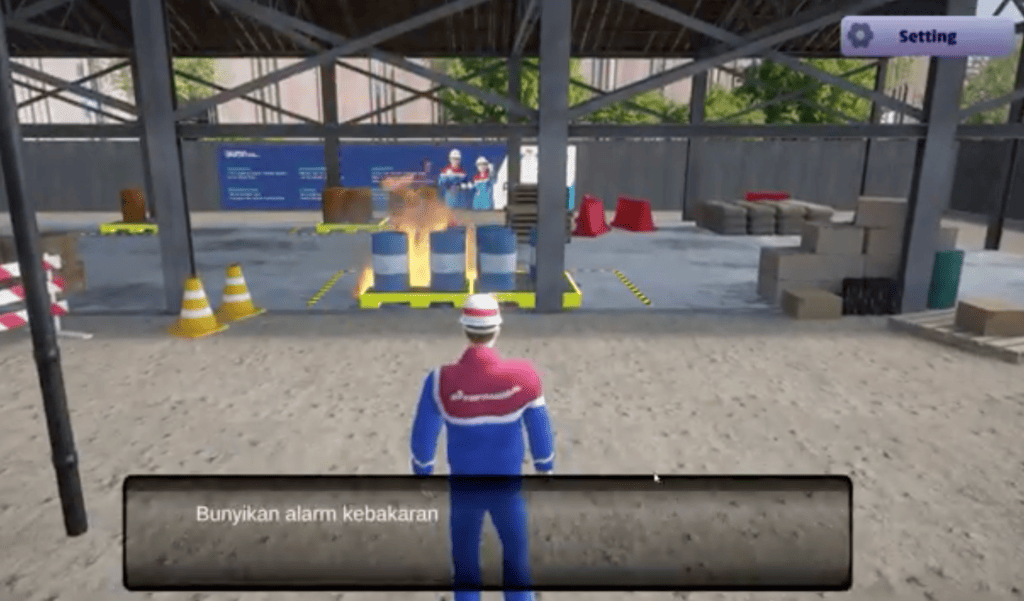
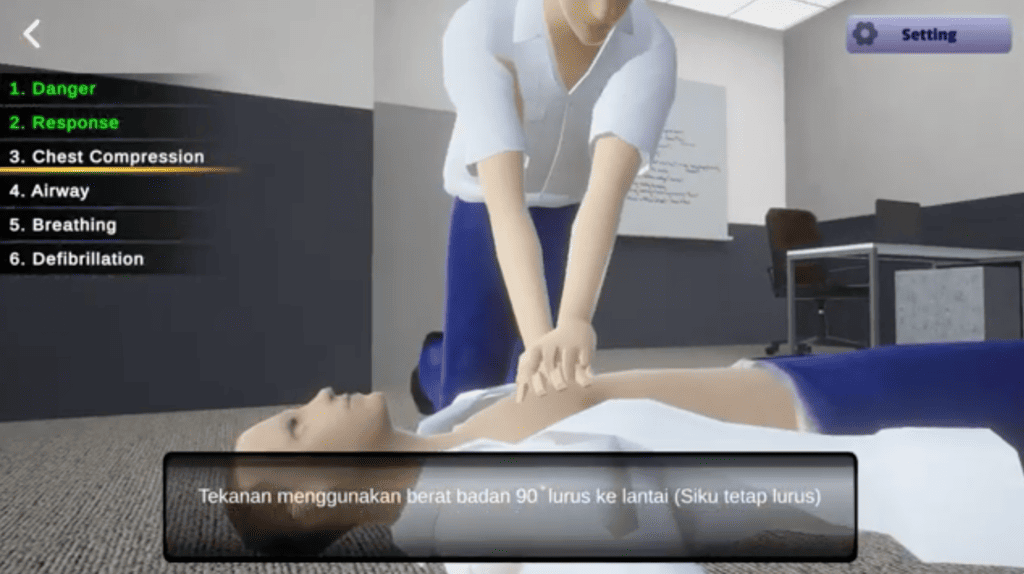
Over the past few years, a local content ecosystem has begun to take shape. VGLANT has developed fire safety and emergency response modules mapped to Indonesian K3 standards. Other local vendors are starting to fill gaps for the mining, chemical, and healthcare sectors. The result: ready-to-use modules in Indonesian with locally relevant regulatory context are now visible in the market.
It’s still worth being honest about the scale. The number of local modules is still far smaller than the catalogs offered by global vendors. For specific use cases beyond general safety training, customization or building from scratch is often still necessary. But the direction is clear — the gap is closing, not widening.
3. LMS Integration Requests Are Becoming More Common
Early VR deployments at many companies ran separately from the main training systems. Results from VR sessions often existed only as PDF reports or stand-alone vendor dashboards. For small companies, this wasn’t a problem. For large corporations with thousands of employees and existing LMS systems, the disconnect was a hassle.
The shift now visible: large corporations — particularly state-owned enterprises, oil and gas companies, and multinationals — typically require direct integration with their internal LMS as a procurement condition. VR training results sync automatically to employee competency profiles, link to internal certification tracks, and feed into HR dashboards.
The reality of integration isn’t entirely smooth yet. API standards across platforms aren’t unified. Not every VR vendor offers out-of-the-box integration with popular LMS platforms like Moodle or Cornerstone. Many projects still require custom middleware. But expectations have shifted: stand-alone VR training without integration is now seen as a half-finished solution.
4. Multi-User Training Is Drawing Interest for Specific Scenarios
For most use cases, VR training is still run one participant per session. This works fine for individual modules like fire extinguisher operation or hazard identification. But for scenarios demanding team coordination — emergency response, incident command drills, coordinated evacuation simulations — single-user training has clear limits.
Multi-user mode, where several participants interact in the same virtual space, is starting to be explored. Safety officers, medical teams, and evacuation marshals can train together even when physically located in different sites. The most mature use case is emergency response training in oil and gas and chemical industries.
What needs to be understood: multi-user implementation in Indonesia is still uncommon. The challenge isn’t only technical, but also coordinating participant schedules, network bandwidth, and device synchronization. For companies with multiple branches and varying internet quality, multi-user VR often looks promising on paper but proves complicated in execution. In two to three years, this category will likely mature. Right now, it’s still in the exploration phase.
5. AI in Content Development Is Entering the Picture, but Hasn’t Reshaped the Core Workflow
There’s been plenty of coverage about AI generating VR scenarios from text prompts. Claims like “create a warehouse fire simulation with three evacuation routes” are expected to immediately produce a ready-to-run module. The reality is far more incremental.
AI tools for 3D content development are indeed advancing quickly. Asset generators, NPC dialogue, and environment building can already be accelerated with AI. For these non-critical components, productivity gains are real.
But for safety training modules that demand regulatory accuracy, legally valid procedures, and visuals aligned with industry standards, generative AI isn’t yet reliable enough to serve as the primary foundation. Expert review by K3 specialists, procedural validation, and testing with real users remain essential parts that can’t easily be cut. Serious vendors generally use AI as a production aid, not a replacement for the module development workflow.
A realistic expectation: over the next two years, AI will likely cut VR module production time by around 20 to 40 percent at many vendors. Not a revolution that replaces development teams, but the kind of efficiency gain that makes custom modules more affordable for mid-sized companies.
What This Means for HR and Decision Makers
The five trends above don’t require companies to overhaul their training strategy overnight. The more sensible approach is to monitor how these developments unfold during 2026 and recalibrate procurement plans against the actual market reality.
For companies just beginning to consider VR safety training, the first two trends — falling hardware costs and growing availability of local modules — are significant enough to make initial deployment more affordable than it was a few years ago. For companies already running VR, the third trend (LMS integration) is worth prioritizing during contract extensions or new module negotiations.
The fourth and fifth trends — multi-user and AI in content development — are still in early stages. Tracking their progress is a good idea. Making major investment decisions based on these two trends right now would be premature.
Closing
The corporate VR industry in Indonesia is not undergoing a revolution. What’s actually happening is gradual maturation — costs are dropping, local content is growing, integration is improving, and a few new capabilities are starting to be explored. For HR teams and procurement leads, this is genuinely good news. The decisions made today rest on firmer ground than they did a few years ago, when nearly everything was still in the experimental phase.
These five trends aren’t a checklist to chase in full. They’re better viewed as indicators of where the industry is heading — useful information for shaping training plans this year, and for setting up strategy for the two to three years ahead.
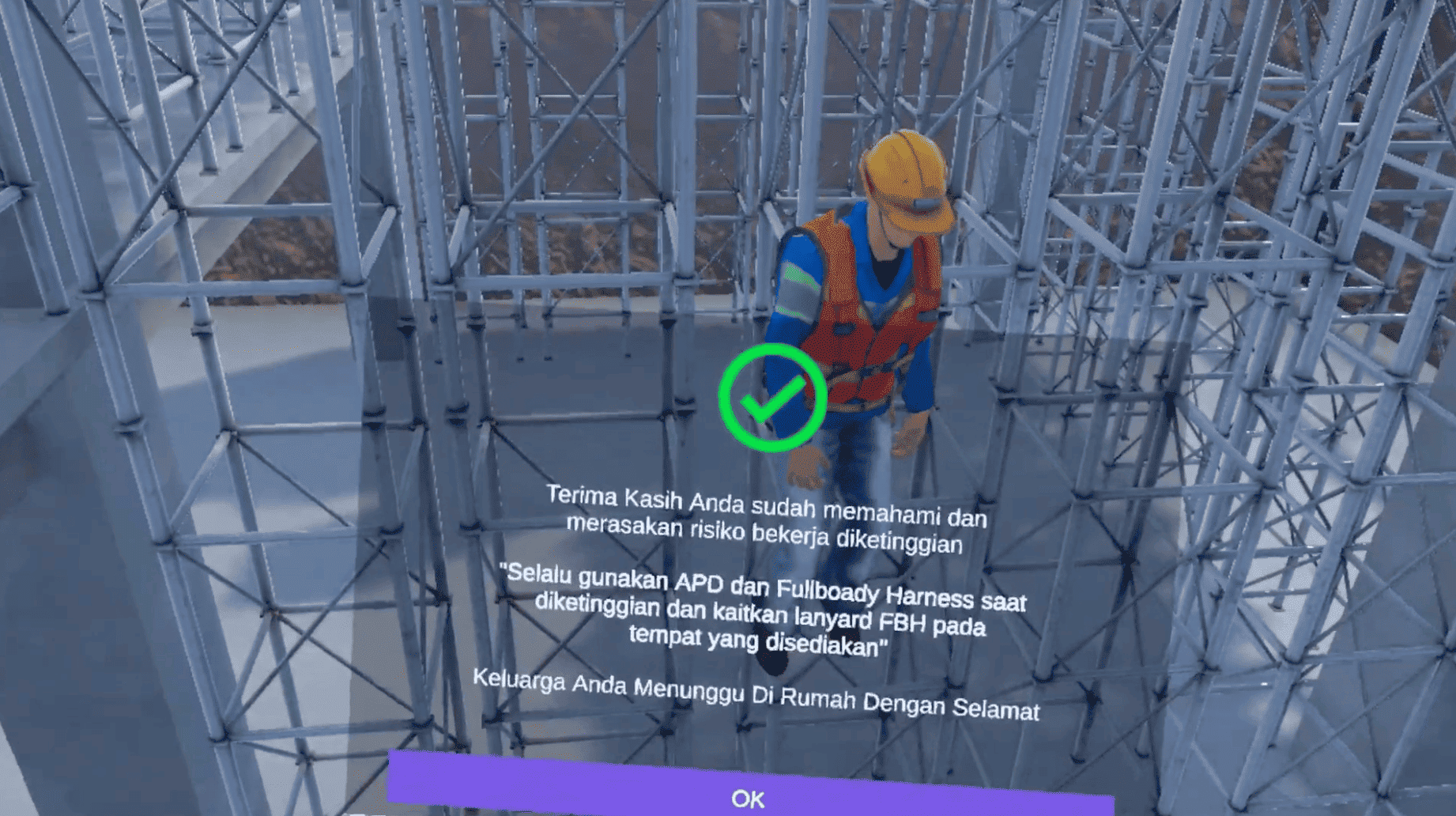
Enhance work-at-height safety with immersive VR training solutions from VGLANT. This cutting-edge technology helps workers recognize real-world hazards, improve reaction time, and significantly reduce the risk of accidents. Visit VGLANT to learn how VR training can elevate your company’s safety standards.