

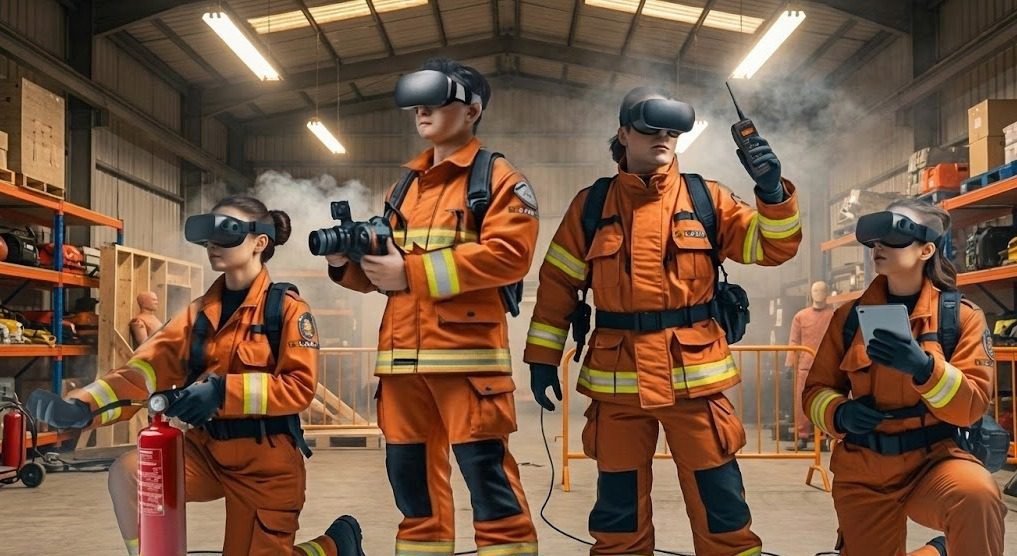
For decades, emergency response training has been stuck in a dangerously static loop: dim rooms, endless PowerPoint slides, and the occasional physical drill that costs a fortune but lacks realism.
However, the industrial landscape is shifting. Data consistently shows that traditional methods fail to bridge the “Readiness Gap.” Employees might pass the written exam, yet they freeze when faced with actual chaos. This is where Virtual Reality (VR) takes over. It is not merely a replacement for the instructor; it is a force multiplier that fundamentally changes how the human brain processes crisis.
1. Knowledge Retention: From 10% to 75%
The statistics on adult learning are unforgiving. Passive lecture methods typically result in a 10% retention rate after just one month. From a business perspective, that is a massive waste of capital.
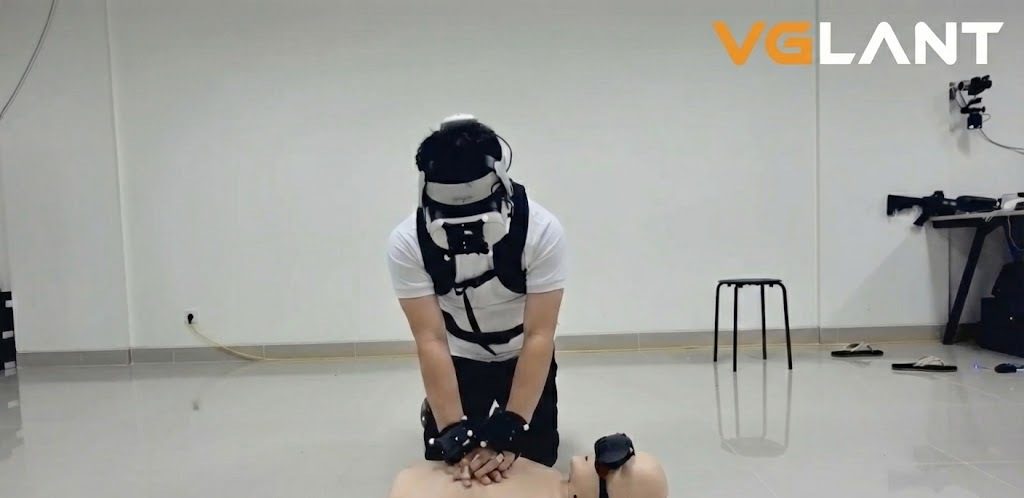
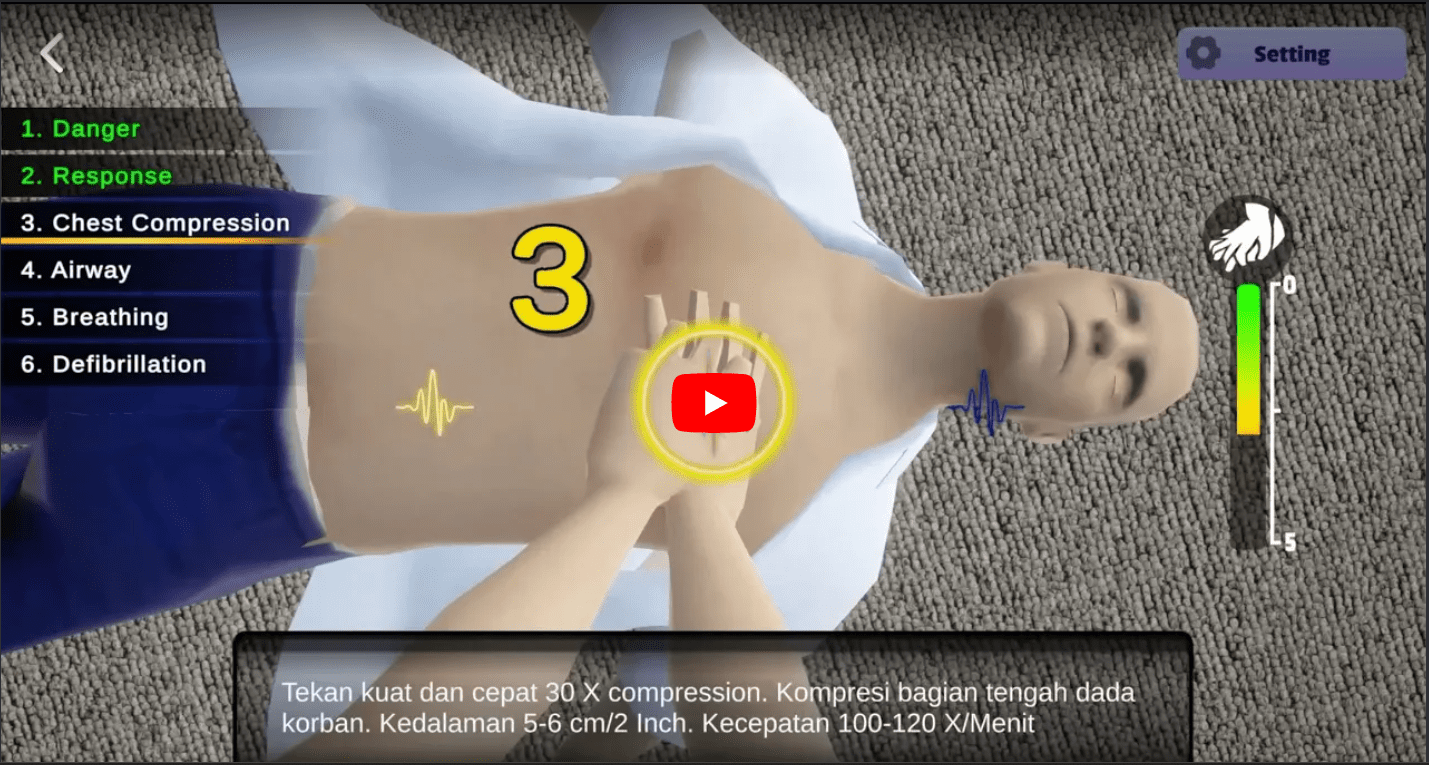
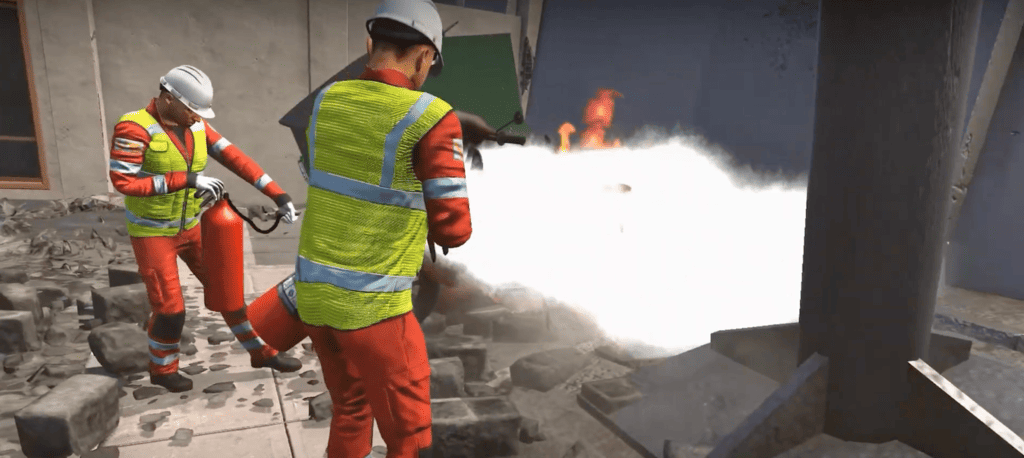
VR flips this paradigm through Immersive Learning. Studies from the National Training Laboratory indicate that “learning by doing” in VR boosts retention rates to 75%. In a VGLANT simulation, trainees don’t just watch a video on triage; they execute it. The brain records this activity as an episodic memory (an experience) rather than semantic memory (textbook facts). The knowledge sticks because the body remembers doing it.
2. Stress Inoculation (Hacking the Panic Response)
In an emergency, the enemy isn’t a lack of knowledge; it’s biology. Panic hijacks the brain. Traditional training in air-conditioned rooms cannot replicate the psychological pressure of a flash fire or a chemical leak.
VR provides a “Measured Dose of Stress.” VGLANT builds environments with high audio-visual tension—explosions, thick smoke, chaotic audio—while keeping the trainee physically safe. This trains the amygdala (the brain’s fear center) to remain analytical. Employees learn to think clearly amidst the noise, ensuring they bypass the “freeze response” when a real incident strikes.
3. Operational Efficiency (OPEX Savings)
Staging a full-scale physical disaster drill is a logistical nightmare. The costs pile up: production downtime, wasted fuel, single-use medical supplies, and travel for expert trainers.
VR democratizes training at a fractional cost. After the initial hardware investment, the cost per session drops to near zero:
- No chemicals are burned for practice.
- No bandages or consumables are wasted.
- Zero travel is required for remote sites.
Companies can deploy high-stakes training to thousands of employees across multiple locations without disrupting the core business.
4. Objective Performance Analytics
In manual training, assessment is often dangerously subjective. “I think he moved fast enough,” is not a metric you want to rely on when lives are on the line.
The VGLANT platform is built on hard telemetry. The system tracks thousands of data points per second:
- Reaction Latency: Milliseconds taken to react to the alarm.
- Precision: Accuracy of the Safety Check sequence.
- Gaze Tracking: Whether the trainee actually scanned the hazard area.
These analytics provide an “X-Ray” of your workforce’s competency, allowing management to fix specific skill gaps with laser precision before they manifest as fatal incidents.
5. Standardization Across Borders
A major challenge for multinational corporations is inconsistency. The quality of training at a Jakarta HQ might differ vastly from a session held at a remote mining site in Kalimantan.
VR eliminates this variable. With VGLANT, every employee experiences the exact same scenario, curriculum, and assessment standards. There is no reliance on the mood or fatigue level of a local instructor. This ensures that the company’s safety standard is universal, consistent, and audit-ready.
6. A “Safe-to-Fail” Environment
The only way to truly learn how to manage a disaster is to fail at it. But in the real world, you cannot afford for employees to fail when treating a real victim.
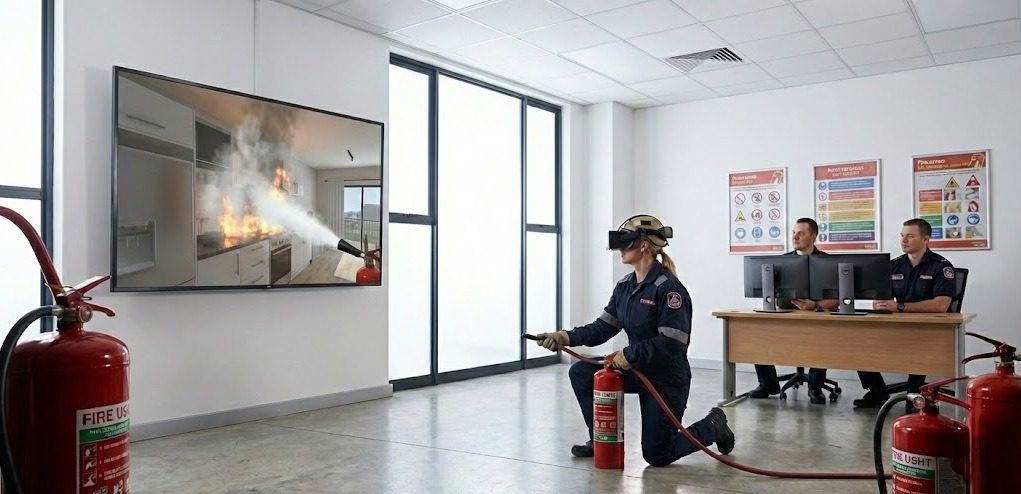
VR creates a “Sandbox” for error. Trainees are allowed—even encouraged—to make mistakes. They can choose the wrong extinguisher or act too slowly and witness the virtual consequences. Seeing the negative impact of their own decisions is a far more effective teacher than a verbal warning. VR allows them to fail in the virtual world so they can be perfect in the real one.
The Verdict: The Future is Immersive
Transitioning to VR is no longer a “nice-to-have” luxury; it is a mandatory evolution for organizations serious about safety. VGLANT delivers a solution where risk is suppressed, costs are cut, and human readiness is maximized. Don’t wait for an incident to occur to evaluate if your training actually works.
Contact Us
Ready to modernize your safety strategy?
Contact our expert team to discuss implementing VR into your corporate safety curriculum.
Call / WhatsApp: +62 812 9696 7887
Email: inquiry@vglant.com
Website: www.vglant.com