

Falls from elevation are the leading killers in construction and industrial sectors. A momentary lapse—a forgotten safety clip or a loose buckle—isn’t just a “compliance violation.” It’s a fatality. The fundamental flaw in standard HSE training? You cannot prepare a worker for the psychological trauma of a 50-story drop using a slide deck in a ground-floor classroom.
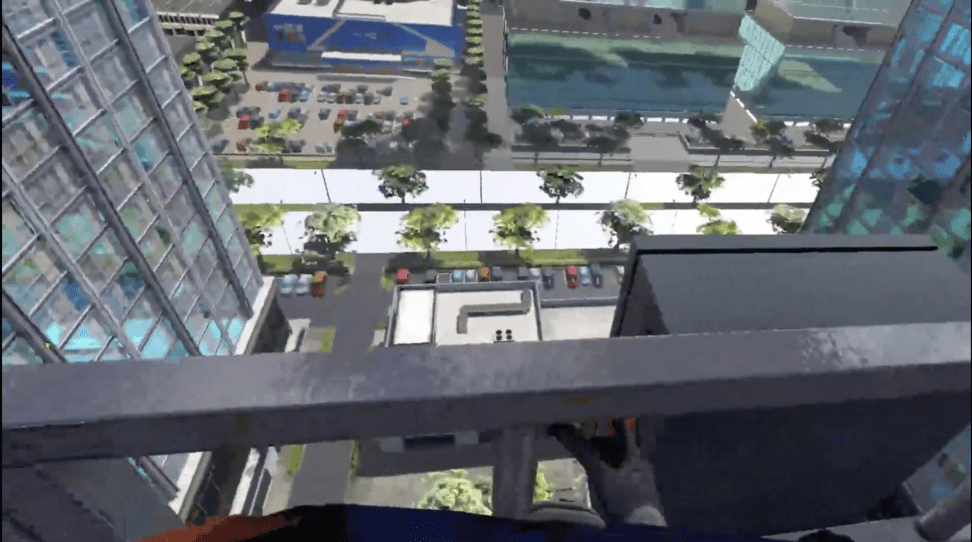
To drive genuine behavioral change, the workforce needs to feel the gravity. The VGLANT VR Work at Height module bridges the gap between theoretical rules and visceral reality. It places your team on a suspended scaffold, 500 feet above the pavement.
The Scenario: High-Rise Suspended Platform Logistics
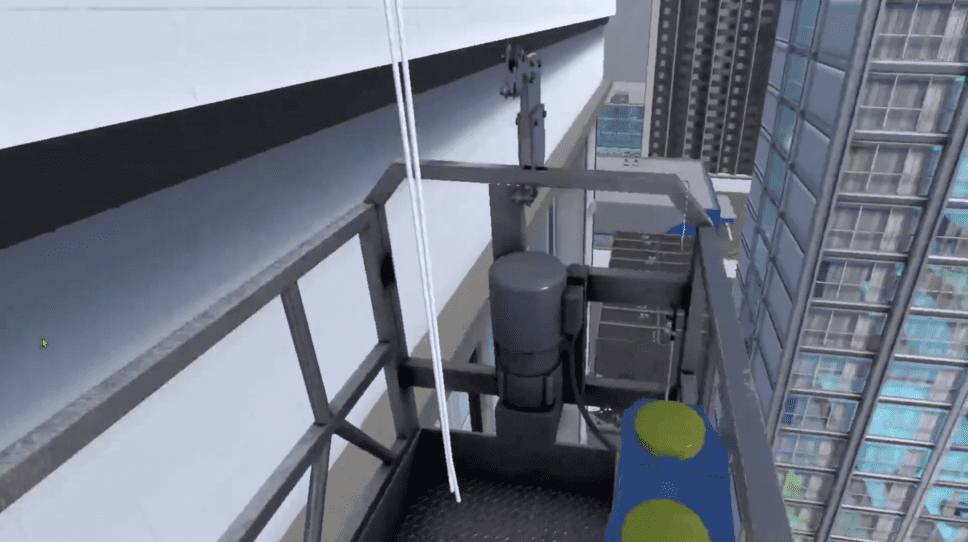
Designed for facade cleaners and maintenance crews, this module drops the trainee onto a motorized gondola scaling a glass skyscraper. We use high-fidelity depth perception and spatial audio to trigger genuine vertigo. Before the first task begins, the environment commands respect.
Trainees manage their workspace within the narrow confines of the platform. But the mission is singular: absolute mastery of personal fall arrest systems.
Safe-to-Fail: The Psychology of Brutal Consequence
In the real world, forgetting to anchor a lanyard results in tragedy. In a classroom, it’s just a red mark on a test paper. VGLANT utilizes a “safe-to-fail” methodology that leaves a permanent psychological imprint.
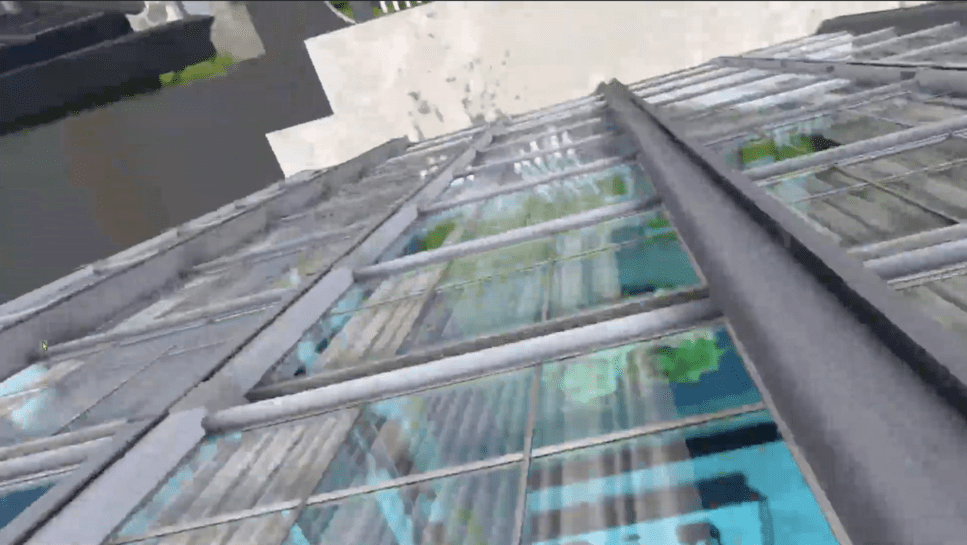
If a trainee fails to secure their Full Body Harness (FBH) and triggers a platform shift, the simulation does not forgive. They experience a terrifying, rapid free-fall down the side of the building. The simulation culminates in the stark visual of the fatal impact.
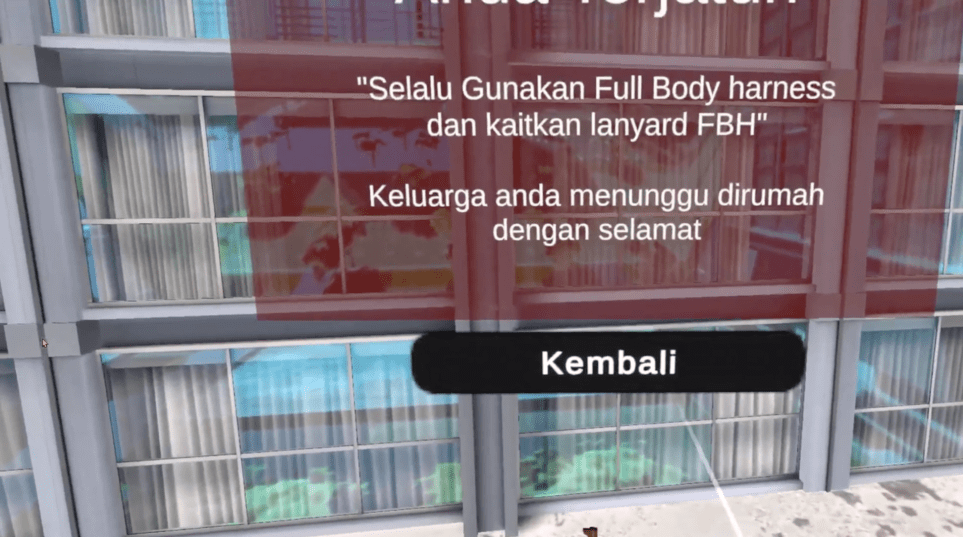
The screen then fades to a blunt, emotionally grounded message:
“Selalu Gunakan Full Body harness dan kaitkan lanyard FBH. Keluarga anda menunggu dirumah dengan selamat.” (Always use a Full Body Harness and attach your FBH lanyard. Your family is waiting for you at home safely.)
This isn’t a boring safety rule anymore. It becomes a personal survival instinct. It teaches the fatal cost of complacency without risking a single life.
Key Tactical Objectives
By completing the VGLANT simulation, trainees develop:
- Situational Awareness: Overcoming height-induced panic to maintain focus in extreme environments.
- Harness Discipline: Building the muscle memory required to wear, adjust, and anchor an FBH every single time.
- Spatial Risk Identification: Recognizing unsafe edges and mechanical hazards while operating on a moving platform.
Why VGLANT for Fall Protection?
- Zero Physical Exposure: Unlimited high-altitude exposure with zero real-world danger.
- Deep Emotional Resonance: By showing the harsh consequences of a fall, we focus on the human impact. Workers remember why they clip in, not just how.
- Tracked Data Records: Our dashboard audits every session. HSE managers see exactly who anchored their lanyard and who needs immediate intervention before stepping onto a real job site.
Stop relying on imagination. Let your team safely experience the edge with VGLANT. Ensure that when they step onto a real platform, their safety protocol is an unbreakable reflex.
For a deeper look into how immersive technology is transforming safety training, explore solutions from VGLANT. Their approach to VR-based work-at-height training highlights how realistic simulations can improve hazard awareness and reduce workplace incidents.