

A fall from 20 meters takes around two seconds before impact. That’s counting from the moment the body has already left the structure. But the real story doesn’t start at the two-second mark before landing. It starts about seven seconds earlier — when the worker begins to lose balance, when a foot lands on an unstable surface, when a hand lets go of a hold to reach for something else.
These seven seconds decide everything. Whether the worker falls or recovers. Whether the harness holds or fails. Whether rescue response will be fast or late. Good working at height training has to address these seven seconds — the part that turns out to be the hardest to train through conventional methods.
The Anatomy of a Height Incident
Investigations into height-related workplace accidents generally find a consistent pattern. Workers rarely fall because of harness failure. They fall because of a chain of small decisions made in the minutes before: unclipping a lanyard to move quickly, skipping a check on platform conditions, ignoring tie-off instructions because of time pressure.
These aren’t dramatic acts of negligence. They’re ordinary decisions made hundreds of times a day by hundreds of workers in the field, and most of them pass without consequence. Until one day, one decision ends in seven seconds of panic before a fall.
Conventional training has a hard time reaching this domain. The domain isn’t really about PPE technique. It’s about cognitive habits — how workers evaluate risk at every step, how they make decisions when time pressure rises, how they respond when something doesn’t go to plan.
Three Scenarios Only VR Can Deliver Safely
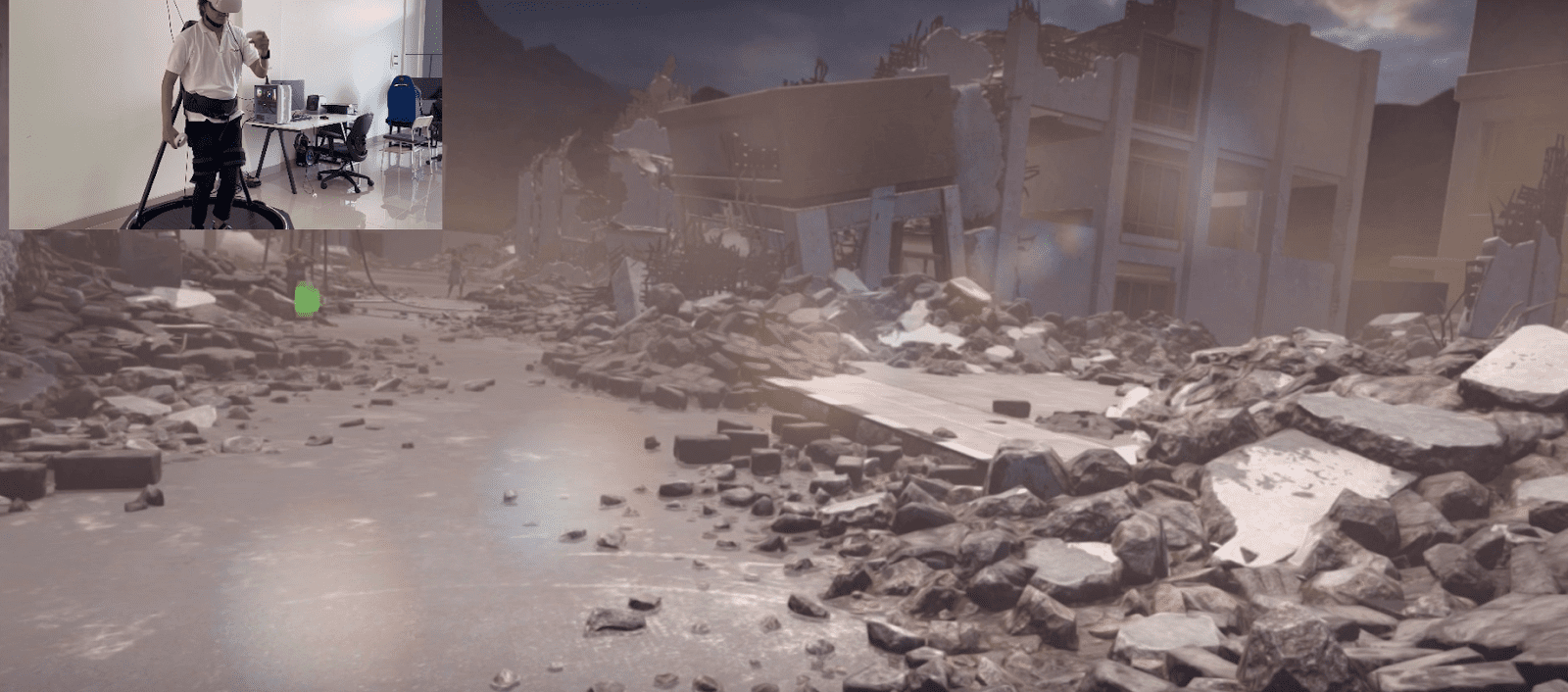
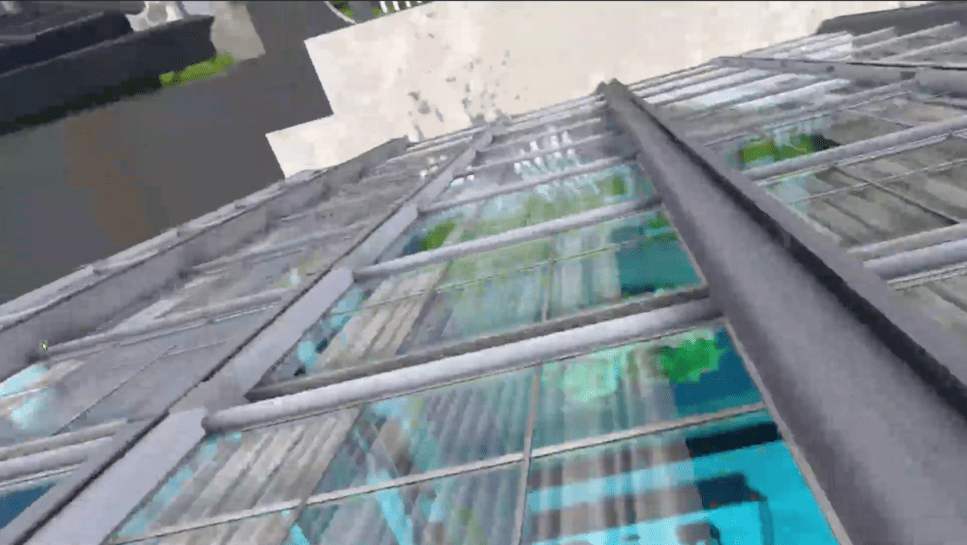
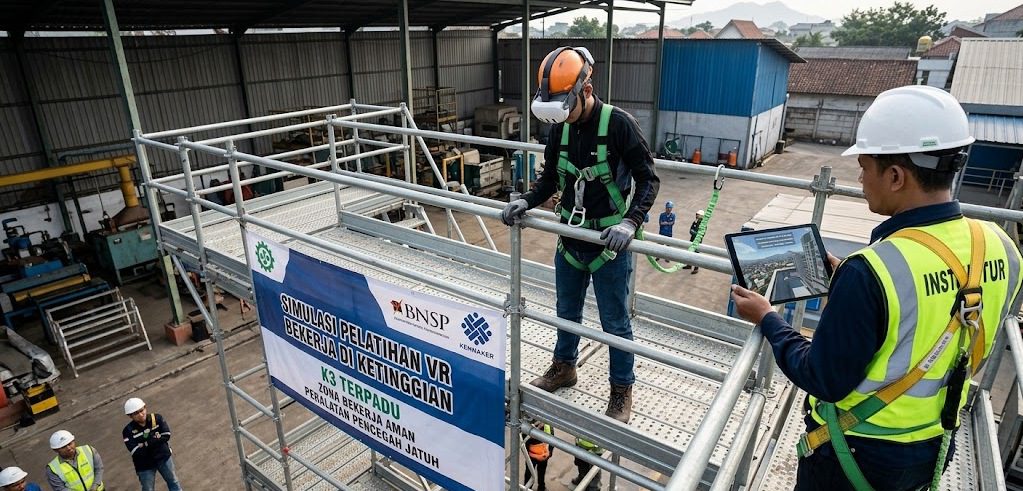
Slipping on a roof with a harness that isn’t perfectly clipped. The nightmare scenario that can’t be physically rehearsed. VR allows the worker to experience the moment of slipping, see that the harness has caught them but the body position is awkward, and learn from that condition without real injury. This kind of virtual experience leaves an impression that safety lectures struggle to match.
Weather changing once you’re already up. Wind picks up suddenly, drizzle starts falling, visibility drops. A worker already on tall scaffolding has to decide: come down now, or finish the task first. Many incidents happen because the pressure to meet deadlines wins out even when conditions have stopped being safe. VR allows this decision to be rehearsed over and over until the pattern “unsafe conditions equal stop” becomes automatic.
Other workers below or beside you. Working at height is rarely done alone. Falling material, dropped tools, or debris from work above can endanger coworkers. Well-designed VR scenarios include this element — workers learn to secure tools, give warning before dropping anything, and maintain awareness of activity around them.
Reflexes That Only Form Through Repetition
One of the most consistent findings from sports psychology and military training research: the skills that surface during a crisis are the skills rehearsed until they became reflexes. Not skills understood in theory, or practiced a few times. Skills repeated hundreds of times until the movement no longer requires conscious thought.
For working at height, these reflexes include:
Always checking anchor points before clipping a lanyard. Always maintaining three points of contact while moving. Always clipping the new before unclipping the old. Always evaluating the platform before transferring full body weight onto it.
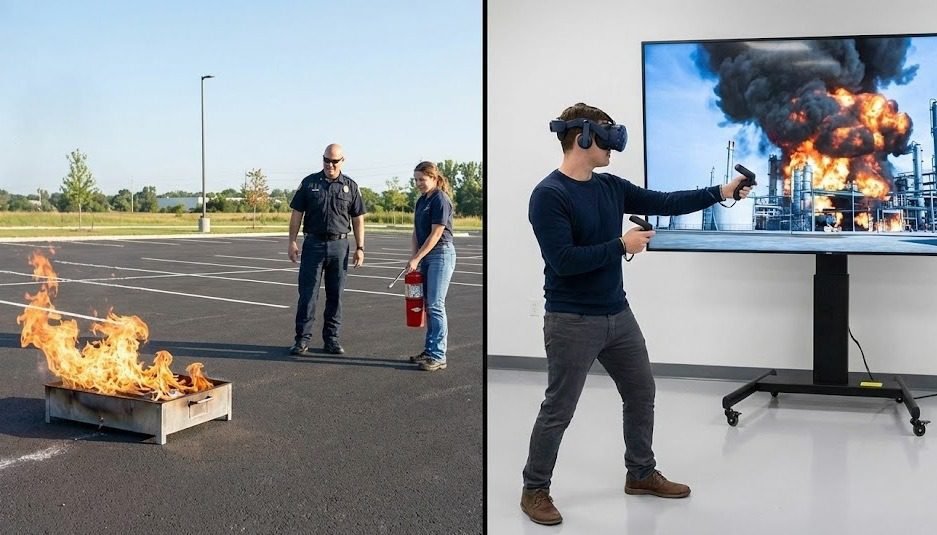
Hands-on training can install these reflexes, but it’s limited by time, access to training structures, and cost. One annual training session isn’t enough to build a reflex. What’s needed is regular repetition that hands-on training struggles to accommodate.
VR fills that gap. A 30-minute session can contain dozens of iterations of tie-off, anchor point identification, or platform evaluation. Higher frequency — monthly, or even weekly for workers at high-risk sites — becomes possible.
The Reality of Implementation in the Field in Indonesia
Permenaker No. 9 of 2016 requires competency certification for workers operating at height. This certification is earned through formal training with certified instructors, and remains a basic requirement that VR doesn’t replace.
What many large contractor companies in Indonesia do is place VR in specific slots within the competency cycle:
Before mobilization to a new site. Workers go through VR simulations that reflect site-specific conditions — structural layout, available anchor points, access routes. They arrive on location with stronger spatial understanding.
As part of the weekly toolbox meeting. A short 10 to 15 minute session with one focused scenario, serving as a reminder and reflex drill. This kind of high frequency is what shapes cognitive habits.
After near misses or incidents. When an event nearly becomes an accident, a VR simulation reflecting that scenario can be run for the whole team as collective learning.
This approach is realistic and affordable. Not a training revolution, but an integration that makes the K3 height program stronger without disrupting the formal certification already in place.
Closing
The seven seconds before a fall is the window where small decisions decide whether today ends ordinarily or ends at the hospital. Training that rehearses this window repeatedly is training whose true value shows up over the long term — in incidents that never happen, in workers who go home healthy to their families every day.
VR working at height isn’t the single answer to K3 height work. But for these critical seven seconds, it’s hard to find another tool that can deliver this much repetition, with this level of safety, at this kind of reasonable cost. For companies with high exposure to height work, the question isn’t whether this is worth considering. The question is when to start implementing.
Enhance work-at-height safety with immersive VR training solutions from VGLANT. This cutting-edge technology helps workers recognize real-world hazards, improve reaction time, and significantly reduce the risk of accidents. Visit VGLANT to learn how VR training can elevate your company’s safety standards.