

Working at height ranks consistently among the highest-risk activities in Indonesian construction, telecommunications, and industrial maintenance. Falls from elevation are a leading cause of workplace fatalities across these sectors. The regulatory framework — Permenaker 9/2016 — establishes technical requirements for full body harnesses, shock-absorbing lanyards, appropriate connectors, and fitness inspection before use.
What the regulations specify is the equipment standard. What they don’t specify, and what conventional training struggles to build, is the cognitive habit of executing correct procedures every single time a worker prepares for elevated work.
The gap between regulatory compliance and operational safety shows up in incident patterns. Workers with valid Tenaga Kerja Bangunan Tinggi certification who fall despite wearing harnesses. Investigation reveals the harness wasn’t inspected before use, the lanyard was improperly connected, the anchor point wasn’t rated for the load. Each of these represents a procedural failure that adequate training should have prevented.
Why Conventional Training Falls Short
Classroom-based working at height training covers the material comprehensively. Fall arrest principles. Harness components and inspection. Anchor point selection. Rescue procedures. Workers pass written assessments demonstrating they understand the content.
Understanding, however, is not the same as habitual correct execution under operational time pressure. When a supervisor is pushing to get workers on the deck before a concrete pour begins, the worker who understood harness inspection perfectly in the classroom often skips the inspection in practice. The knowledge exists; the habit doesn’t.
Physical training with actual equipment helps but faces its own limitations. Setting up realistic fall arrest scenarios requires facilities that not every worksite has. Practicing rescue from fall arrest requires suspended-position simulation that most training programs can’t safely conduct at scale. The result is training that covers the material but doesn’t build the operational reflex.
What VR Adds to Height Training
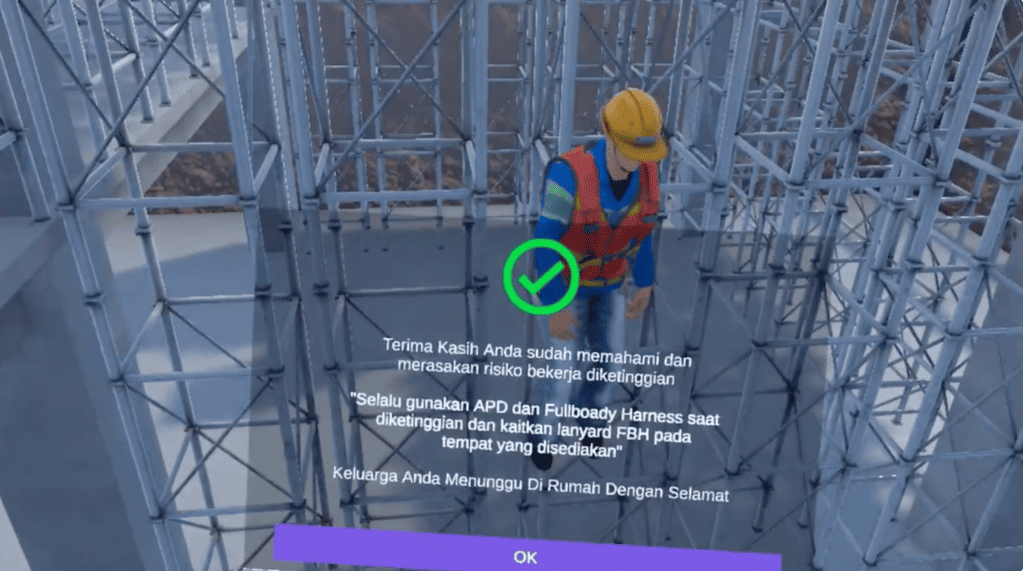
VR-based working at height training addresses the reflex-building gap through repetition of realistic scenarios that workers face daily.
The equipment room scenario simulates the PPE selection and inspection phase before work begins. Workers see equipment on virtual racks — some in good condition, some with defects. They must select appropriate equipment, inspect it visually, and identify defects before use. Over repetitions, this builds the habit of actually inspecting equipment rather than glancing at it and grabbing it.
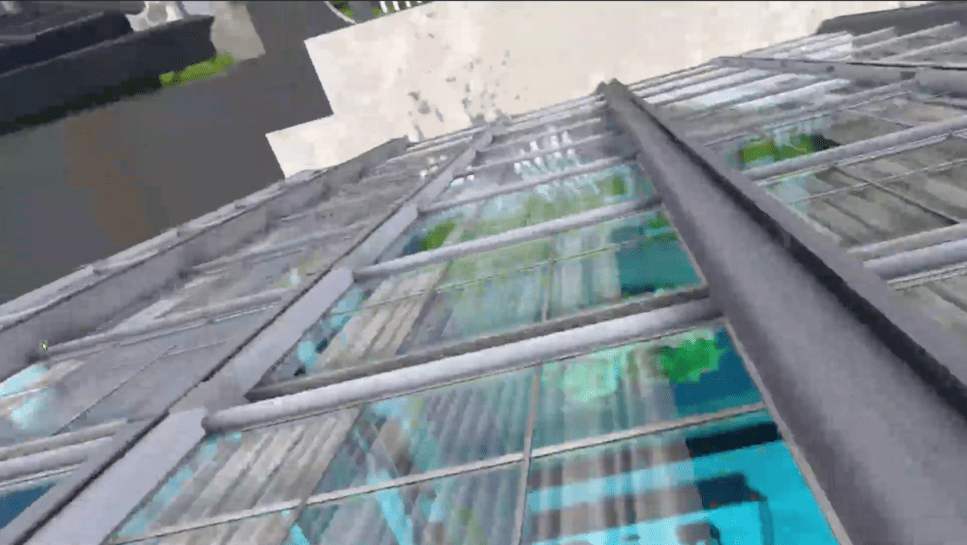
The vertical ladder ascent scenario drills three-point contact discipline, load carrying limitations, and the transition from ladder to platform where many falls occur. Workers experience the consequences of releasing hand contact during ascent, of carrying tools improperly, of stepping onto platforms without securing the next anchor point first.
Anchor point selection scenarios present workers with multiple potential anchoring options in realistic work environments. Some options are appropriate; some aren’t rated for fall arrest. Workers develop pattern recognition for anchor point evaluation that classroom training cannot efficiently build.
Rescue scenarios drill the response when a colleague falls and hangs suspended. Suspension trauma begins within minutes; the response speed and equipment familiarity matter. Physical rescue training is difficult to conduct frequently; VR-based scenarios can be repeated as often as needed.
The Data That Reveals Real Competency
VR training generates performance data that reveals which workers have actually internalized safe practices and which are executing checklist compliance without genuine competency development.
Equipment inspection completion rates across the workforce. Defect recognition accuracy on planted scenarios. Response time to safety violations observed in training scenarios. Three-point contact compliance during ladder ascent scenarios. Anchor point selection accuracy across varied environments.
For HSE teams, this data enables targeted intervention with specific workers who show gaps, rather than blanket refresher training that doesn’t distinguish between workers who need it and workers who don’t.
VGLANT Working at Height Modules
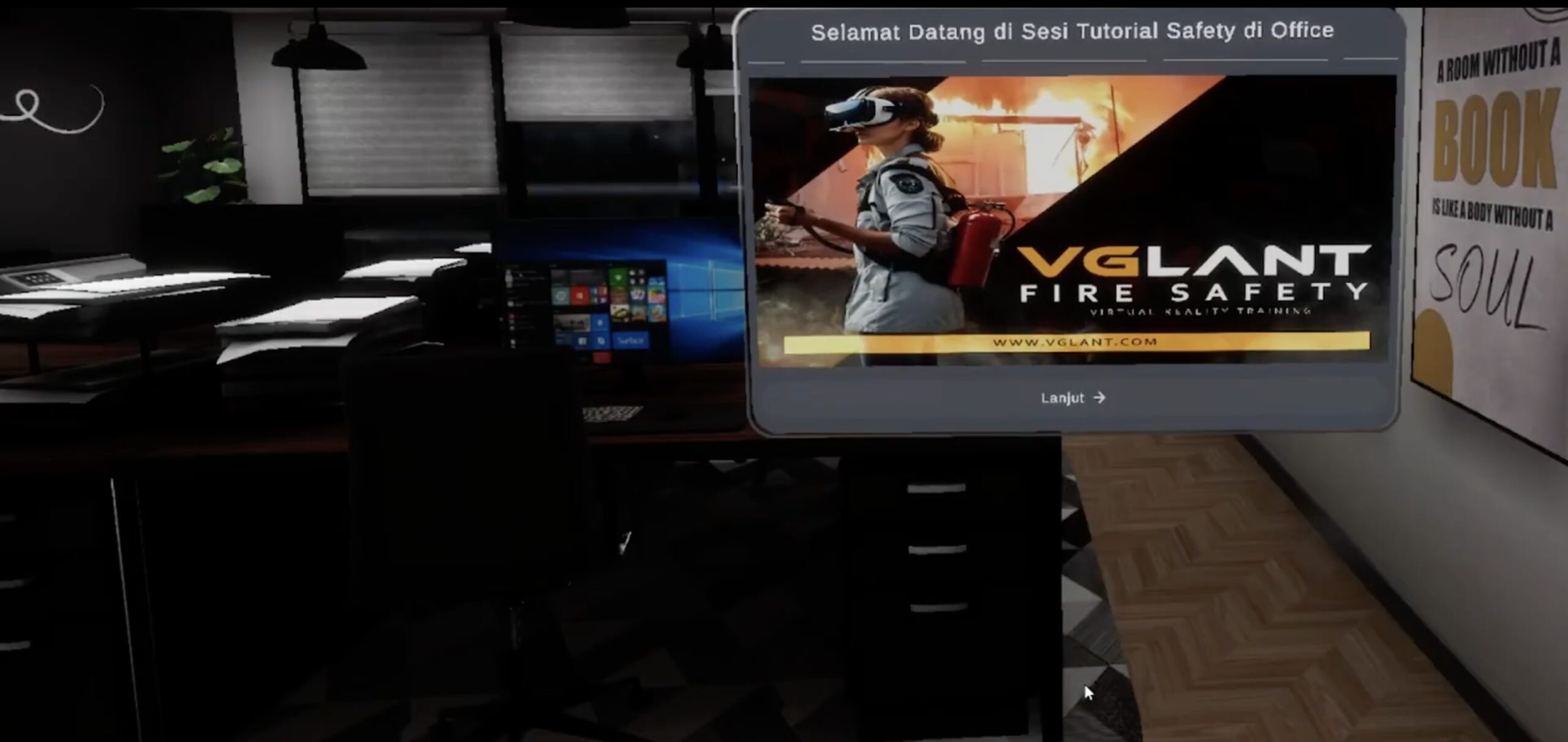
VGLANT, built by PT Virtu Digital Kusuma, includes comprehensive working at height scenarios developed for Indonesian construction and industrial contexts. Coverage spans PPE selection and inspection, vertical ladder ascent, anchor point selection, edge protection, mobile elevating work platform operation, and rescue from fall arrest scenarios.
Content aligns with Permenaker 9/2016 requirements and complements formal Tenaga Kerja Bangunan Tinggi certification through BNSP-recognized providers. Scenarios can be customized to match contractor-specific PPE configurations and equipment standards.
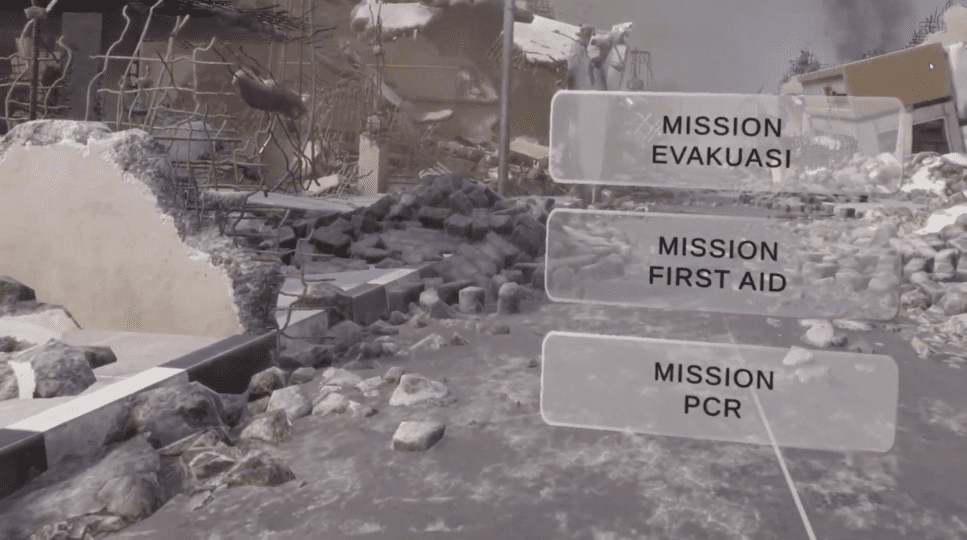
The VGLANT K3 catalog integrates working at height with fire safety, first aid, confined space entry, and hazardous material response, enabling operations to build comprehensive safety training on unified infrastructure. For construction and industrial operations serious about closing the gap between certified workers and genuinely safe workers, VR-based working at height training provides capability that conventional methods structurally cannot match.