


Ask any HSE manager to describe the most frustrating pattern in safety training, and you’ll hear a version of the same complaint. Workers pass their assessments. Certifications are current. Documentation looks good. Then an incident happens and the response reveals that most workers don’t actually apply what they were trained on. The gap between what training documents show and what workers actually do in emergencies is where safety programs quietly fail.
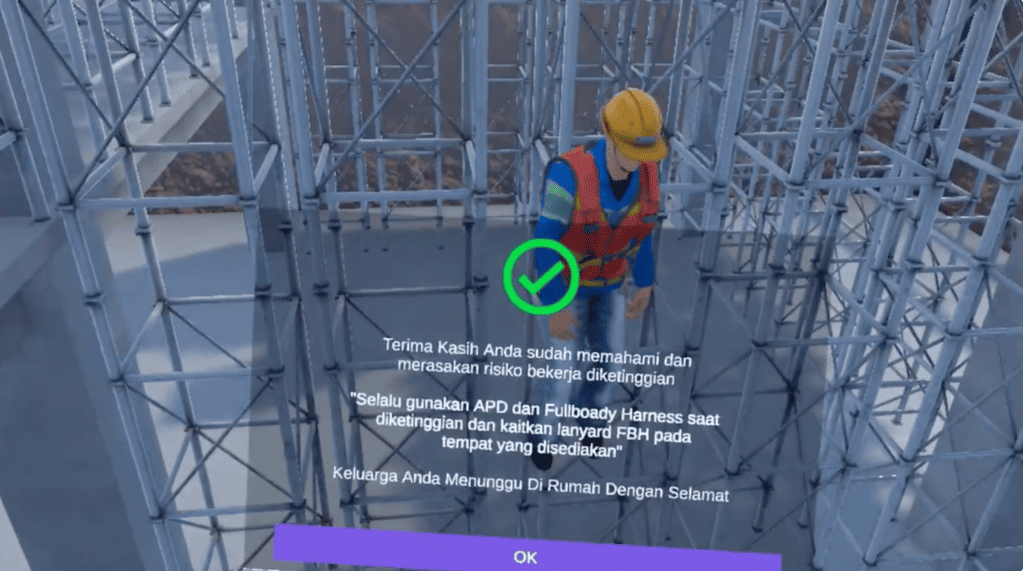
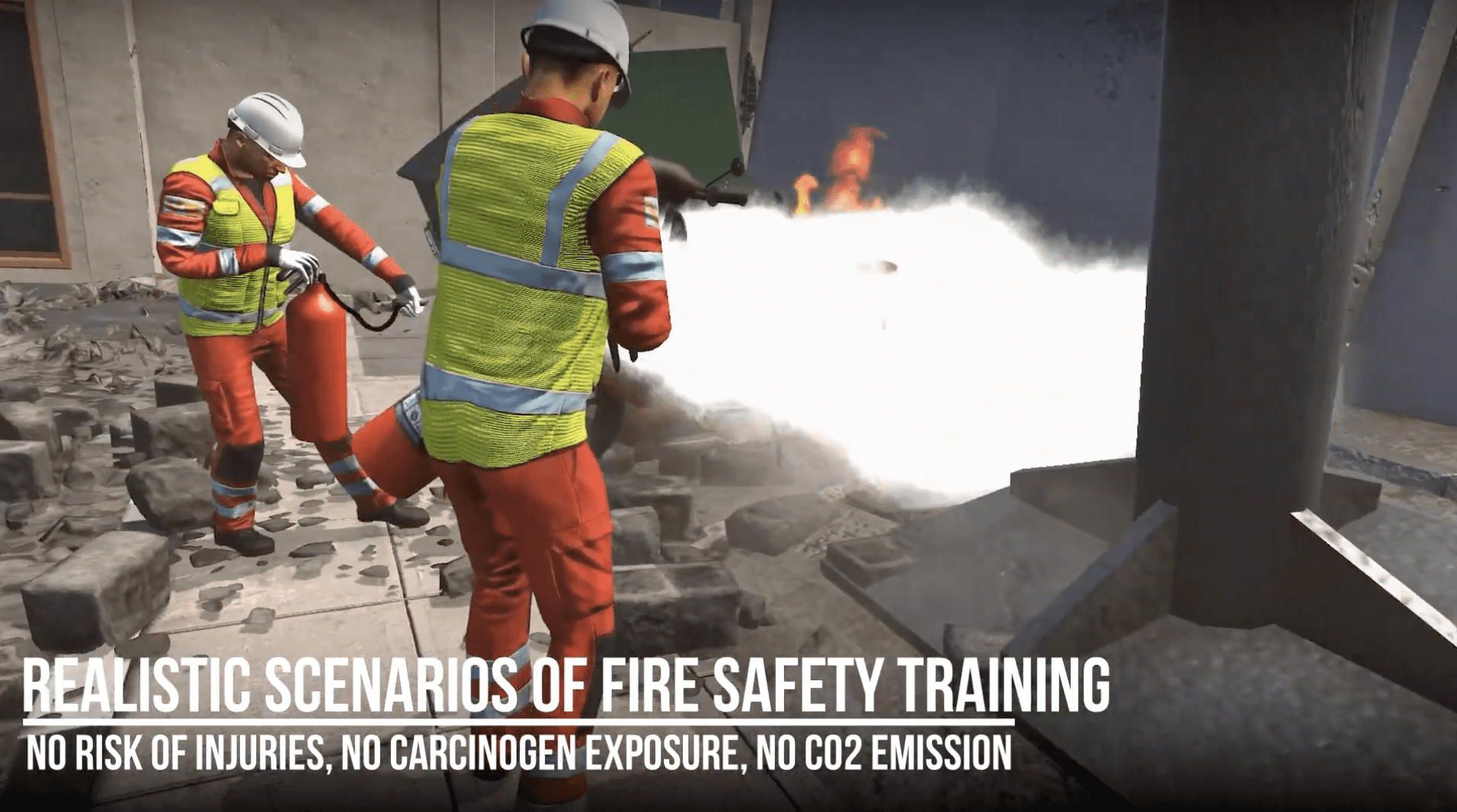
This pattern isn’t unique to any single training domain. It shows up in fire response, where workers who correctly identified extinguisher classes on tests grab the wrong extinguisher during actual fires. It shows up in first aid, where certified responders freeze when a colleague collapses. It shows up in working at height, where certified workers skip pre-use harness inspection under time pressure. The consistent thread is that theoretical knowledge doesn’t reliably translate to operational reflex.
VR-based safety training addresses this translation gap through mechanisms conventional training structurally cannot match. Understanding how the bridge from theory to practice actually works matters for HSE teams designing programs that produce genuine field readiness rather than just compliance documentation.
Why Theory Doesn’t Transfer Automatically
Cognitive science has understood the theory-to-practice gap for decades. Passive learning — reading, watching, listening — activates specific neural pathways that store information but don’t automatically translate to motor execution. When workers need to act, they need pathways that were built through active practice, not passive absorption.
Traditional safety training relies heavily on passive methods. Classroom instruction. Video demonstrations. Written assessments. Each of these transmits knowledge effectively, but none of them builds the reflexive execution real emergencies require.
The physical training that supplements classroom methods helps, but it faces its own limitations. Live fire drills happen once or twice per year, well below the frequency required for procedural memory to form. First aid mannequin practice occurs during certification cycles that may be 24 months apart. Working at height physical practice depends on facility availability that most sites can’t provide continuously.
The result is workers who understand safety in theory but haven’t developed the operational reflexes real emergencies demand. Their training documentation shows compliance. Their actual field capability doesn’t match the documentation.
What Active Practice Actually Requires
Building operational reflex requires specific conditions that theoretical training doesn’t provide.
Repetition volume matters. Neurological research indicates procedural memory forms through hundreds of correct executions, not the two or three attempts a typical certification course provides. Without adequate repetition, the response stays cognitive — accessible with time to think, unavailable under emergency stress.
Realistic conditions matter. Practice under calm classroom conditions doesn’t build responses that survive real emergency stress. The training environment needs to approximate real conditions closely enough that the neural pathways being built are the same ones the actual emergency will require.
Consequence exposure matters. Workers who practice without seeing consequences don’t develop the same responses as workers who experience realistic outcomes from their choices. Physical training can’t always safely provide consequences; VR can.
Variability matters. Practicing the same scenario repeatedly produces rigid responses that fail when the real emergency differs. Varied scenarios build adaptable competency that transfers to novel situations.
How VR Meets These Requirements
Virtual reality training addresses these conditions in ways conventional methods cannot.
The repetition volume becomes economically feasible. A worker can practice fire response, CPR sequences, or harness inspection dozens of times per month at marginal cost. Conventional physical training cannot deliver comparable repetition volume without prohibitive expense.
Realistic conditions become renderable on demand. Emergency scenarios with time pressure, environmental complexity, and stress-inducing conditions can be simulated authentically. Trainees experience psychological pressure similar to real events, building responses that survive that pressure.
Consequence exposure becomes safe. Workers can make wrong choices in simulation and observe the results. The learning from these observations shapes correct future responses without physical harm from the mistakes.
Variability becomes practical. The same underlying training objective can be practiced across many different scenario configurations. Fire response in different fuel types and environments. CPR in different physical settings with different complications. Harness inspection with different equipment conditions and time pressures.
What VR Doesn’t Solve
VR-based training isn’t a complete solution. Formal certification through recognized providers remains regulatory requirement for many competencies. Physical calibration to actual equipment weight and behavior still requires periodic hands-on practice. Cultural safety mindset development requires organizational efforts beyond any training technology.
The role of VR training is bridging a specific gap — between theoretical knowledge that certification demonstrates and operational reflex that real emergencies require. This gap has constrained safety program effectiveness for decades. VR provides mechanisms to close it that conventional methods structurally cannot provide.
Where VGLANT Fits
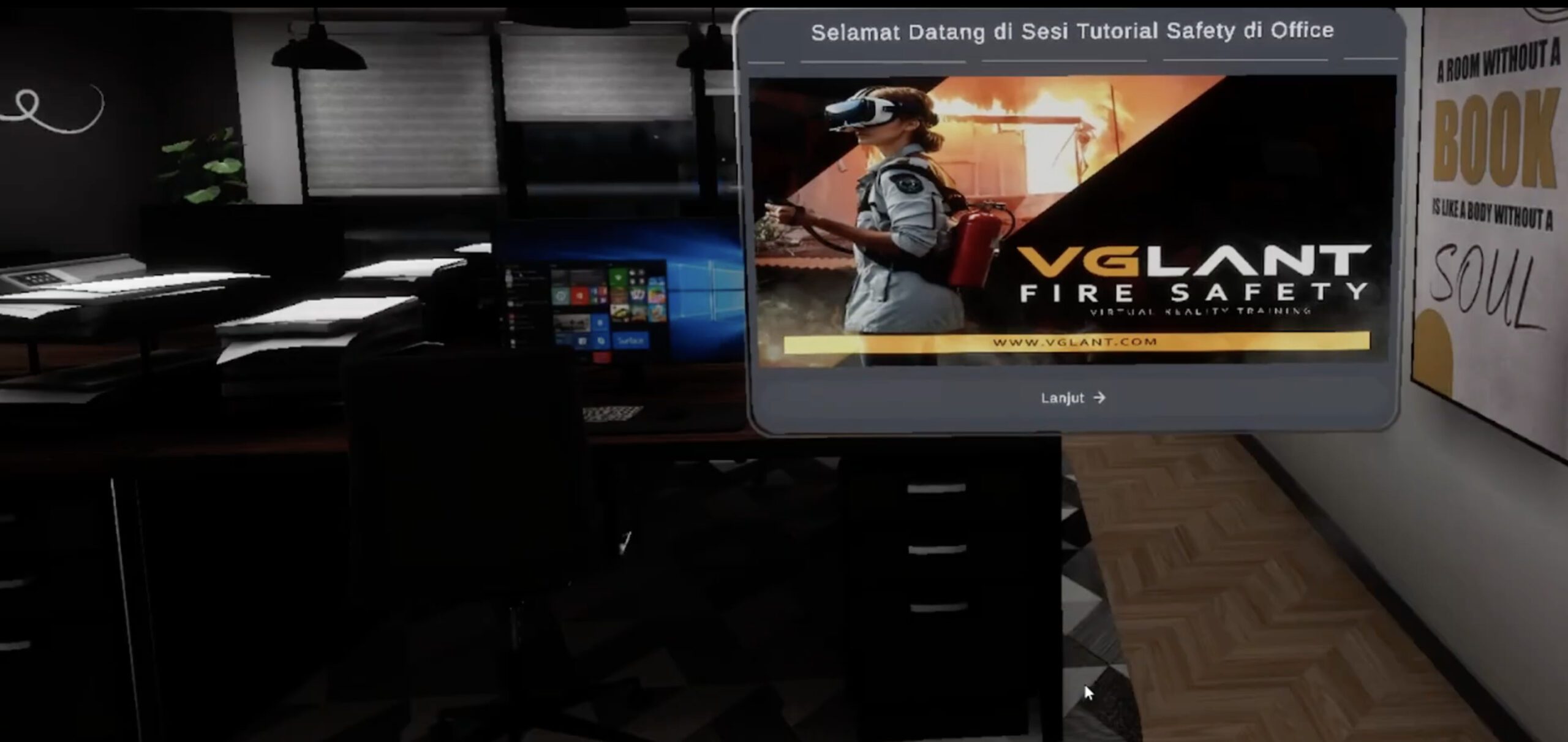
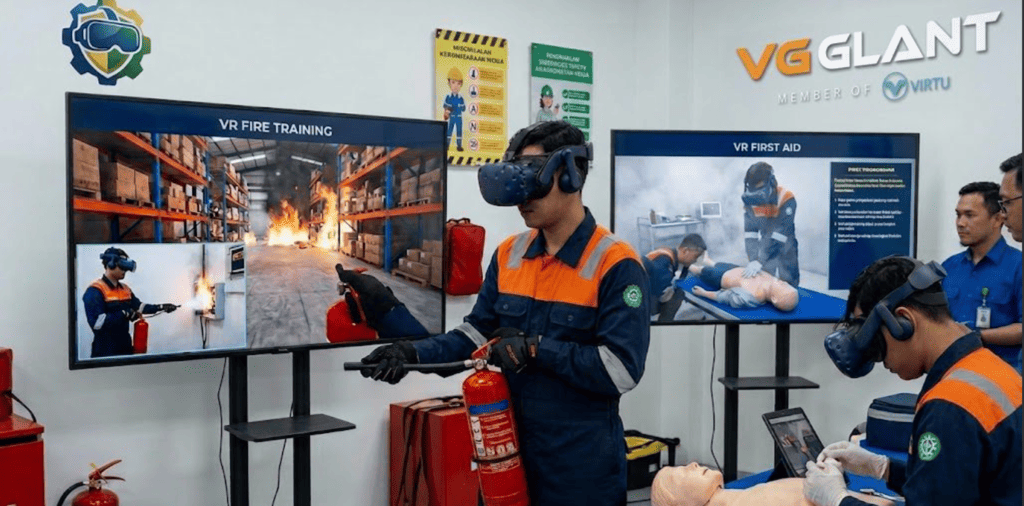
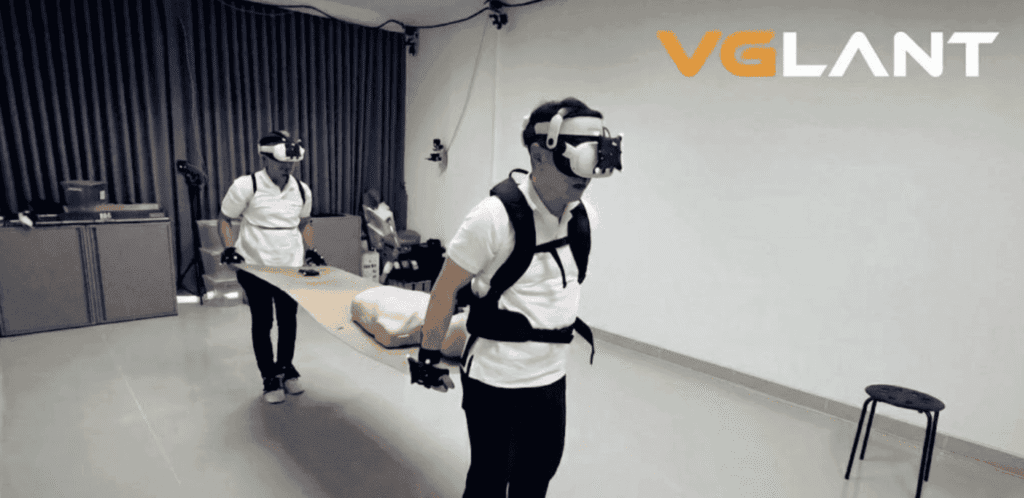
VGLANT, built by PT Virtu Digital Kusuma, focuses specifically on the operational reflex development that bridges classroom theory and workplace response. Content across fire safety, first aid, working at height, and other domains is designed for the high-repetition practice that builds procedural memory rather than just cognitive familiarity.
Scenarios include the realistic conditions, consequence exposure, and variability that operational reflex actually requires. The platform integrates into broader safety programs alongside classroom instruction, physical drill, and formal certification — providing the specific capability those other methods cannot deliver.
For HSE managers building programs that produce genuine field readiness, VGLANT addresses the theory-to-practice gap that has quietly limited what safety training could accomplish. Workers who complete integrated programs including VR-based practice consistently demonstrate operational capability that certification-only programs don’t reliably produce.
Safety training’s ultimate purpose isn’t compliance documentation. It’s workers who respond correctly when real emergencies happen. Bridging theory and practice is how that outcome actually gets achieved.