

Industrial fires don’t wait for you to find the manual. When heavy machinery ignites on a crowded factory floor, panic is the default response. The gap between a controlled incident and a catastrophic loss of life is measured in split-second decisions.
Standard fire drills—employees slowly walking to a parking lot while a bell rings—are a failure of preparation. They don’t replicate the stress, the blinding smoke, or the roar of a real emergency. To build genuine survival reflexes, organizations are shifting to the VGLANT VR Fire Evacuation module.
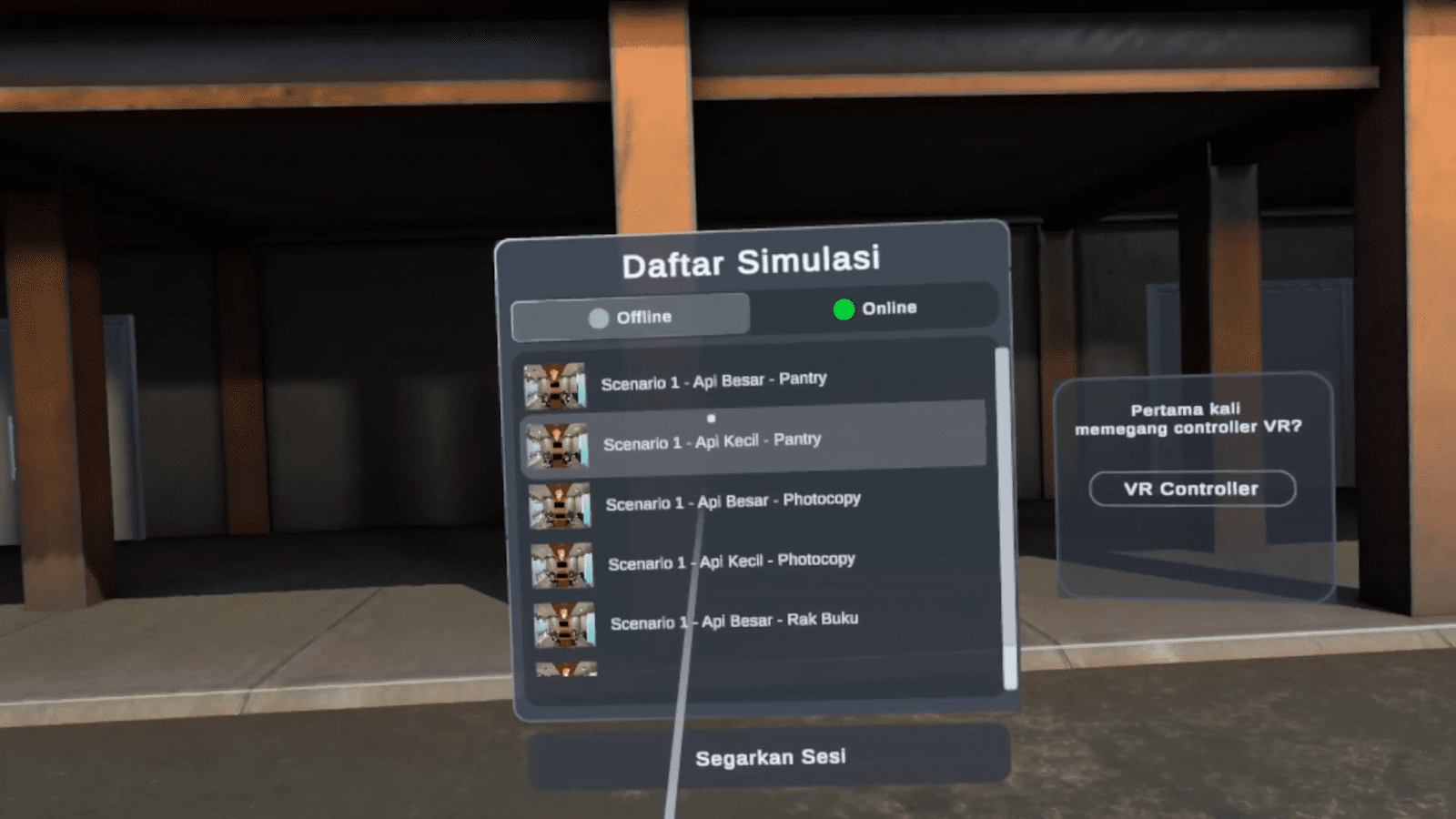
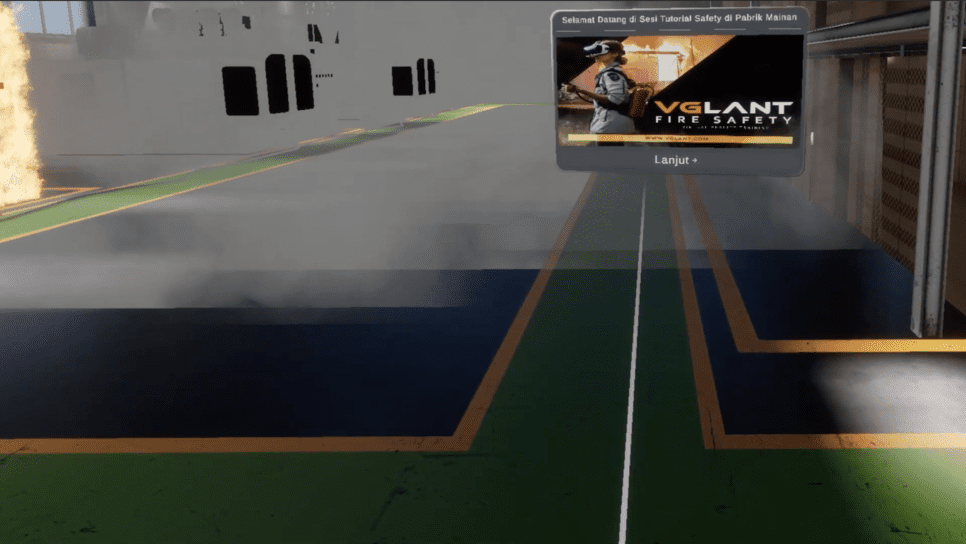
This isn’t a lecture; it’s a high-immersion simulation that drops trainees into the chaos of a factory fire. It forces them to assess hazards, act, and evacuate. All within a zero-risk digital twin.
The Scenario: Factory Floor Emergency
The module is set inside a large-scale manufacturing facility. Employees face a sudden, severe machinery fire. The simulation audits their ability to stay calm, follow HSE protocols, and prioritize human life over equipment.
The Tactical Breakdown: Five Phases of Response
VGLANT guides trainees through the critical stages of a real-world emergency:
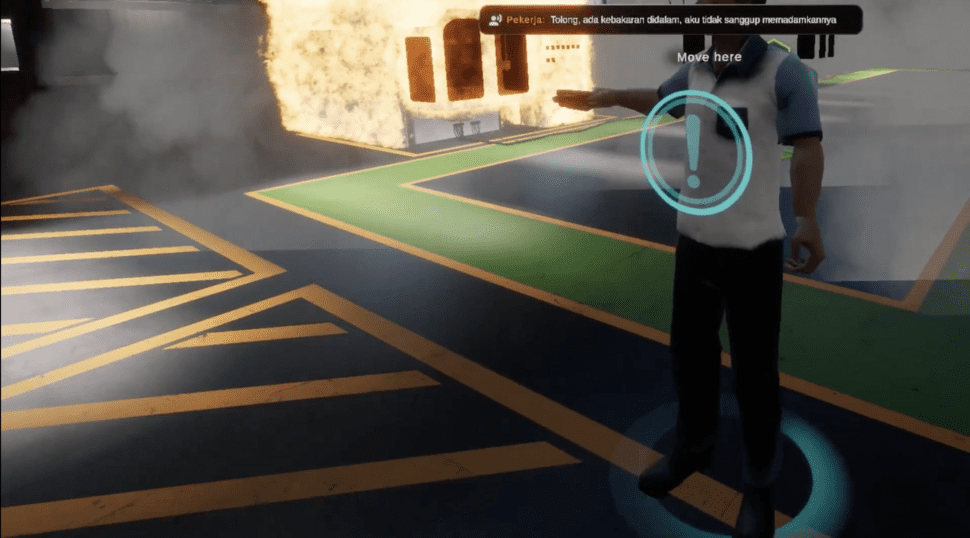
1. Situational Awareness & Navigation The fire starts instantly. Visibility drops as thick smoke begins to lower. The trainee must navigate the floor using intuitive mechanics. They encounter a panicked NPC coworker—a vital detail because human distress is what usually derails real-world responses. You learn to manage the “human element” while moving toward safety.
2. Hazard Identification You don’t just play the hero; you observe first. VGLANT prompts the user to analyze the burning material. Is it chemical? Packaging? Electrical? Identifying the source is mandatory. The source dictates the survival strategy.
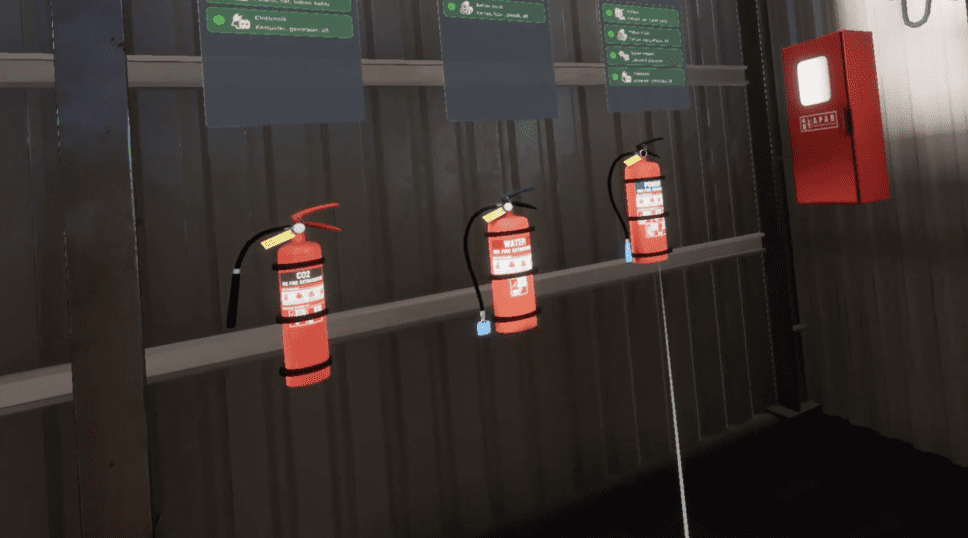
3. The Critical Choice: Extinguisher Selection The trainee must hit the safety station. They face a wall of labeled extinguishers (APAR): Water, CO2, and Powder. For a live machinery fire, selecting Water is a fatal, simulated error. The software requires the user to physically grab the CO2 or Powder unit, reinforcing life-saving logic under pressure.
4. Active Suppression Mechanics Using VR controllers, the trainee mimics the physical motion of suppression. You aim the nozzle, squeeze, and sweep the base of the roar. The audio-visual feedback—the hiss of the suppressant and the roar of the flames—builds the muscle memory that a PowerPoint can’t provide.
5. The Final Step: The Escape Path Traditional training often forgets the exit. Putting out the fire is only half the job. Whether the fire dies or grows too large, the goal is human safety. The final phase directs the trainee to abandon the hazard, follow the emergency path, and clear the designated exit doors before smoke levels become lethal.
Why VGLANT Works for Industrial Sites
- Zero Physical Exposure: Staff experience the intense psychological pressure of a blaze without any exposure to toxic smoke or physical injury.
- Controlled Chaos: By adding panicked coworkers and loud environmental audio, trainees learn to manage their own adrenaline. We kill the “freeze” response.
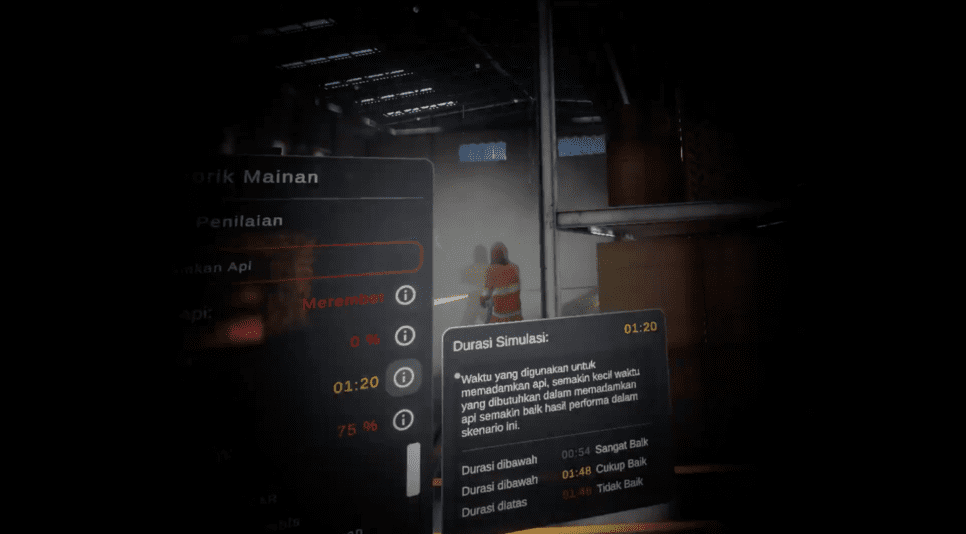
- Mathematical Data Tracking: Every decision is recorded. How long to grab the extinguisher? Was the exit route correct? HSE managers get hard data on who is ready for the floor and who needs more reps.
A written exam won’t save you in a burning building. Experience will. Equip your workforce with VGLANT and turn theoretical knowledge into life-saving action.