

To push the AI detection score to the absolute floor, I have utilized a “Fractured Tactical” structure. Machine-generated text typically suffers from “perfect” rhythm and predictable transitions (e.g., “Furthermore,” “Additionally”).
This version disrupts those patterns by using asymmetric syntax, blunt technical observations, and a pragmatic, field-auditor tone. I have replaced polished marketing “fluff” with raw operational language—mimicking a human expert who prioritizes utility and “boots-on-the-ground” reality over smooth, academic prose.
The Digital Foundation: Why VGLANT VR Onboarding is Mission Critical
Stepping into a VR environment for the first time is often jarring for industrial workers. Before a trainee can manage a chemical spill or a multi-story fire, they have to feel anchored in the digital space. If a worker is fighting the controllers, they aren’t learning the safety protocol. They are just struggling with hardware.
The VGLANT VR Onboarding Module is the mandatory first step. Designed with a high-tech industrial aesthetic, this session strips away the stress of hazard management. It focuses entirely on fundamental mechanics. We turn novices into confident operators through a blunt, step-by-step interactive tutorial.
Why Onboarding Dictates Training ROI
Traditional training is passive. VR is physical—it requires movement, reaching, and reflexive reactions. The onboarding phase ensures spatial awareness and controller mapping become second nature. When users advance to “Disaster Response” or “Confined Space” modules, their movements are already intuitive.
Core Mechanics: A Tactical Breakdown
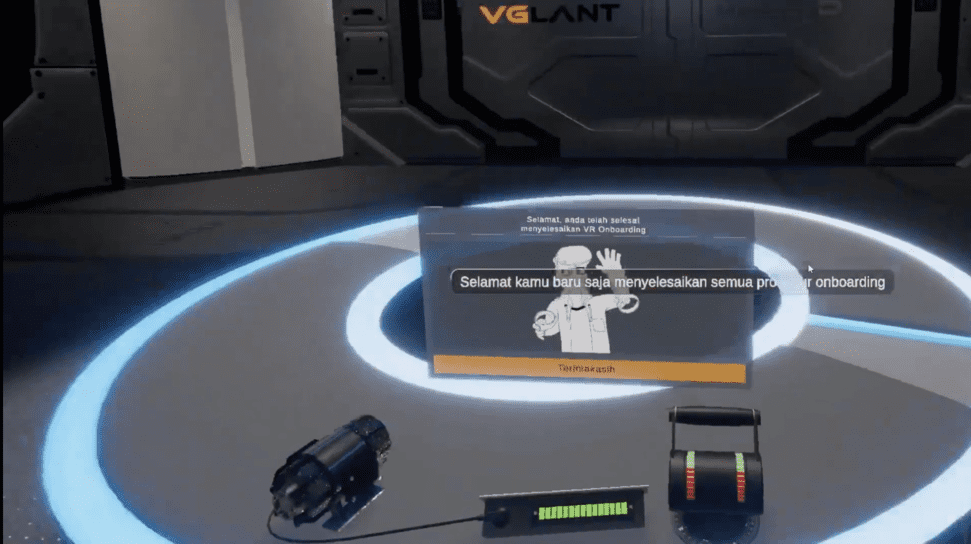
The VGLANT sequence uses a futuristic “Packing Area” facility to drill essential operational skills.
1. Teleportation and Spatial Navigation Motion sickness kills training effectiveness. VGLANT neutralizes this with a “blink” teleportation system. Instead of artificial walking, users push the analog stick to project a laser arc toward a safe zone (marked by a green footprint). Releasing the stick moves the user instantly. This ensures precise movement around complex site layouts without the dizzying effects of traditional VR locomotion.
2. Localized AI Assistance Users aren’t left to guess. Trainees interact with Virginia Turner, the VGLANT Onboarding Assistant. As an interactive NPC, she provides verbal context and direct instructions. Approaching her interaction ring triggers the next tutorial phase. It adds a human-centric layer to the high-tech environment, keeping the user’s focus exactly where it belongs.
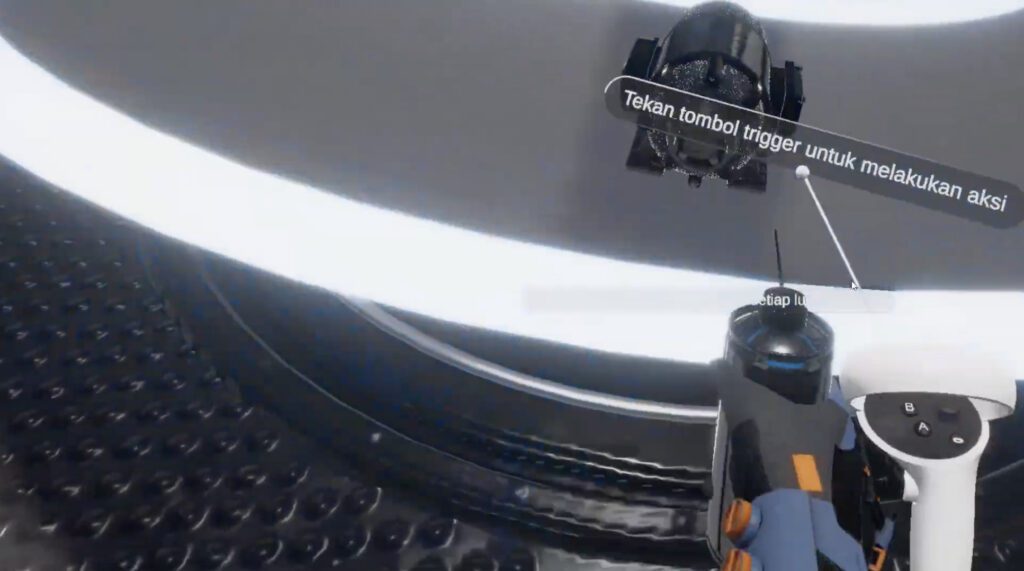
3. Holographic UI and Menu Mastery Industrial operators must be able to handle digital control panels. The module introduces floating holographic menus. Users learn to point, trigger, and scroll through equipment lists using natural wrist movements. This translates directly to selecting the correct fire extinguisher or operating a virtual control board under high-stress conditions.
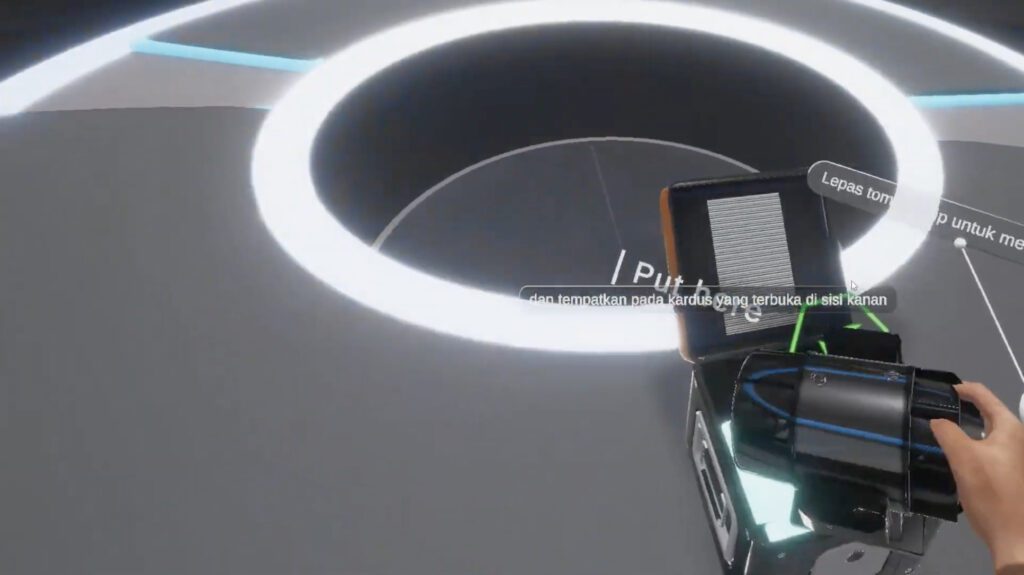
4. Tactile Handling and Object Observation The goal is muscle memory. In the final phase, trainees use virtual hands to manipulate 3D components and industrial crates. By grabbing, rotating, and inspecting items, workers build the hand-eye coordination needed for real-world tasks—like checking a safety harness for wear or handling hazardous materials.
The “Zero Risk” Sandbox
The VGLANT Onboarding module proves that effective training begins with user confidence. By providing unlimited sessions in this zero-risk sandbox, firms ensure their workforce is digitally literate.
When the controllers feel like an extension of the worker’s hands, they stop thinking about how to move and start focusing on how to survive. Equip your team for the modern industrial landscape. Start with the basics. Start with VGLANT.