

Generic safety training has a quiet credibility problem. A worker watches a video filmed in someone else’s facility, with someone else’s equipment, in a layout that looks nothing like the floor they’ll stand on tomorrow. The content might be technically correct. It just doesn’t feel like theirs — and training that doesn’t feel personal rarely changes behavior.
This is the gap that custom VR training solutions are built to close. Not a polished demo of a different factory, but your factory: your evacuation routes, your panel layout, your specific hazards, rebuilt inside a headset.
Why “close enough” isn’t close enough in an emergency
In a real emergency, people don’t perform a procedure from scratch. They run the version their environment has trained them to run. If every drill happened in a generic virtual warehouse, that’s the warehouse their instincts will reach for when the alarm sounds — and the mismatch with their actual surroundings costs them seconds they don’t have.
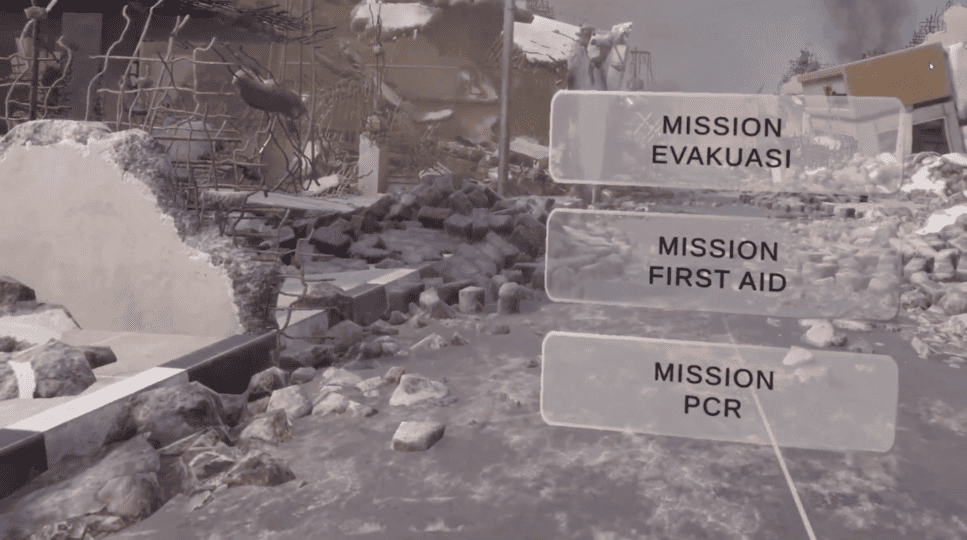
The detail that matters here is spatial. A worker who has rehearsed evacuating their building — turning left at the actual junction, finding the actual exit, accounting for the actual blind corner — carries a map that matches reality. Generic content can teach principles. Only a custom environment can teach the route.
How an SOP becomes a scenario
The starting point isn’t the technology. It’s the documents you already have. Your SOPs, your HIRADC, your evacuation plans, your incident history — these are the raw material. A good custom VR build translates them into something a worker can step inside.
The process generally moves through a few stages:
The first is capture. The provider studies your floor plan, equipment, and procedures — sometimes from drawings, sometimes from a site visit — to understand what the environment actually looks like and where the real risks sit.
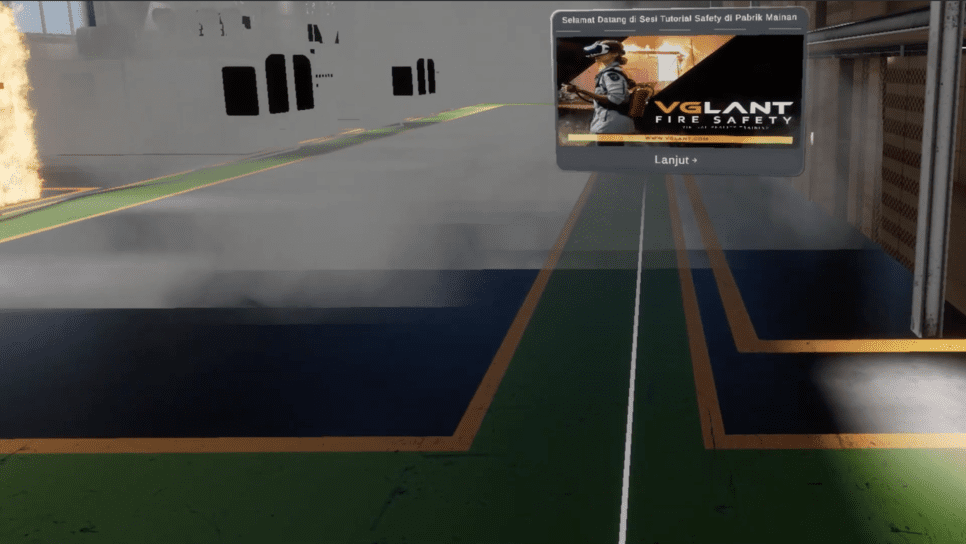
The second is reconstruction. The space is rebuilt as an interactive 3D environment that matches the real one closely enough that a worker recognizes it the moment they put the headset on. The mixing tank is where the mixing tank is. The fire panel is the model you actually own.
The third is scenario design. This is where your SOP stops being a document and becomes an experience. A procedure that reads as eight numbered steps on paper becomes eight decisions the worker has to make, in order, under time pressure, with consequences for getting them wrong.
The hazards only you have
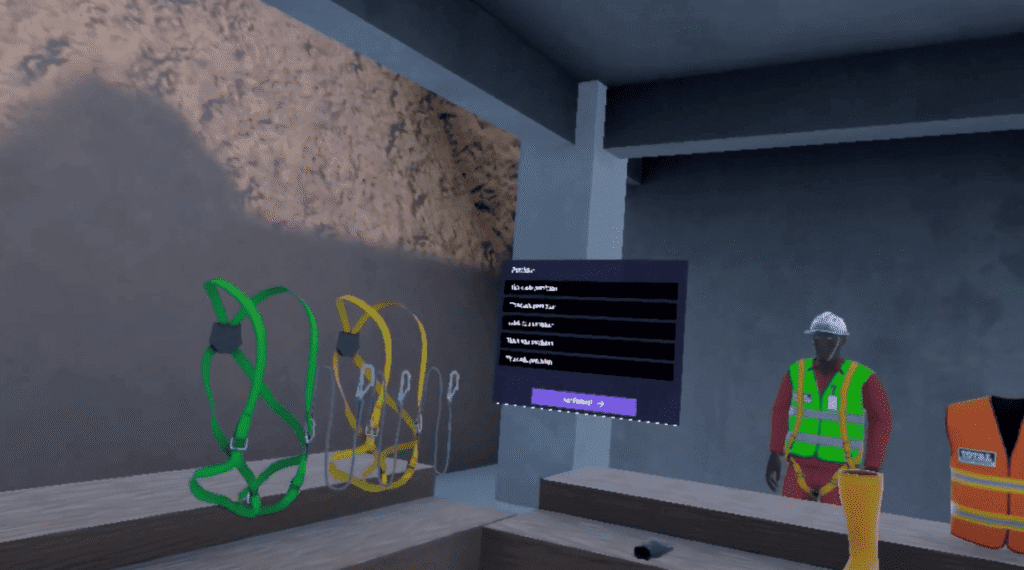
Every industrial site has risks that no off-the-shelf module will ever cover. A textile plant’s combustible-dust corners. An oil and gas facility’s confined-space entries. A specific chemical stored in a specific room with a specific incompatibility. Generic training treats these as edge cases. For your team, they’re the main event.
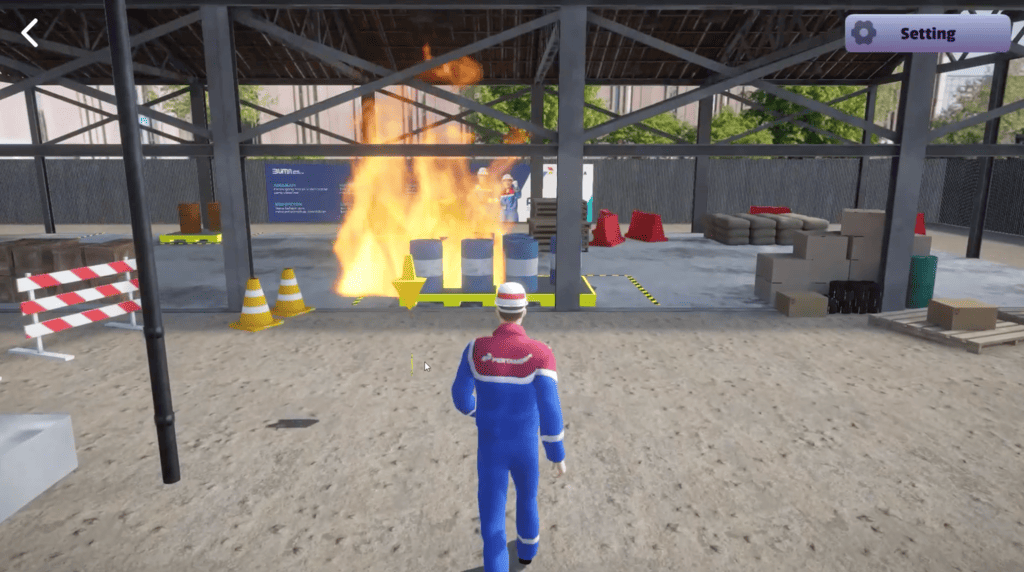
Custom VR is the only format that can rehearse them honestly. You can’t run a live drill for a real chemical fire in an occupied building, and a stock video won’t show your exact configuration. A purpose-built simulation can put a worker in front of precisely that scenario, as many times as it takes, with no risk to anyone.
This is also what makes custom training a genuine safety-culture tool rather than a compliance checkbox. When workers see their own environment rendered faithfully — recognizing the room, the equipment, the layout — the training stops being something done to them and starts being about their workplace. That shift in ownership is worth more than any single scenario.
Is custom always the right call?
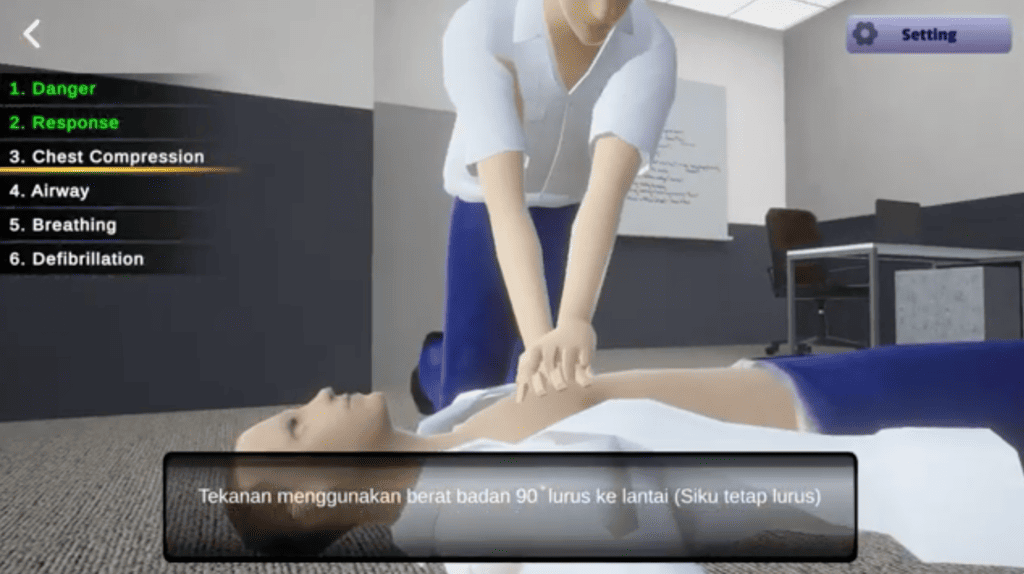
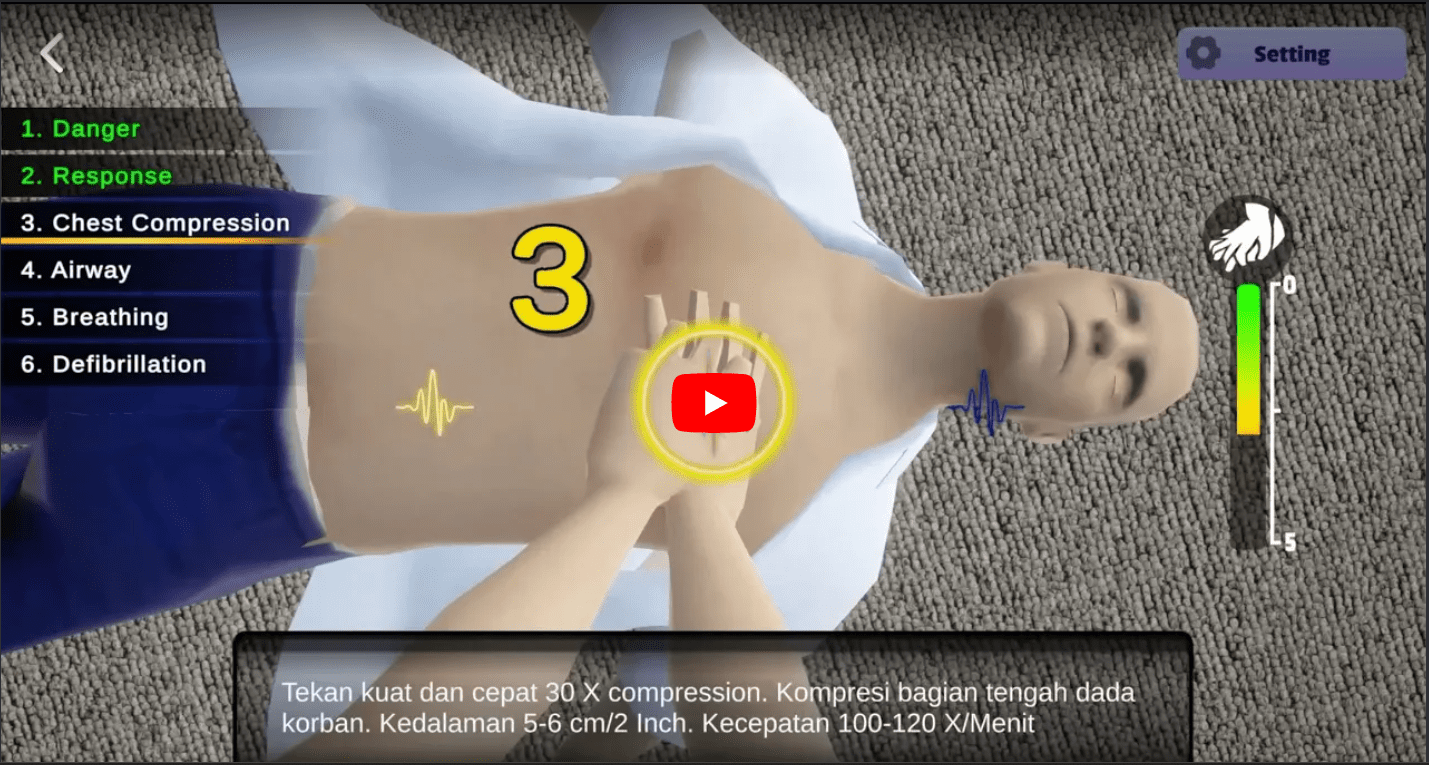
Honesty matters here. Custom isn’t automatically better for everything. For universal skills — basic CPR, the fundamentals of extinguisher handling, general fire-class recognition — a well-made standard module is efficient and entirely adequate. There’s no reason to rebuild the universe to teach someone how a powder extinguisher works.
Custom earns its cost when the environment is the hazard: when the layout, the specific equipment, or a site-unique risk is the thing workers most need to internalize. The smart programs blend both — standard modules for the universal skills, custom builds for the risks that only exist on your floor.
The test is simple. Ask whether a worker trained on generic content would recognize their own workplace in a crisis. If the honest answer is no, that’s where custom VR earns its place.