


Here’s an uncomfortable question for any HSE manager: if a fire broke out six months after your last annual training, how many of your workers would actually remember the right sequence under pressure?
Most safety programs are built on an annual rhythm. One day a year, the team gathers, runs a drill, signs the attendance sheet, and goes back to work. The certificate is valid for twelve months, so the assumption is that the skill is too. It isn’t.
The skill-decay curve nobody plans around
Human skill retention follows a predictable downward slope. Knowledge taught once and never revisited fades fast — and the more a skill depends on physical performance under stress, the faster it goes. CPR is the textbook case. Studies on resuscitation skills consistently show measurable decline within months of certification, long before the annual refresher comes around. Fire response is no different. The steps feel obvious in the classroom and evaporate when the alarm is real.
The standard program doesn’t fail because the training is bad. It fails because of spacing. One intense day a year is the worst possible schedule for retention. The brain treats a single exposure as unimportant and discards it. What actually holds a skill in place is the opposite pattern — short, repeated exposures spread across time.
The problem has always been logistics. You can’t realistically pull a crew off the line every month to refill extinguishers and stage a live drill. So companies settle for once a year, knowing it’s not ideal, because the alternative is unaffordable.
Where VR breaks the trade-off
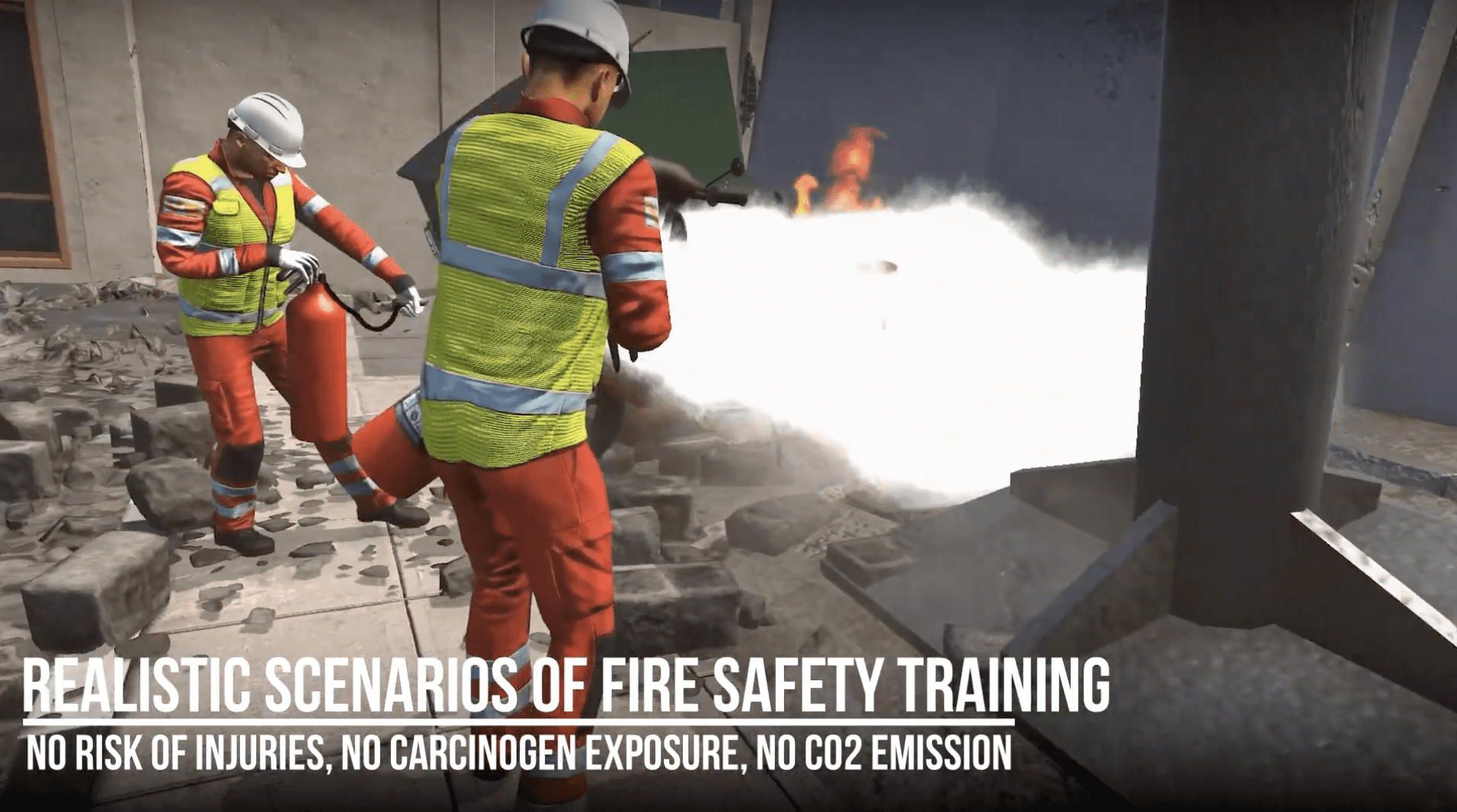
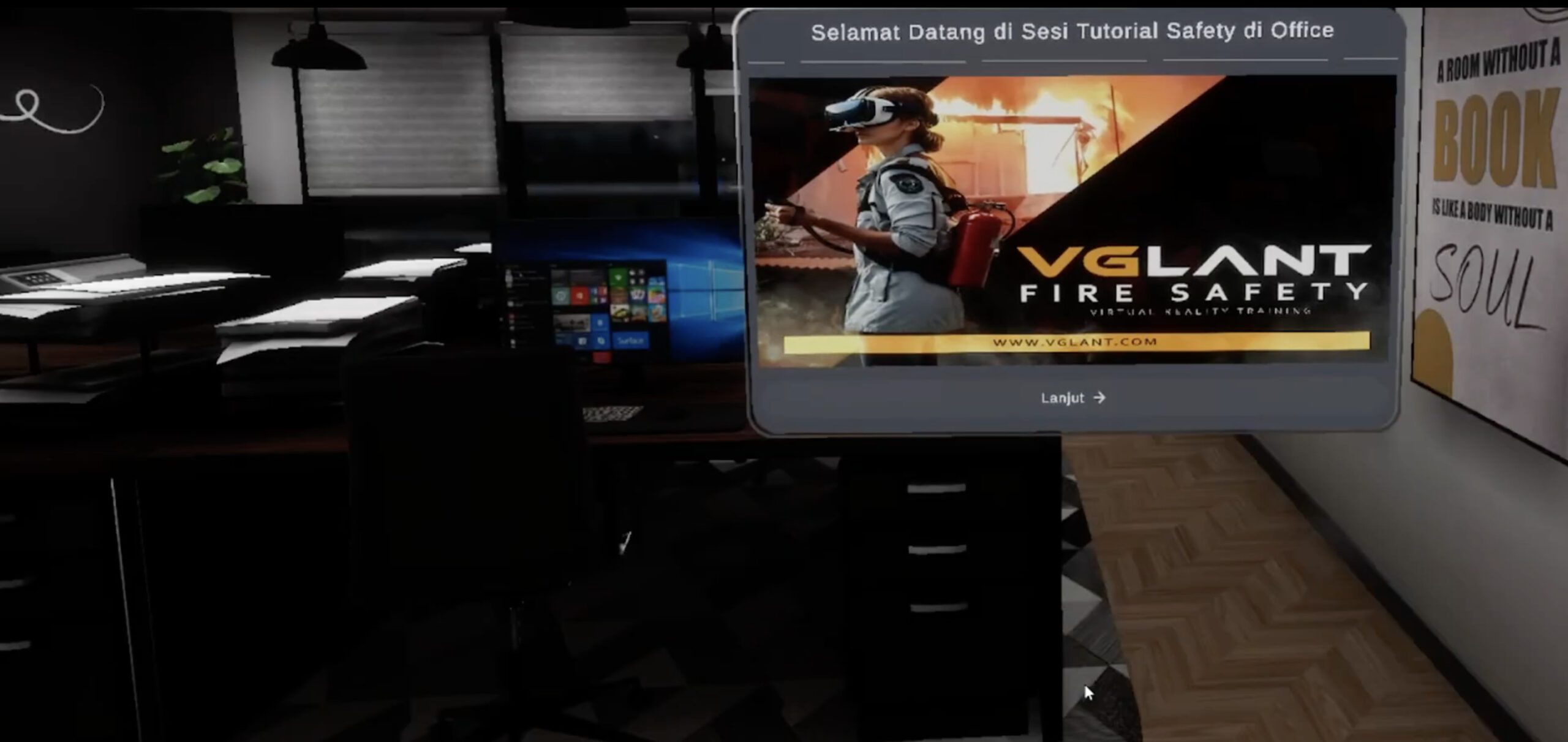
This is the specific constraint VR safety training removes. A headset doesn’t need a venue, a fire marshal, consumable extinguishers, or a halted production line. A worker can run a fifteen-minute scenario at the start of a shift, during a quiet hour, or in a corner of the break room. The cost of the eleventh session is the same as the first — essentially nothing.
That changes what’s possible. Instead of one annual marathon, you can run brief, spaced refreshers throughout the year, hitting the skill again right around the point where it would otherwise start to fade. The science calls this spaced repetition. On the floor, it just means your team stays sharp instead of sliding back to baseline between certifications.
Repetition without boredom
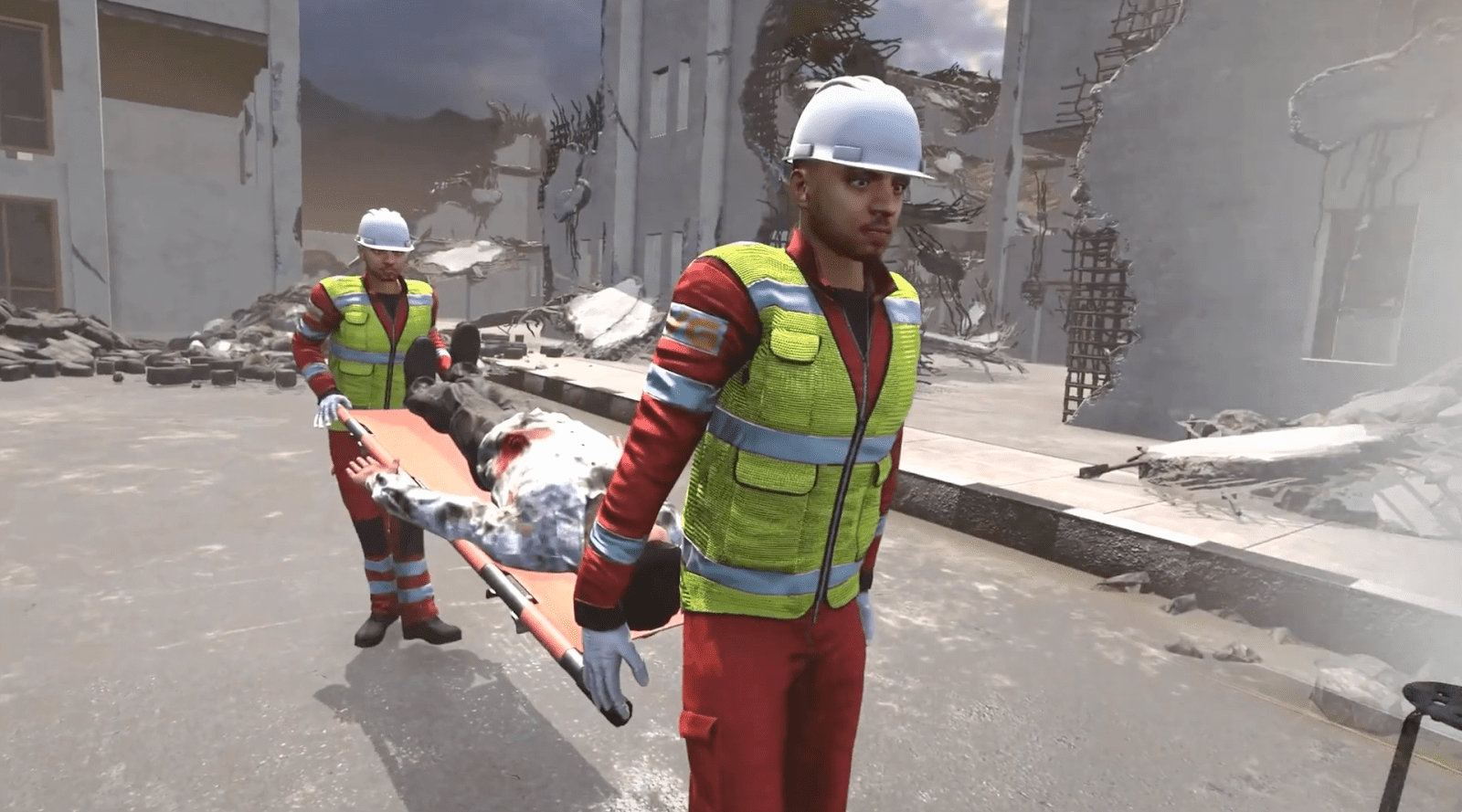
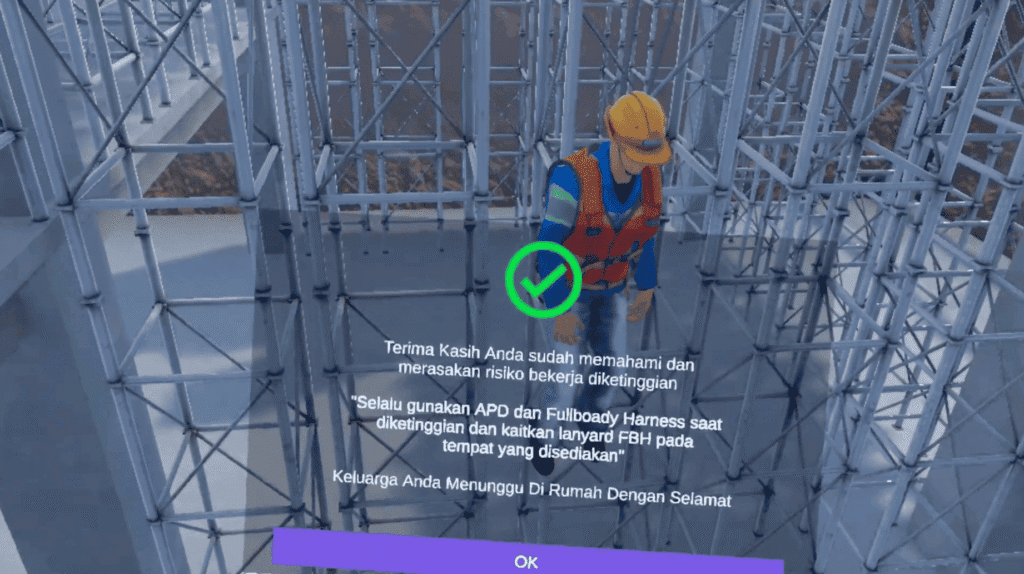
There’s a second reason this works better than it sounds. Repeating a slide deck four times a year would be torture, and nobody would absorb anything by the third round. Repeating a VR scenario isn’t the same experience. The simulation can vary the conditions — a different fire class, a blocked exit that wasn’t there last time, a victim in a new position — so the worker is solving a fresh problem each session rather than re-watching a known one.
That variation is what builds genuine adaptability instead of a memorized routine. A worker who has handled the same fire ten different ways has something far more useful than a worker who watched the same video ten times: they’ve learned to read the situation, not recite the answer.
What this looks like as a program
For an HSE team, the shift is from event to habit. Annual training becomes a baseline, and VR fills the eleven months in between:
- A short onboarding-level session when a worker first joins.
- Brief, scenario-varied refreshers every one to three months.
- A focus on the skills that decay fastest — CPR, extinguisher handling, evacuation decision-making.
- Tracked performance over time, so you can see decay starting before an incident exposes it.
The last line is the one that earns its place in a management review. Annual training gives you a yes/no record: trained or not trained. Spaced VR gives you a trend line. You can watch a worker’s response time and accuracy across sessions and catch the slide while it’s still a number on a dashboard, not a casualty.
Annual training was never the enemy
None of this means scrapping your yearly program. The annual drill still anchors the schedule, satisfies compliance, and brings the team together. The argument is narrower and harder to dismiss: a skill trained once a year is a skill you’re hoping survives on luck. VR makes the cost of not relying on luck low enough that there’s no longer a good reason to.
The fire doesn’t check your training calendar before it starts. The only honest defense is a team that practiced recently — and “recently” is exactly what annual training can’t deliver and short VR sessions can.