

A substantial portion of fall fatalities in Indonesian construction don’t happen at the work position. They happen during access — on the way up to the work, or on the way back down. The worker is climbing a vertical ladder to reach the next pour level. He’s carrying a tool. His hand slips on a wet rung. Or he reaches up to grab the next rung and his foot misses the rung below. The fall happens in the access phase, not during the work itself.
Vertical ladder ascent is the unglamorous side of work at height. It gets less attention than the work position itself, despite producing a meaningful share of the incidents. The training that addresses it is sometimes a single slide in the classroom session. Three points of contact. Don’t carry loose items. Use a fall arrester on fixed ladders above the threshold height.
This article looks at how VR working at height training drills vertical ladder ascent for Indonesian construction workers, what scenarios work well, and how it fits within Permenaker No. 9 Tahun 2016.
Why ladder falls happen during access, not work
Three patterns recur in incident investigations.
The first is the loss of three-point contact during ascent. The worker is climbing. He needs to reposition something — adjust a tool belt, wipe sweat, scratch an itch, answer a radio. He releases one hand. At the same moment, his foot shifts on a rung. With only two contact points active, a single slip results in a fall.
The second is fatigue at height. A worker climbing thirty meters vertically is doing meaningful physical work. By the time he reaches the top, grip strength has degraded. Forearm fatigue is significant. The last few rungs are where the grip discipline tends to slip — not because the worker doesn’t know better, but because the muscle has run out.
The third is the gap during transition. The worker reaches the top of the ladder. He needs to step off onto the platform, dock, or work surface. The moment of transition — when his weight shifts from the ladder to the platform — is when many falls happen. If the platform edge is not protected, or the worker doesn’t have a separate anchor connection ready for the work position, the transition becomes the failure point.
Classroom training mentions these patterns. It doesn’t drill them, because the classroom doesn’t have a ladder and even if it did, drilling a near-fall under realistic conditions is unsafe.
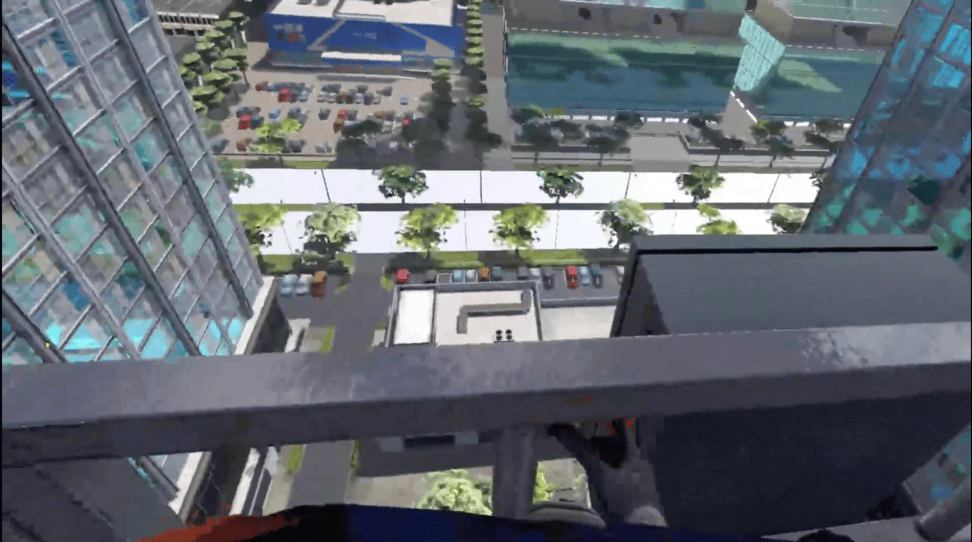
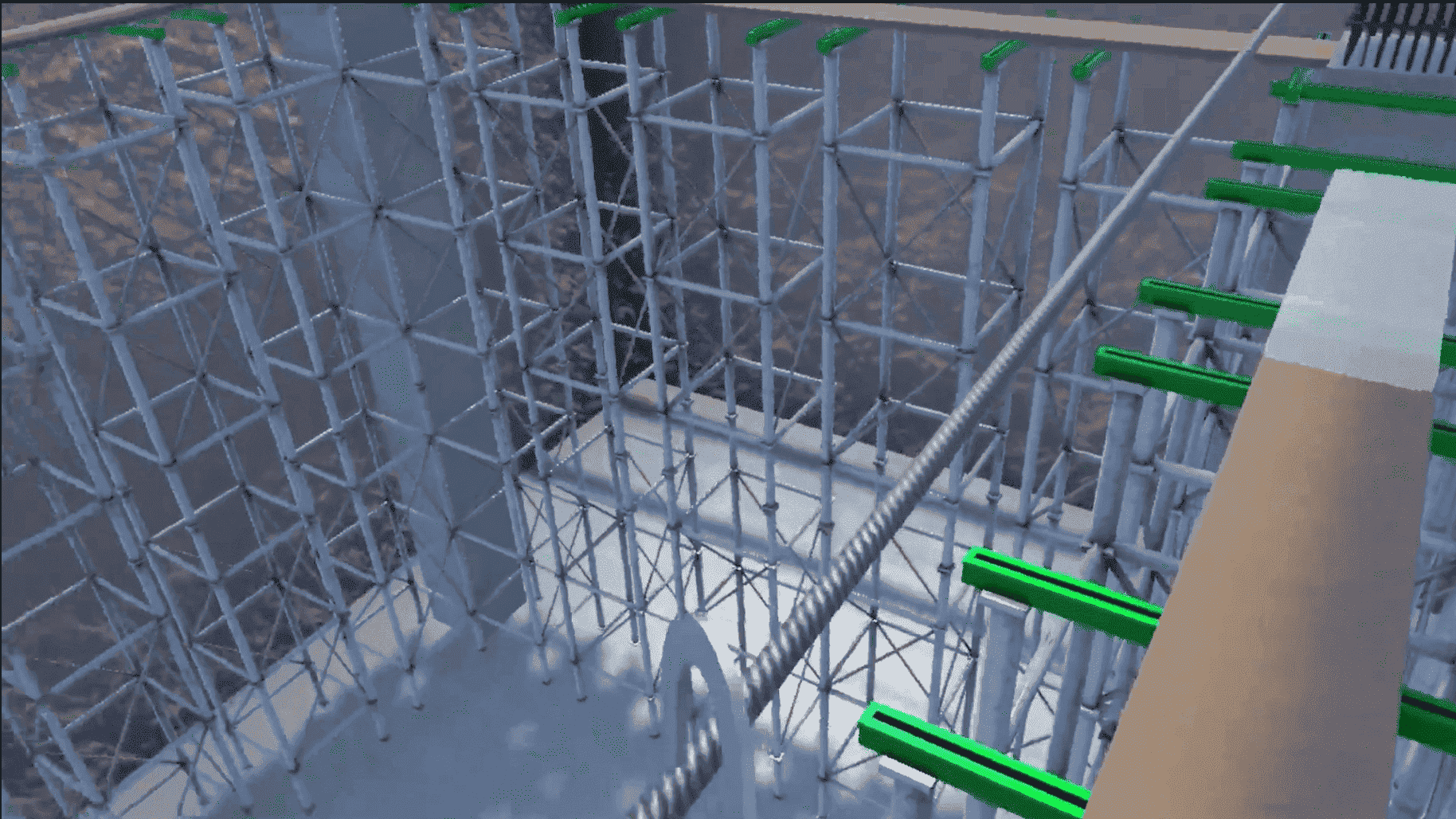
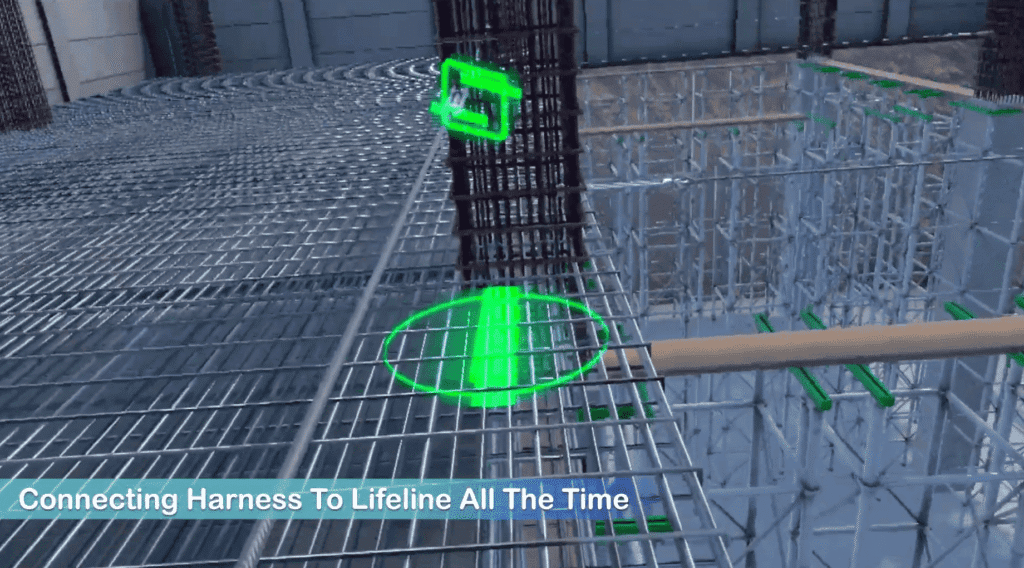
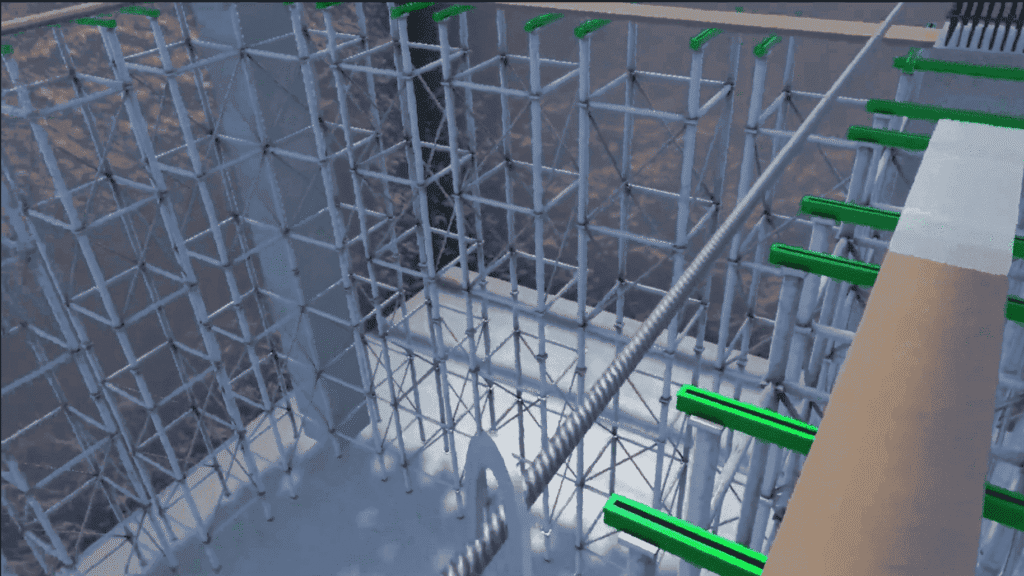
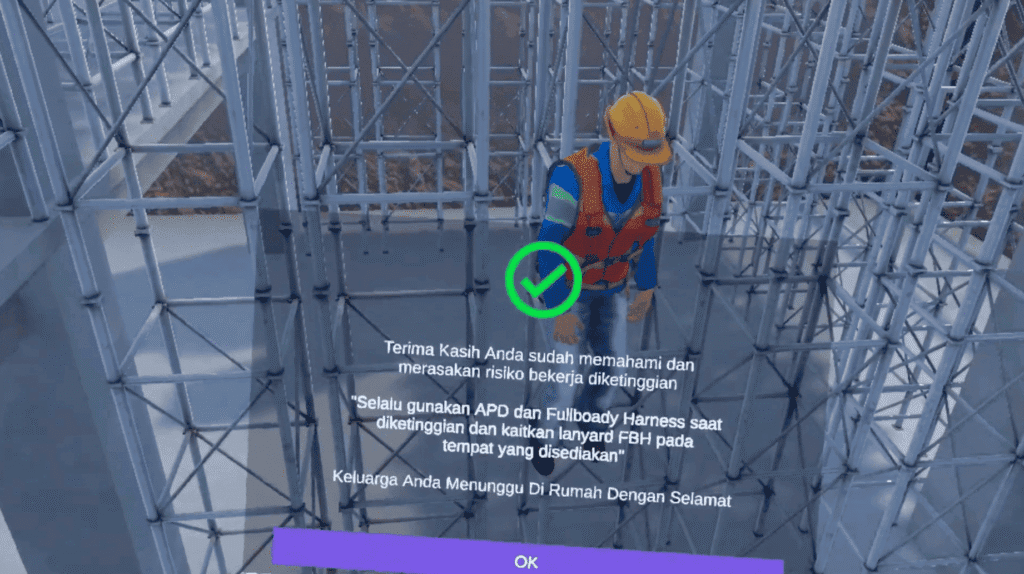
VR can do this. The simulated environment can put a worker on a thirty-meter vertical ladder. It can simulate the fatigue indirectly by lengthening the climb. It can test the three-point contact discipline by introducing scenarios that tempt the worker to release a hand. The wrong-action consequences are visualized in a controlled way that reinforces the discipline without exposing anyone to actual risk.
Regulatory frame for ladder ascent in Indonesia
Permenaker No. 9 Tahun 2016 covers work at height broadly, including access systems. Fixed ladders, portable ladders, and step ladders are all addressed. For fixed vertical ladders above a certain height threshold, fall arrest systems are required — typically a vertical lifeline with a fall arrester, or a cage with rest platforms at specified intervals.
Permenaker No. 1 Tahun 1980 (K3 Konstruksi Bangunan) covers construction work environments and includes safe access provisions.
SNI references provide the technical specifications. SNI 7397:2008 covers fall protection tali pengaman. Ladder construction standards apply for both fixed and portable equipment.
In practice, the worker is responsible for:
- Using the appropriate ladder for the work (not a step ladder for vertical access, not a portable ladder beyond its design height)
- Inspecting the ladder before use
- Maintaining three points of contact during ascent and descent
- Carrying tools and materials by tool belt, bucket, or hoist rather than by hand
- Using the vertical lifeline and fall arrester where provided
- Maintaining anchor connection during the transition from ladder to platform
The regulations and standards specify these obligations. The classroom training covers them at the awareness level. VR is where the cognitive habit gets built.
Ladder ascent scenarios that work in VR
The scenarios most worth running cover the failure patterns that physical training cannot drill safely.
Three-point contact discipline. The trainee climbs a simulated vertical ladder. During the climb, the scenario introduces interruptions — a radio call, a tool that needs adjustment, an itch on the face. The trainee has to either complete the action while maintaining three-point contact (which means either pausing at a stable position or finding a way to act with one hand without releasing the other points), or recognize that the action should wait until the climb is complete. Each choice has a tracked outcome.
Grip transition at the top. The trainee reaches the platform level. The scenario tests the transition sequence — establishing the next anchor connection before stepping off the ladder, ensuring the platform edge is appropriate to step onto, maintaining hand contact with the ladder until the body weight has fully shifted. The wrong sequence triggers a controlled visual of the fall.
Vertical lifeline use. The trainee is climbing a ladder equipped with a vertical lifeline and personal fall arrester. The scenario tests the proper engagement of the arrester at the bottom, the smooth tracking of the device during ascent, and disengagement at the top. The arrester locking up during a controlled scenario fall demonstrates the protection working as designed.
Carrying loads on the ladder. The trainee is asked to bring a small tool up to the work position. The wrong solution is to hold the tool in one hand and climb with the other; the right solution is to use a tool belt or hoist the tool separately. The scenario presents the wrong path, lets the trainee make the wrong choice, and shows the outcome.
Wet rung conditions. The simulated ladder is damp from rain. The grip behavior changes. The scenario drills slower ascent, hand placement away from accumulated water, and recognition that some weather conditions warrant postponing access entirely.
Fatigue at height. A long ascent — thirty meters or more in simulated height — is rendered such that the climb time and the visual perception of distance build cognitive pressure. The trainee learns to rest at platforms where they exist, to use the lifeline correctly throughout, and to recognize the failure point where grip discipline tends to slip.
Wrong equipment selection. The trainee is presented with multiple ladder options and has to select the right one for the work. A step ladder is not for vertical access beyond its design. A portable extension ladder has limits. The scenario drills the selection step rather than letting it default.
What the data from ladder ascent sessions provides
Each scenario generates measurable output. For ladder ascent specifically, the data points that matter:
Three-point contact compliance. The percentage of the ascent where three contact points were maintained. Tracked across the workforce, this metric reveals which workers consistently keep the discipline and which lose it under pressure.
Vertical lifeline engagement. Whether the trainee correctly engaged the fall arrester at the bottom and maintained the connection throughout.
Transition sequence at top. Whether the trainee established the next anchor connection before stepping off the ladder.
Wrong-action incidents. The frequency with which the trainee chose to carry tools by hand, climb on a wet ladder without adjusting technique, or accept inappropriate equipment for the work.
Time to recognize an unsafe situation. In scenarios where conditions degrade (weather change, equipment defect introduced mid-scenario), the interval between the change and the trainee responding.
For a contractor with workers regularly accessing height via fixed ladders, this data lets the HSE team distinguish between workers who internalize the discipline and workers who need targeted refresher before the next high-risk assignment.
Where physical training still belongs
Initial certification for work at height under Permenaker 9/2016 — particularly for Tenaga Kerja Bangunan Tinggi 1 and 2 — remains the regulatory baseline. VR is not an accreditation path.
Physical practice on actual ladders, with actual vertical lifeline equipment, retains value. The muscle memory for hand placement and foot positioning on real rungs is something controllers approximate but don’t fully replicate. The weight of an actual harness while climbing also factors in.
Site-specific inspection of the actual ladders, lifelines, and transition points workers will use remains separate. Every site has its own equipment, its own configurations, its own wear patterns. VR scenarios are generic; site walkdowns are not.
Rescue practice — the procedure for retrieving a worker who has fallen on the vertical lifeline and is suspended — continues to require physical practice with the actual rescue equipment. Suspension trauma sets in within minutes; the rescue capability must be drilled physically.
VR fits between these. More frequent than the annual K3 refresher. Wider variation in scenarios than physical practice can arrange safely. Better cognitive realism than the classroom version of three-point contact discussion.
VGLANT ladder ascent modules
VGLANT, built by PT Virtu Digital Kusuma, includes vertical ladder ascent as part of its working at height training catalog. Scenarios cover three-point contact discipline, vertical lifeline engagement, the transition sequence at the top of the ladder, load carrying limitations, wet condition adjustment, fatigue at height, and equipment selection.
The protocols align with Permenaker 9/2016 for work at height and Permenaker 1/1980 for construction K3 contexts. Where customization is scoped for a specific contractor — including modeling the contractor’s typical ladder configurations and the access patterns on their actual project types — the scenarios can be matched to the operational context.
Hardware runs on standalone Meta Quest headsets in the IDR 7 to 25 million range per unit. Content is licensed annually, per-seat or per-site. The same hardware extends across the broader VGLANT K3 catalog — fire safety, confined space, first aid, hazardous material response.
For pilot scoping or rollout planning, contact enquiry@vglant.com or +62 818 0755 5538.