

Workplace fires don’t happen with a polite warning. When a spark ignites in a crowded office, the gap between a minor incident and a total disaster is measured in a few seconds of raw decision-making. Yet, traditional safety training often leaves staff underprepared. Most rely on passive lectures or outdoor drills that fail to replicate the panic and physical constraints of a real indoor emergency.
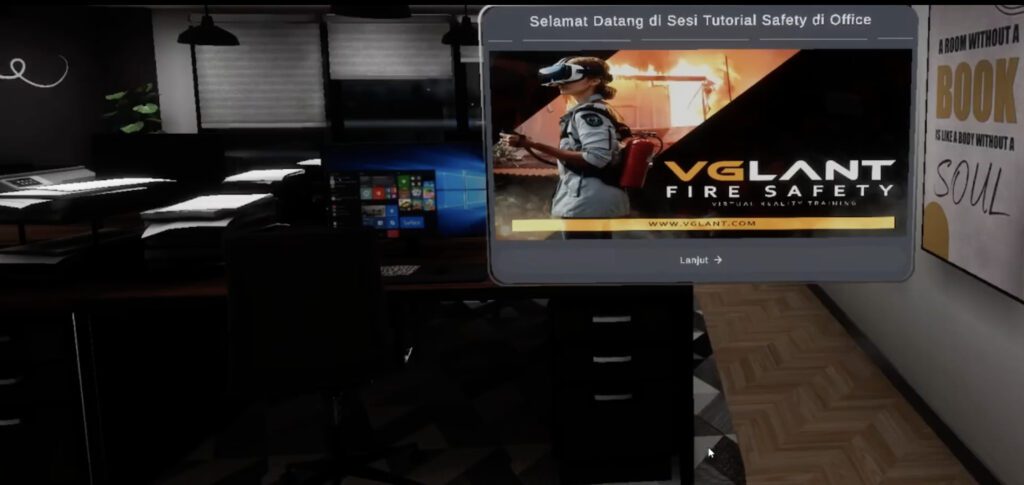
VGLANT VR Fire Safety changes the stakes.
Designed for absolute immersion with zero physical risk, this simulation drops users into a high-fidelity, interactive office environment. By moving from passive listening to active responding, VGLANT builds the genuine muscle memory and measurable compliance that textbooks can’t touch.
Module Deep-Dive: The Office Electrical Fire
This scenario targets one of the most common corporate hazards: an electrical fire starting from standard equipment. Trainees must navigate the room, identify the fire class, select the right fire extinguisher (APAR), and neutralize the threat before the smoke floor rises.
Target Audience:
- Corporate staff and office employees
- HSE Managers and facility teams
- Emergency Response Teams (ERT)
The Training Sequence: A Tactical Walkthrough
VGLANT is built on a progressive learning curve. It ensures trainees understand not just the how, but the why of the protocol.
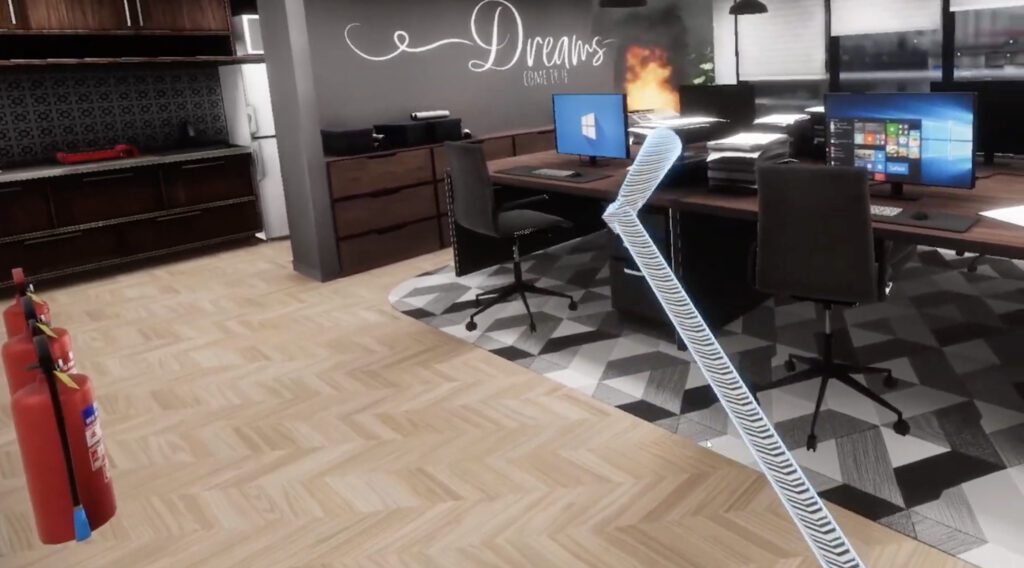
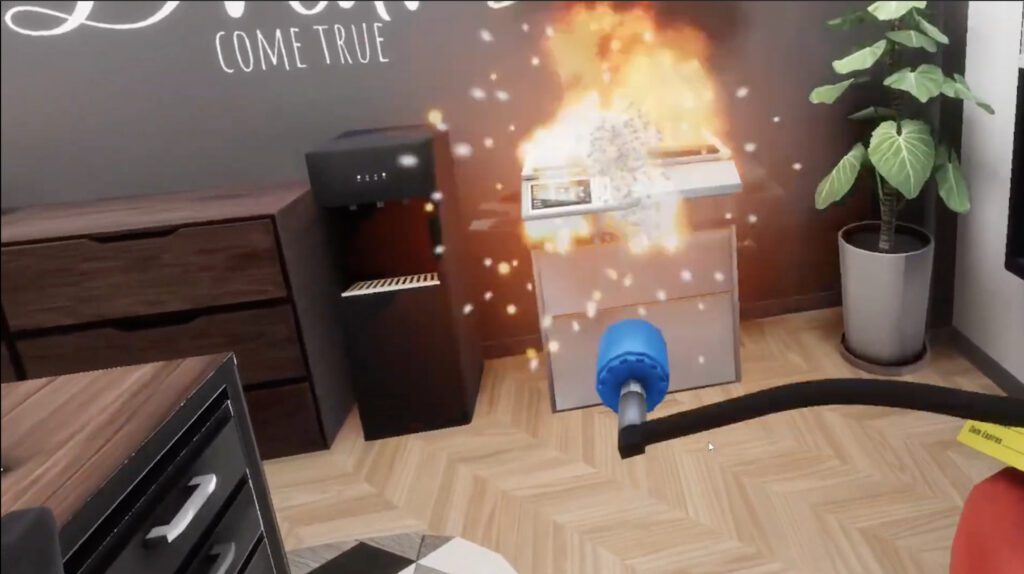
1. Detection and Urgent Response Upon entering the VR space, the user starts in a standard modern office. Suddenly, a multi-function printer catches fire. The environment shifts immediately—flames spread, and thick smoke billows, creating a high-stress psychological urgency that demands action.
2. The Extinguisher Wall: Logic Under Pressure Most training just hands you a tool. VGLANT forces you to choose. The user must navigate to the safety station and evaluate the options:
- Powder: Multi-purpose (solids, liquids, electrical).
- Water: High danger for electrical fires.
- CO2: The ideal choice for electronics.
The trainee must physically select the CO2 unit. Picking water triggers a dangerous, simulated consequence, teaching the lesson through experience rather than a lecture.
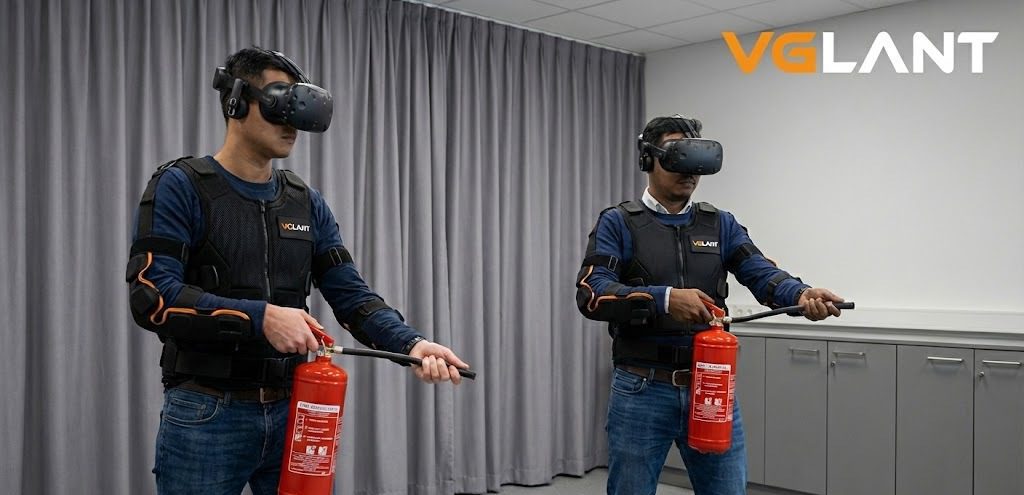
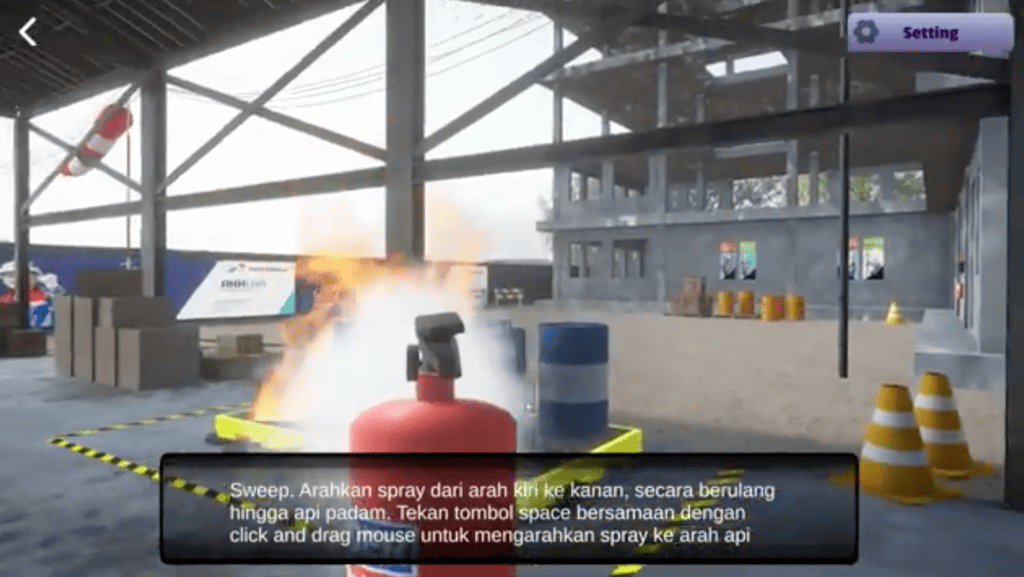
3. Execution and Feedback Using VR controllers, the trainee mimics the physical actions of the job. They pull the pin, approach the fire, aim at the base, and sweep. The simulation provides instant feedback. Aim too high or act too slowly, and the room fills with blinding smoke.
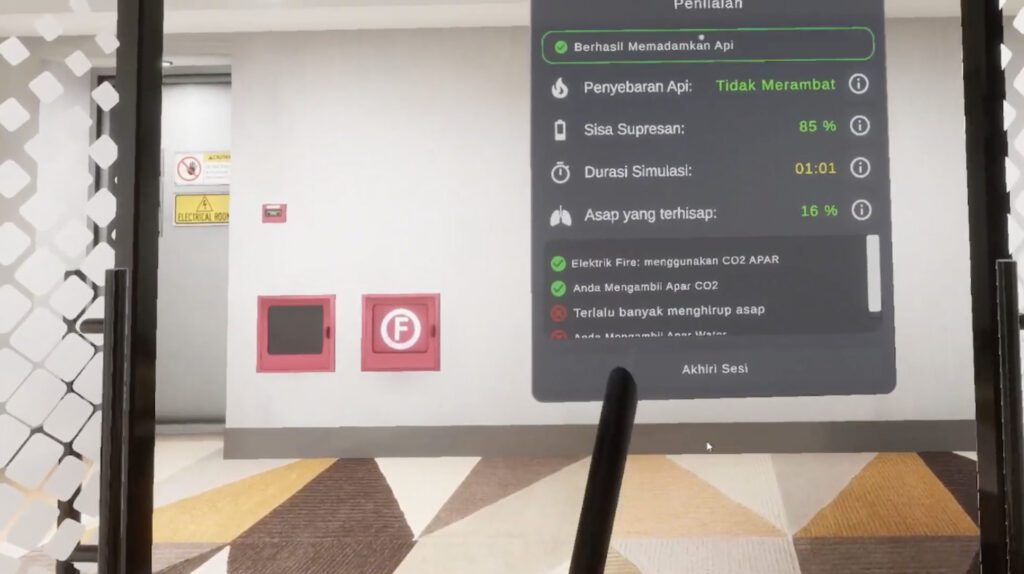
4. The Data-Driven Audit Once the fire is out, the simulation provides a granular assessment via the VGLANT dashboard. The system tracks micro-metrics that manual training misses:
- Success Rate: Was the fire contained or did it spread?
- Efficiency: How much suppressant was wasted?
- Health Impact: A calculation of smoke inhaled during the response.
- Procedural Accuracy: Did the user stand too close? Was the response time within safety limits?
The VGLANT Edge
- Zero-Risk Exposure: Experience the stress of a blaze and heavy smoke with no actual danger or property damage.
- Muscle Memory: Physically mimicking the grab-aim-sweep motion ensures the body remembers the protocol in a real crisis.
- Tracked Results: Administrators move from “guessing” to “knowing.” The dashboard provides hard data on workforce readiness and procedural compliance.
Stop relying on theory to save lives. Train for the reality of the emergency with VGLANT.