


Deploying Virtual Reality (VR) for First Aid isn’t as simple as handing out hardware. Unlike a PowerPoint presentation, VR is a physical event. It requires space, hygiene management, and data integration. If these logistics are ignored, your expensive new technology will gather dust in a cabinet.
Here are the five critical pillars you must establish before your first employee puts on a headset.
1. The Physical Safe Zone (The 6×6 Rule)
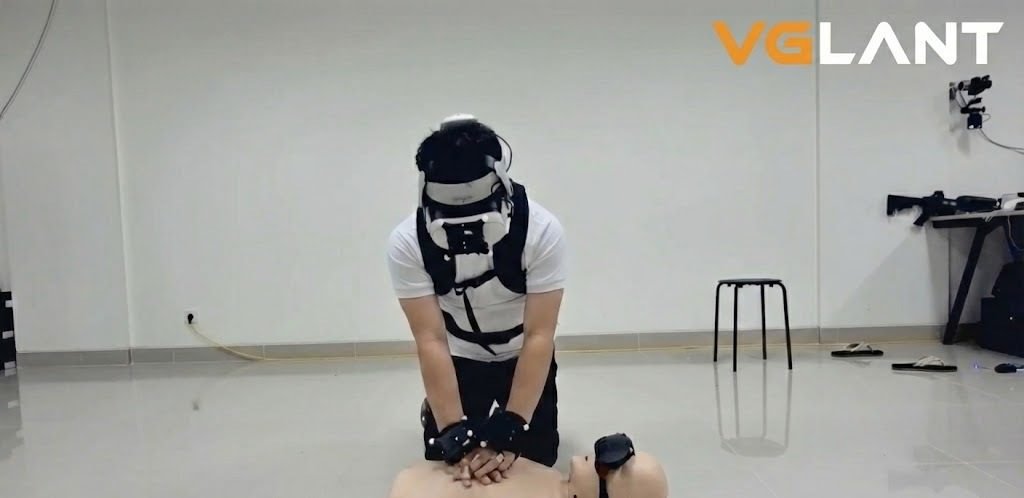
First Aid training is active. Trainees will be kneeling to perform CPR, reaching for virtual AEDs, and turning 360 degrees to assess the scene. You cannot run this training in a cramped cubicle or a cluttered breakroom.
The Requirement: Designate a “Safe Zone” of at least 6×6 feet (2×2 meters) per active user.
This area must be free of tripping hazards like cables, chairs, or uneven flooring. We recommend using a textured floor mat (anti-fatigue mat). This provides tactile feedback to the user—if their feet feel the mat, they know they are safe. If they step off, they know they have drifted out of bounds.
2. The “Clean Tech” Hygiene Protocol
The fastest way to kill a VR program is for an employee to put on a headset that is damp with the previous user’s sweat. In a post-COVID world, hygiene is not optional; it is the primary barrier to entry.
The Requirement: Establish a strict “Clean In, Clean Out” protocol.
- Silicone Covers: Replace the standard foam facial interfaces with medical-grade silicone that can be wiped down.
- UVC Sanitizers: Consider investing in a UVC cleaning box for deep sterilization between shifts.
- Disposable Masks: Offer disposable VR eye masks for employees who are particularly germ-sensitive. Make the cleaning supplies visible. If employees see you cleaning it, they will trust the tech.
3. LMS Integration (The Data Pipeline)
Vglant generates rich telemetry data: compression depth, reaction time, and procedure accuracy. But where does that data go? If you plan to manually transcribe scores into an Excel sheet, you are creating an administrative bottleneck.
The Requirement: Before rollout, connect your IT department with our integration specialists. Ensure your Learning Management System (LMS) is ready to receive xAPI or SCORM data packets.
Test the pipeline. When a user completes the module, their “Pass/Fail” status should appear in their HR record automatically. This turns VR from a “cool experiment” into a verifiable compliance tool.
4. The “VR Champion” (Facilitator)
Technology rarely fails; implementation does. Do not leave the VR station unmanned, expecting employees to figure it out self-service style. Some users will need help adjusting the strap. Others might experience mild disorientation.
The Requirement: Appoint and train a “VR Champion” or Facilitator. This person isn’t just an IT support role; they are a coach. They guide the user through the menu, help with the fit, and provide the “human” debrief after the simulation. A calm, knowledgeable facilitator drastically reduces user anxiety and tech resistance.
5. Internal Communication (Managing Expectations)
If you drop VR on your team without context, they might view it as a “video game” or a gimmick. You need to control the narrative.
The Requirement: Launch an internal campaign one week prior.
- The “Why”: Explain that this isn’t about gaming; it’s about building muscle memory that saves lives.
- The “How”: Reassure them that the training is short (15-20 minutes) and user-friendly.
- The Schedule: Use a booking system. VR creates high throughput, but you don’t want a line of 10 people standing around waiting. Scheduled slots respect their operational time.
Conclusion: Preparation Equals Adoption
The magic of VR happens inside the headset, but the success of the program happens outside of it. By preparing your space, your hygiene protocols, and your data systems, you ensure a rollout that is smooth, professional, and impactful.