

There is a frustrating statistic in the world of emergency training: The Ebbinghaus Forgetting Curve.
Studies show that adults forget roughly 70% of new information within 24 hours if it is not reinforced. In the context of First Aid, this is dangerous. A certification card in a wallet does not guarantee that an employee remembers how to stop a bleed six months later.
Traditional training tries to fix this with “recertification” every two years. That is too long. The brain deletes the data long before the certificate expires.
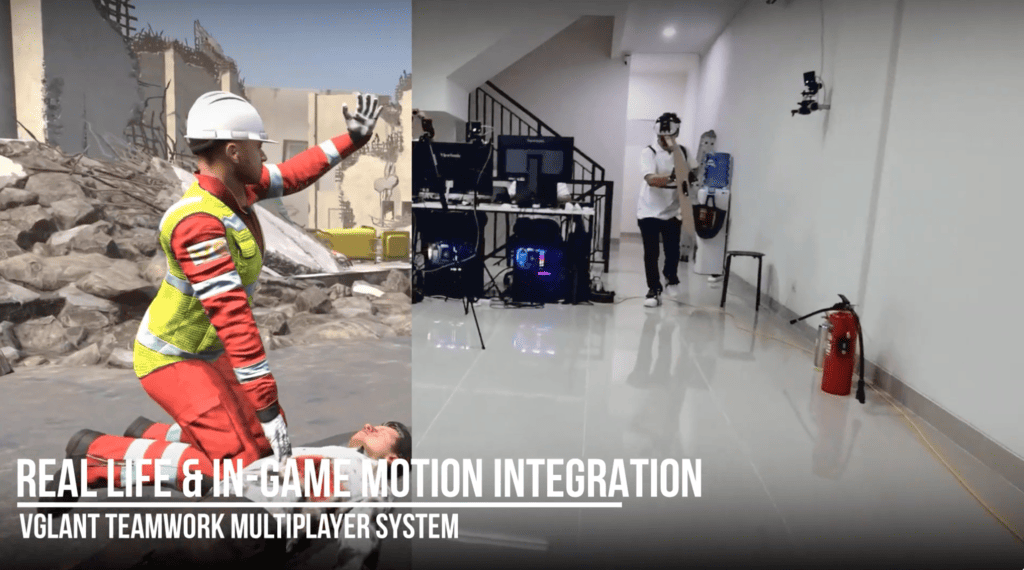
Vglant solves this with Micro-Dosed VR Training. Instead of one long day in a classroom, we advocate for three short (15-minute) VR sessions spaced out over time. This triggers Spaced Repetition, moving skills from short-term memory to long-term muscle memory.
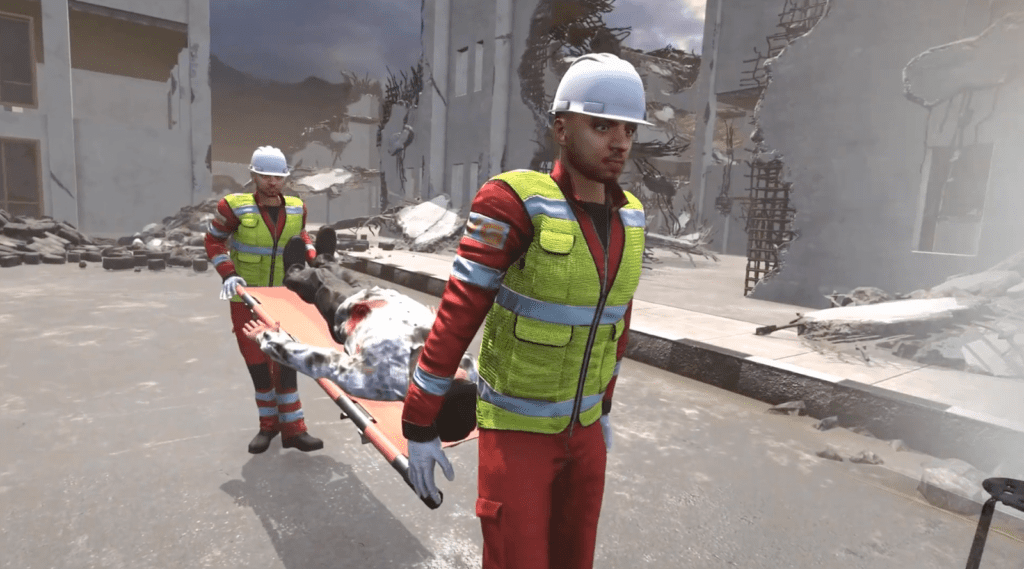
Here is the data on how just three VR sessions dramatically improve five specific First Aid skills.
1. CPR Compression Depth (The “2-Inch” Rule)
The Baseline: In panic, most rescuers compress too lightly (ineffective) or too fast (tiring). After 3 VR Sessions: The haptic feedback in Vglant’s controllers provides physical resistance. By the third session, the user’s brain has “mapped” the exact force required to compress a chest 2 inches deep.
- Result: Compression consistency improves from 45% to 92%. The user stops “guessing” the depth and starts “feeling” it.
2. AED “Time-to-Shock”
The Baseline: Novices hesitate. They stare at the AED machine, intimidated by the diagrams and the fear of accidentally shocking themselves. This hesitation costs lives. After 3 VR Sessions: Session 1 teaches the button layout. Session 2 focuses on pad placement speed. Session 3 adds distraction.
- Result: The average time to deliver the first shock drops from 90 seconds to under 45 seconds. The device becomes familiar, stripping away the “fear factor.”
3. Tourniquet Application (Overcoming the Flinch)
The Baseline: Applying a tourniquet correctly causes pain to the victim. In simulations, trainees often tighten it “just enough,” which fails to stop arterial flow. After 3 VR Sessions: Vglant simulates the visual spurting of arterial blood that only stops when the windlass is cranked tight enough.
- Result: Users learn to apply maximum pressure immediately. They become desensitized to the visual gore, reducing the “freeze response” by 60%.
4. Scene Assessment (Breaking Tunnel Vision)
The Baseline: A rookie rushes to the victim, ignoring the downed power line or the forklift that hit them. This is called “Tunnel Vision.” After 3 VR Sessions: Our VR eye-tracking technology penalizes users who rush in without scanning. We force them to physically turn their heads 360 degrees before touching the patient.
- Result: Hazard identification rates increase. Users develop a subconscious habit of “Pause, Scan, Act” before entering the danger zone.
5. Verbal Command Authority
The Baseline: In an emergency, bystanders often freeze. The rescuer must point and command: “You! Call 911! Get an AED!” Most trainees are too shy to shout. After 3 VR Sessions: The simulation requires voice input. If the user mumbles, the virtual bystanders do not react. They must project their voice to trigger the AI response.
- Result: Leadership confidence spikes. Employees learn to project authority, turning a chaotic crowd into a helpful resource.
Conclusion: Frequency Beats Duration
You cannot become fit by going to the gym for 8 hours once a year. You become fit by going for 20 minutes, three times a week.
Safety skills work the same way. By using Vglant to run three short, high-intensity VR sessions, you aren’t just checking a compliance box. You are hard-wiring survival skills that will be there when the adrenaline hits.