


The three immersive technology acronyms — VR, AR, and MR — are often used interchangeably, as if they refer to the same thing. Vendor marketing materials tend to reinforce that impression. In reality, each technology operates on different principles, requires different hardware, and suits different training scenarios.
This distinction matters beyond theory. The wrong choice can cost a company hundreds of millions of rupiah on technology that fails to address actual operational needs. The four aspects below are the most fundamental dividing lines between VR, AR, and MR in enterprise contexts.
1. Level of Immersion: From Total Enclosure to Light Augmentation
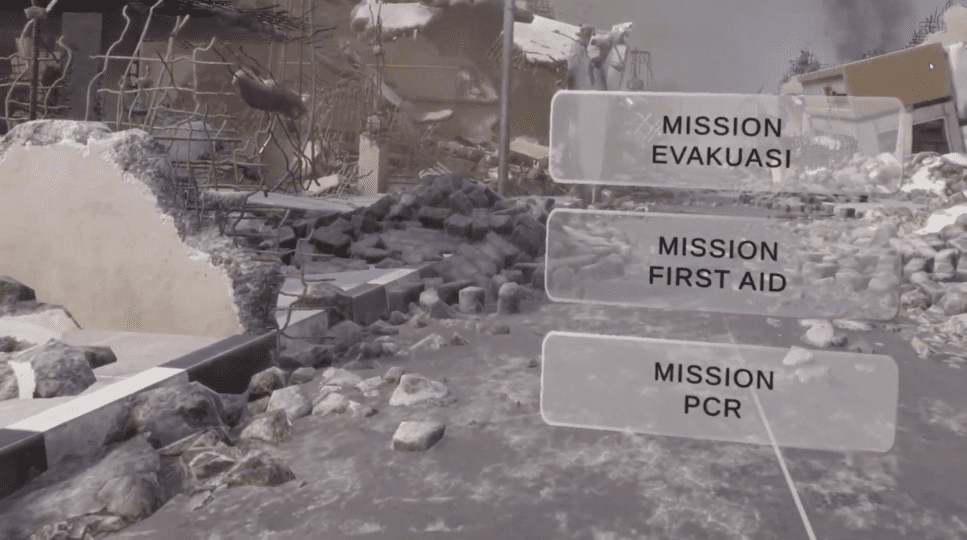
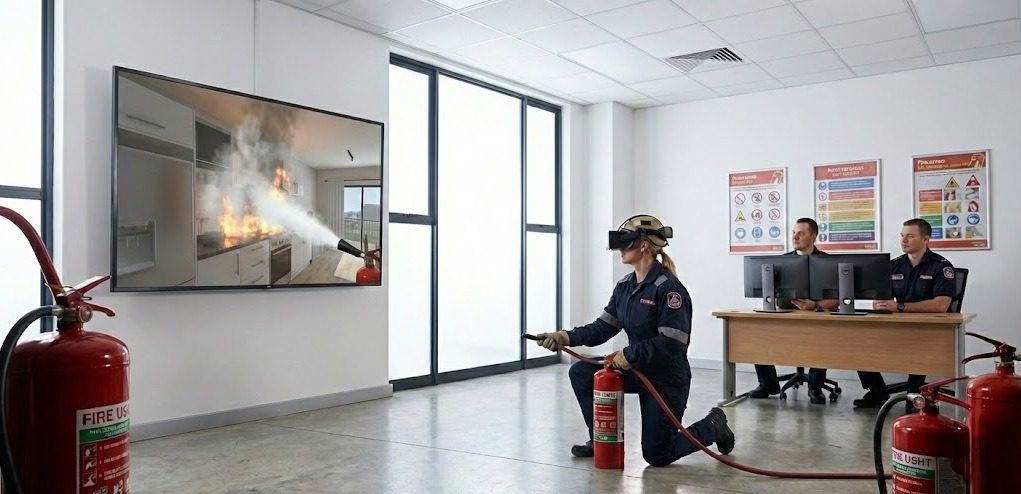
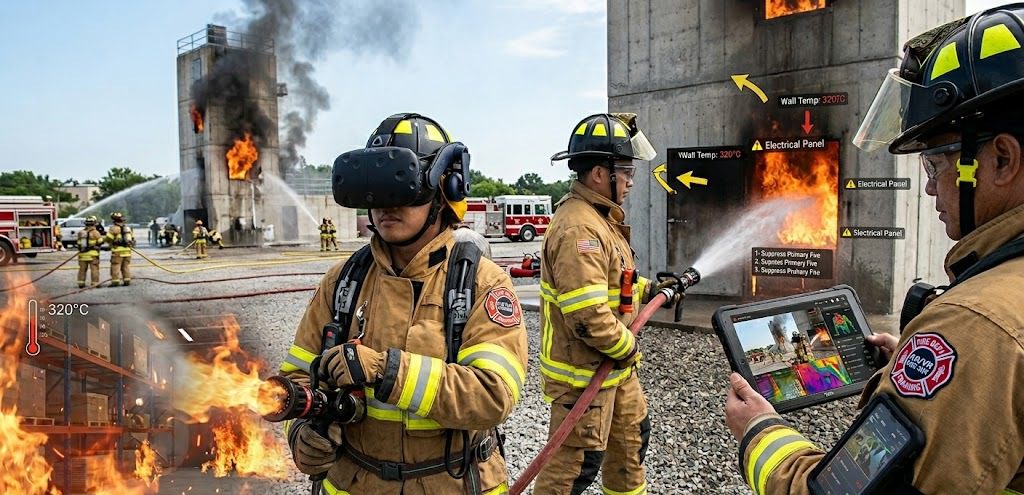
Virtual Reality (VR) seals the user off completely from the physical world. Once the headset is in place, only the digital environment is visible. There are no visual cues from the actual room. This complete immersion is what makes VR effective for high-stress training scenarios such as fire simulations, emergency evacuations, and disaster response — the user’s body responds to the virtual situation almost as it would to a real one.
Augmented Reality (AR) works in the opposite direction. The physical world remains visible, and digital information appears as an additional layer on top. A technician can see directional arrows, component labels, or step-by-step instructions overlaid on the machine being worked on. This partial immersion is intentional, designed to keep the user connected to the real working environment.
Mixed Reality (MR) is the most complex blend. Digital objects don’t merely sit on top of the real world — they interact with physical surfaces. A 3D model of a machine can be placed on an actual meeting table, rotated, opened up, and discussed collaboratively by a team. Real and virtual stop being separate categories.
The selection implication: the higher the required level of immersion, the more decisive the case for VR. For training that requires the user to remain in contact with physical equipment, AR or MR is the more sensible choice.
2. Hardware: A Difference That Hits the Budget
Each category demands different devices with very different cost profiles.
VR generally runs on standalone enclosed headsets. Meta Quest and Pico are the most popular choices in Indonesia’s enterprise market, with per-unit pricing well below other categories. Most devices come with onboard processors, removing the need for an additional PC.
AR has the broadest hardware spectrum. Ordinary smartphones are sufficient for many simple AR applications — features like visual guidance, component identification, or augmented training can run without specialized devices. For hands-free field requirements, AR glasses such as RealWear and Vuzix are available at mid-range pricing.
MR demands the most advanced and most expensive hardware. Microsoft HoloLens and Apple Vision Pro are the two leading products, with per-unit pricing several times higher than equivalent VR headsets. Beyond hardware costs, integrating MR into an enterprise IT ecosystem requires significant technical resources.
The consequence is straightforward: for large-scale deployment, VR offers the best cost-to-benefit ratio. AR wins when users already have company smartphones. MR is best reserved for specific use cases with limited user numbers.
3. Use Cases: Each Technology Has Its Right Territory
Selecting immersive technology should start with the use case, not the other way around.
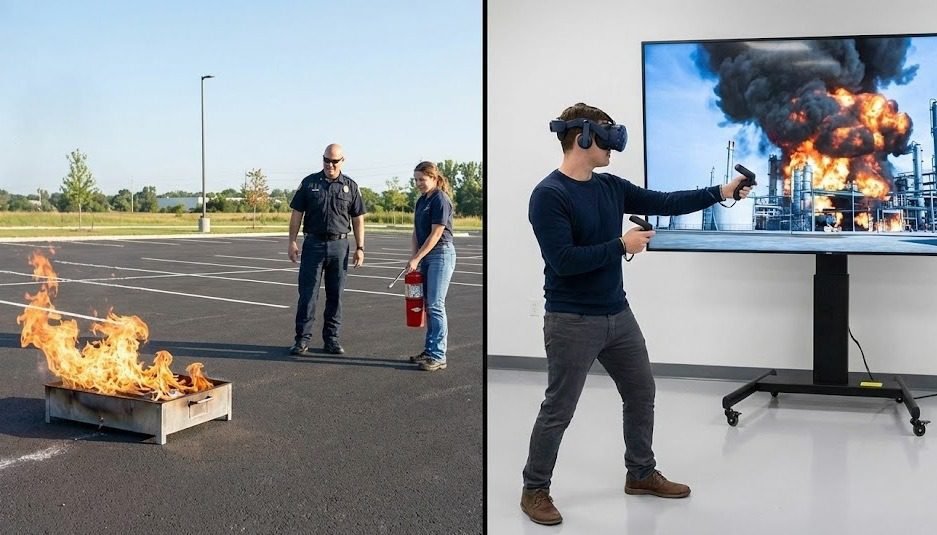
VR is the right choice for safety training involving dangerous scenarios — fires, hazmat leaks, explosions, confined spaces, or emergency medical response. Such scenarios are impossible to simulate physically without real risk, and AR or MR cannot deliver the level of immersion required to build reflexive responses. VR also excels at intensive onboarding, heavy equipment operations training, and managerial crisis simulation.
AR delivers the most value for real-time field guidance. Maintenance technicians, plant operators, and installation teams benefit from visual instructions appearing over the equipment they’re handling. Hands stay free, eyes stay on the work, and errors drop significantly. Remote assistance applications — where experts at headquarters guide technicians at remote sites — are among the most mature AR use cases.
MR is strongest for complex product visualization and collaborative design. The automotive, real estate, medical device, and engineering services industries use MR for prototype presentations, cross-team design reviews, and premium customer experiences. The advantage of MR is its ability to display digital objects that remain anchored to a shared physical space, allowing discussions to feel natural.
For mass training across multiple sites, MR is hard to justify economically. For field service guidance, VR actually obstructs the work. For extreme safety simulation, AR isn’t immersive enough.
4. Total Cost of Ownership: More Than Just Hardware
The initial investment is only a fraction of the total cost of ownership. Three other components often slip through the cracks during early-stage budgeting.
Content and training modules. VR has the most mature content ecosystem in Indonesia’s enterprise market. Off-the-shelf modules for fire safety, hazmat handling, electrical training, and working at height are available from several local vendors, including VGLANT. Many modules are already mapped to K3 and Permenaker standards, allowing implementation to begin within weeks. AR generally requires per-use-case customization because it must adapt to specific equipment layouts. MR almost always demands a dedicated development team because no adequate content ecosystem yet exists.
Maintenance and updates. Hardware requires periodic firmware updates, calibration, and replacement of accessories (face cushions, controllers, batteries). Content must also be updated whenever regulations change or internal procedures are revised. Annual maintenance budgets typically range from 15 to 25 percent of the initial investment.
Internal staffing and support. An immersive program needs at least one administrator who understands device management, content distribution, and training data reporting. Without this role, deployments tend to stall after the initial enthusiasm fades.
When all three components are added up, the total cost over three years for MR often reaches two to three times the headline investment figure. VR tends to be the most efficient thanks to its mature ecosystem. AR sits in the middle, with custom content being the main variable.
A Practical Selection Guide
A working rule of thumb based on the dominant use case:
- Safety training, crisis simulation, intensive onboarding → VR
- Real-time work guidance, field maintenance, remote assistance → AR
- Premium product visualization, collaborative design review, exclusive customer experience → MR
Many companies eventually adopt a hybrid approach. VR for initial training that requires total immersion, AR for ongoing support once operators are on the floor. This combination has consistently produced the strongest results in manufacturing, oil and gas, and utilities.
Closing
Immersive technology is not a single category. VR, AR, and MR have distinct characters, costs, and territories of use. The right choice begins with an honest mapping of operational needs — not from whichever vendor demo looks most impressive on a screen.
The four differences above — level of immersion, hardware, use cases, and total cost of ownership — are the basic filters worth applying before any investment decision is finalized. This kind of clarity helps ensure that the budget allocated actually delivers operational impact, rather than adding to the pile of technology assets that end up rarely used.