

There is a silent crisis in modern industrial safety: The Compliance Illusion.
A safety manager presents a 40-slide deck on “Fall Protection.” The employees sit in a dark room, drink lukewarm coffee, and nod at the right times. They sign the attendance sheet. Legally, they are trained. But neurologically? They are disengaged.
Safety Culture is not built in a lecture hall; it is built on the floor. However, we cannot practice dangerous tasks on the floor without risk. This dilemma has trapped companies in a cycle of passive learning—until now.
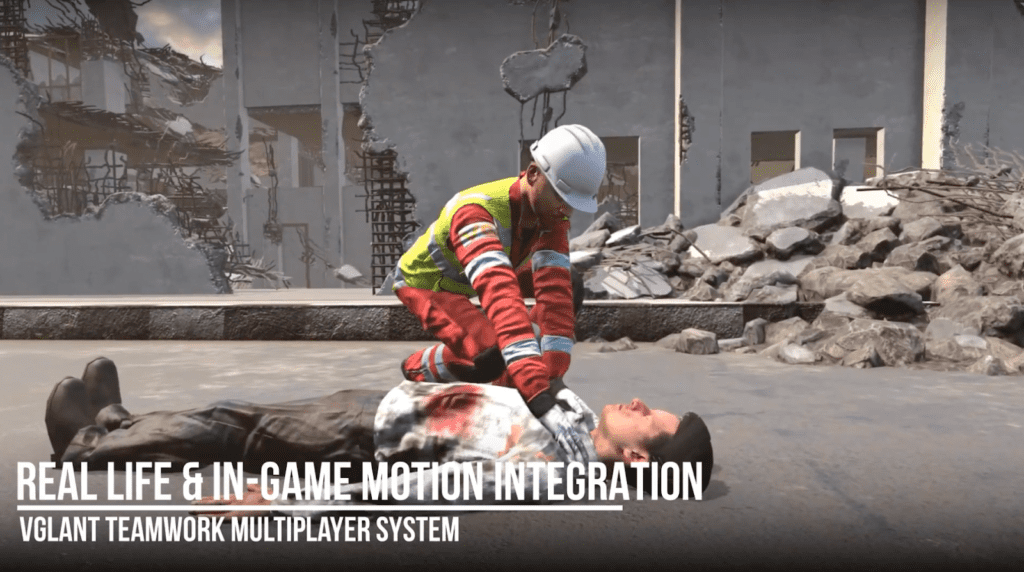
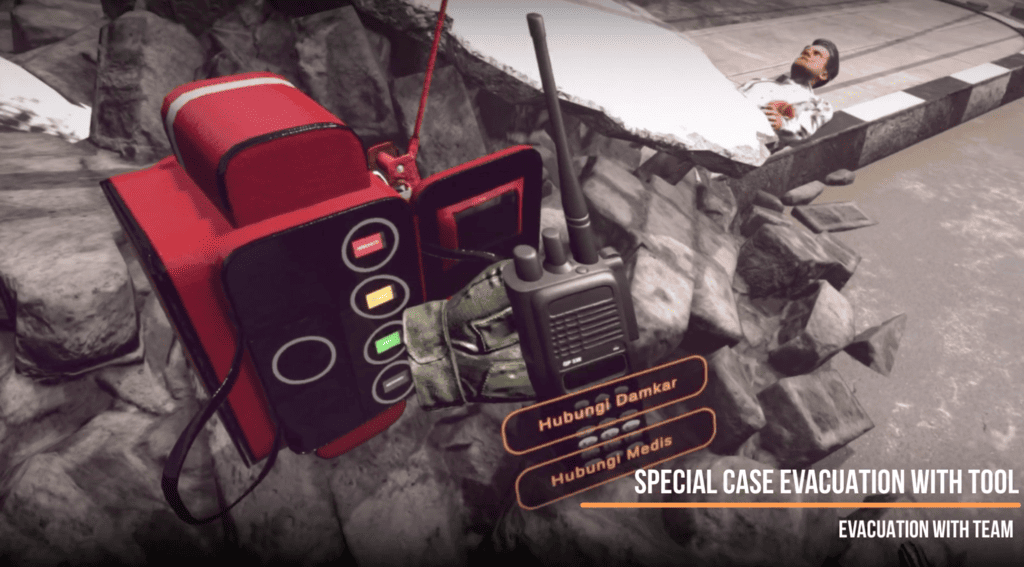
Vglant uses Virtual Reality (VR) to break the “slide-deck” cycle. We don’t just transfer information; we transfer experience. Here are five ways VR transforms your safety culture from passive observation to decisive action.
1. Crushing the “Click-Next”
E-learning modules often create “Click-Next”—employees whose eyes scan for the arrow button just to finish the module. They aren’t learning; they are enduring.
The Vglant Shift: VR demands Kinetic Participation. You cannot “click next” in a fire. You have to physically turn your head to find the exit. You have to crouch to avoid smoke. You have to reach out and pull the lever.
By requiring physical movement to progress through the training, VR ensures 100% engagement. If the user zones out, the simulation stops. The technology forces the brain to be present.
2. The Neurology of “Safe Failure”
In traditional training, failure is a low quiz score. It is abstract. In the real world, failure is an injury. It is tragic. There has never been a middle ground—a place where failure is visceral but safe.
The Vglant Shift: We create Emotional Imprints. If a trainee in our forklift module turns too sharply with a raised load, the machine tips over. They hear the metal crunch. They feel the visual horizon tilt violently. They experience a micro-dose of the adrenaline spike associated with an accident. This “safe failure” teaches the brain to respect the risk in a way that a bullet point on a slide never could.
3. From “I Think” to “I Know” (Data-Driven Competence)
Ask a supervisor: “Is John ready to handle the high-voltage panel?” The answer is usually subjective: “I think so, he paid attention.”
The Vglant Shift: We replace intuition with Biometric & Telemetric Data. Vglant tracks metrics invisible to the human eye:
- Gaze Analysis: Did they check the pressure gauge, or just look near it?
- Reaction Latency: Did it take them 2 seconds or 10 seconds to identify the leak?
- Sequence Accuracy: Did they skip step 3 of the LOTO procedure?
We provide a scorecard based on physics and behavior, giving managers the confidence to say, “I know he is ready.”
4. Standardization of the “Gold Standard”
Human trainers are variable. A safety induction on Monday morning might be energetic and detailed, while the Friday afternoon session might be rushed and skipped over.
The Vglant Shift: VR delivers Perfect Repetition. Every employee, in every branch, receives the exact same high-fidelity training experience. The “Gold Standard” procedure is the only procedure they see. This eliminates the “drift” in safety culture where bad habits are passed down from senior staff to rookies during informal shadowing.
5. Building Muscle Memory (The Body Remembers)
You cannot learn to ride a bicycle by watching a video of someone riding a bicycle. Similarly, you cannot learn to perform CPR or use a fire extinguisher by reading a manual. These are psychomotor skills.
The Vglant Shift: We enable Haptic Rehearsal. When a user practices a chaotic event in Vglant—like applying a tourniquet or shutting down a runaway valve—they are building neural pathways connected to movement.
When a real emergency occurs, the brain doesn’t have to recall page 42 of the manual. It relies on muscle memory. The body reacts because it feels like it has “been there before.”
Conclusion
Safety culture isn’t what you write on the wall; it’s what your people do when the alarm rings. Transitioning from slides to VR sends a powerful message to your workforce: We are not just ticking a box. We are investing in your survival.