

In Health, Safety, and Environment (HSE) management, training effectiveness often walks a fine line between checking a compliance box and ensuring actual field readiness. For decades, the industry has relied on a static formula: classroom theory followed by a brief practical session extinguishing a controlled fire in a drum. The problem? This method is no longer financially efficient or psychologically effective.
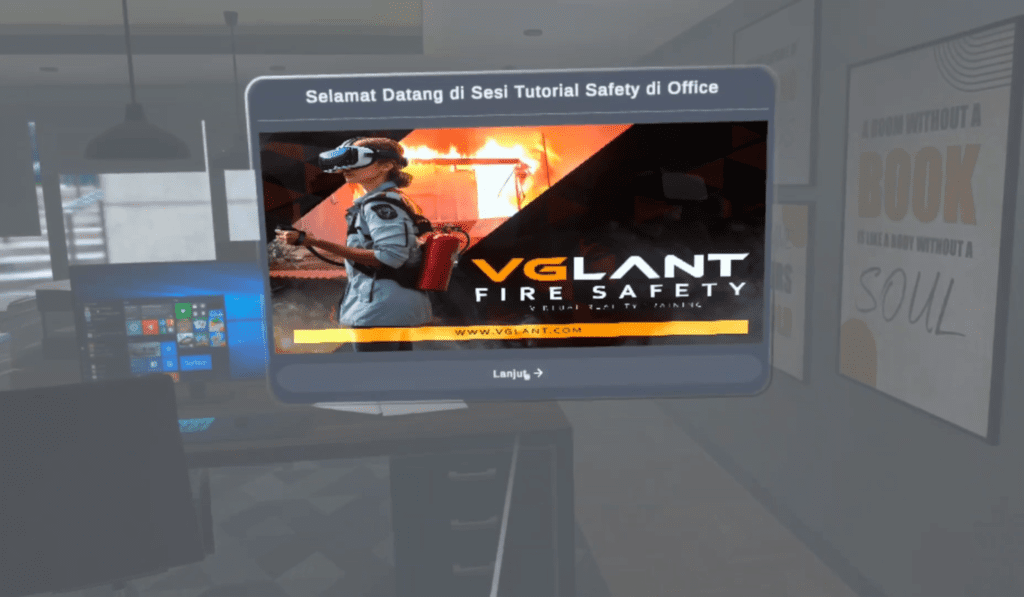
Industry data points to a massive shift. Companies are moving away from analog methods toward high-fidelity simulation. VGLANT, a pioneer in fire extinguisher simulation, offers an approach that—according to data analysis—boosts retention and competency rates by up to five times compared to traditional models.
Here is a deep dive into why this technology is becoming the new operational standard.
1. Building “Muscle Memory,” Not Just Theory
There is a massive gulf between knowing the P.A.S.S. technique and executing it effectively during a panic. Adult learning research consistently shows that passive methods, such as listening to a lecture, result in information retention rates below 10% after just 30 days.
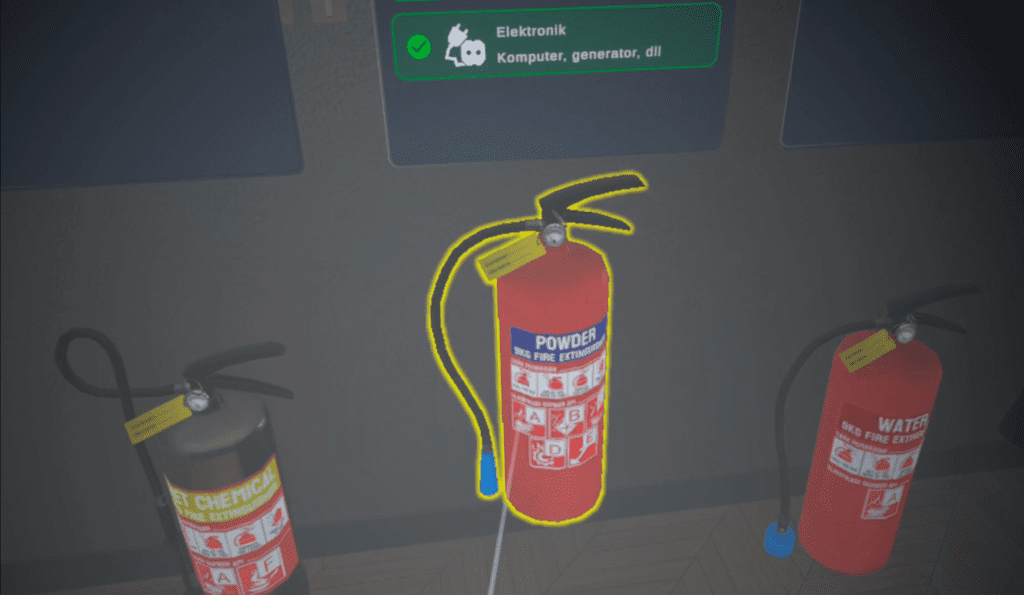
VGLANT flips this dynamic through full kinesthetic engagement. In a VR simulation, trainees physically pull the pin, aim the hose, and squeeze the lever. This targets muscle memory. When the body repeats these physical motions in an immersive environment, the brain encodes it as a real experience, not abstract theory. Consequently, when a real incident occurs, the employee’s response becomes a reflex rather than a slow, cognitive process.
2. Eliminating the Hidden Costs of Physical Training
When dissected financially, traditional fire training is a surprisingly wasteful line item.
Refill Costs: Every “live” training session depletes extinguisher canisters that must be refilled at a premium.
Logistics & Downtime: Marshalling employees to an outdoor area, setting up fuel, and cleaning up chemical residue eats up hours of billable time and halts productivity.
VGLANT technology slashes these inefficiencies. After the initial hardware investment, the cost-per-trainee drops to near zero. You can train 50 employees in a single day inside a conference room without spending a dime on chemical refills or site cleanup. This is tangible OPEX (Operational Expenditure) efficiency.
3. Data-Driven Competency Validation
The fatal flaw of traditional training is subjectivity. Instructors often judge performance based on a quick visual check: “The fire is out, you pass.” But was the technique correct? Was the spray distance safe?
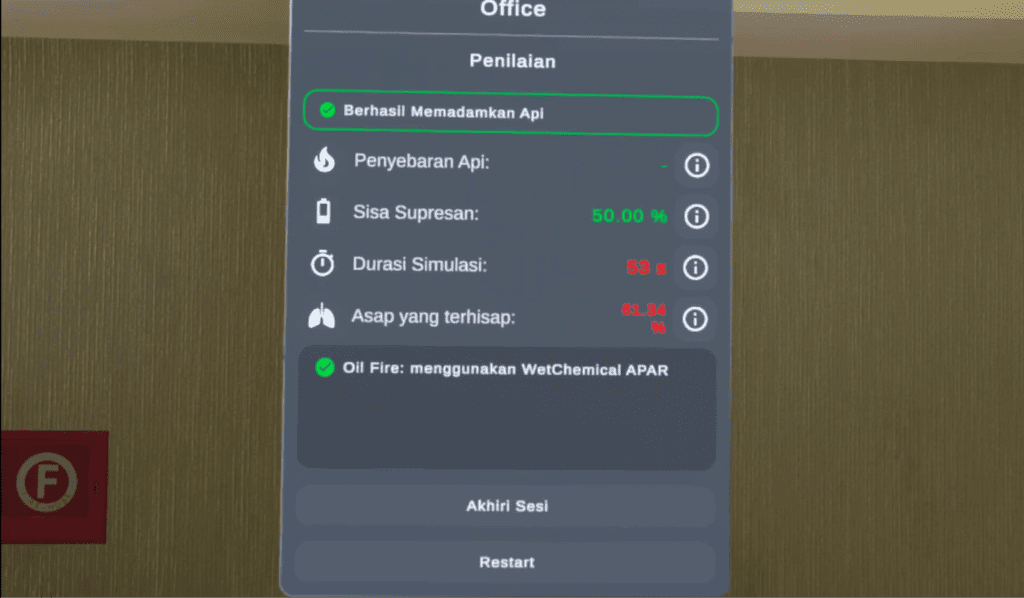
The VGLANT platform removes the guesswork. The system tracks precise telemetry that the naked eye misses:
Aiming accuracy at the base of the fire.
Reaction time from detection to action.
Agent usage efficiency.
Body positioning and safe distance maintenance.
This data is compiled into instant analytical reports. HSE managers can clearly identify who is competent and who requires retraining, ensuring that safety standards are uniform across the organization, not just theoretical.
4. Stress Inoculation in a Safe Environment
You cannot train the mental resilience needed for a massive blaze by fighting a small, controlled fire in a sunny parking lot. Employees often “pass” standard training yet freeze when confronted with a real fire in a confined, smoke-filled room.
VGLANT creates psychological realism without physical risk. Trainees face dynamic fire scenarios, roaring audio, and visual smoke that obscures vision. This is “stress inoculation”—training the brain to remain calm and make rational decisions under high pressure. You cannot safely practice “near-miss” scenarios in the real world, but you can do it repeatedly in VR until the protocol becomes second nature.
5. Environmental Sustainability (ESG)
In an era where ESG (Environmental, Social, and Governance) criteria drive corporate strategy, spraying Dry Chemical Powder or CO2 into the atmosphere for mere practice is an outdated habit. These residues contaminate soil and air quality.
Switching to vglant is a strategic move toward green operations. Virtual training is a 100% clean process—zero waste, zero chemical runoff, and zero additional carbon emissions. Companies gain a highly skilled workforce while simultaneously strengthening their sustainability credentials.
Conclusion: Investing in Genuine Readiness
Adopting VR for safety training isn’t about chasing a tech trend. It is a calculated business decision to protect your most valuable assets: your people and your business continuity. VGLANT bridges the gap between safety theory and real-world competence in the most measurable, cost-effective, and impactful way available today.
Hubungi Kami
Ready to transform your company’s safety standards?
Visit the link below to learn how VGLANT can be deployed at your worksite.
Call / WhatsApp: +62 812 9696 7887
Email: inquiry@vglant.com
Website: www.vglant.com