


A Different Problem Than a Single-Floor Exit
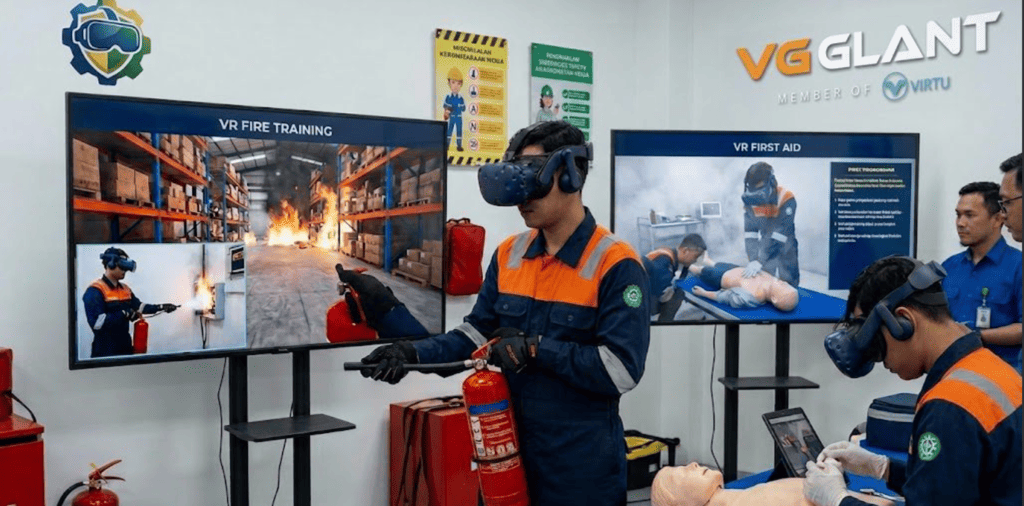
Evacuating a single-floor facility during a fire is mostly a route problem — know the exit, get to it. A multi-story building adds a second problem on top of that one: a stairwell that has to carry every person from every floor above it, all moving at once, often with smoke or reduced visibility making the descent slower and more disorienting than anyone practices for in a routine fire drill. That gap between a routine drill and the real thing is exactly what VR safety training for fire is built to close.
That bottleneck is where a lot of the actual risk in a multi-story evacuation sits, and it’s structurally difficult to test in a live drill, because running a real fire drill with realistic congestion and reduced visibility across an occupied building isn’t something most organizations can safely do more than once or twice a year, if that.
Simulating the Stairwell, Not Just the Exit
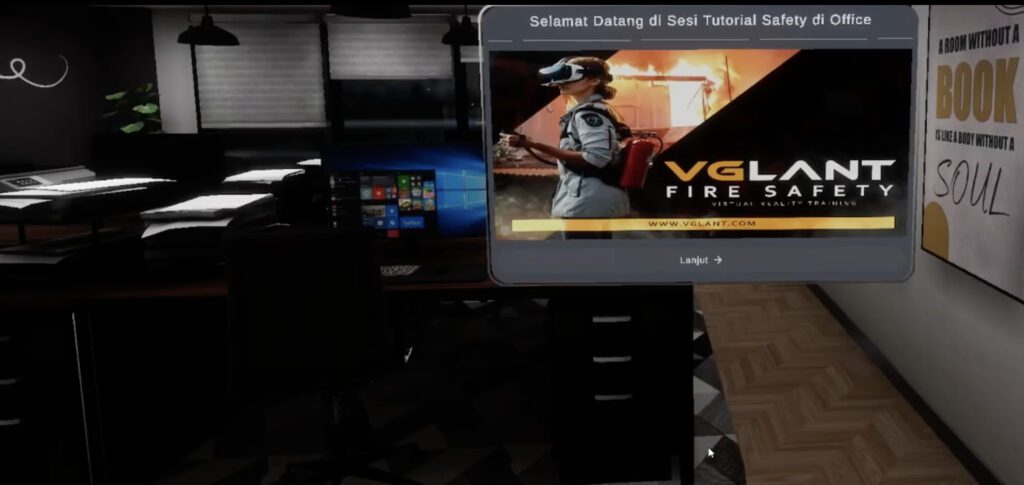
As a leading provider of immersive VR training solutions, VGLANT builds multi-story evacuation scenarios around exactly that bottleneck. A trainee experiences a stairwell descent under degraded visibility, with the kind of congestion and pacing pressure a real event would create, repeatable as many times as needed without disrupting an actual occupied building to do it.
The training isn’t just “can you find the stairwell.” It’s whether someone maintains a safe pace and doesn’t panic-push past others in conditions that make it hard to see more than a few steps ahead — behavior that matters enormously in a real event and is nearly impossible to observe accurately in an announced, orderly fire drill where nobody is actually worried.
Where the Data Points
Tracked metrics include descent pace, hesitation points, and how a trainee responds when the stairwell is more congested than expected. A trainee who reliably slows to a controlled pace under pressure is behaving the way an evacuation actually needs to work. One who speeds up erratically in low visibility is a specific, correctable risk pattern that shows up clearly in session data.
Readiness That Holds Up Under Real Conditions
Transforming evacuation readiness with virtual reality technology means testing the version of the drill that actually resembles a bad day — degraded visibility, other people on the same stairwell, real time pressure — rather than only the version that’s safe and convenient to run live.