

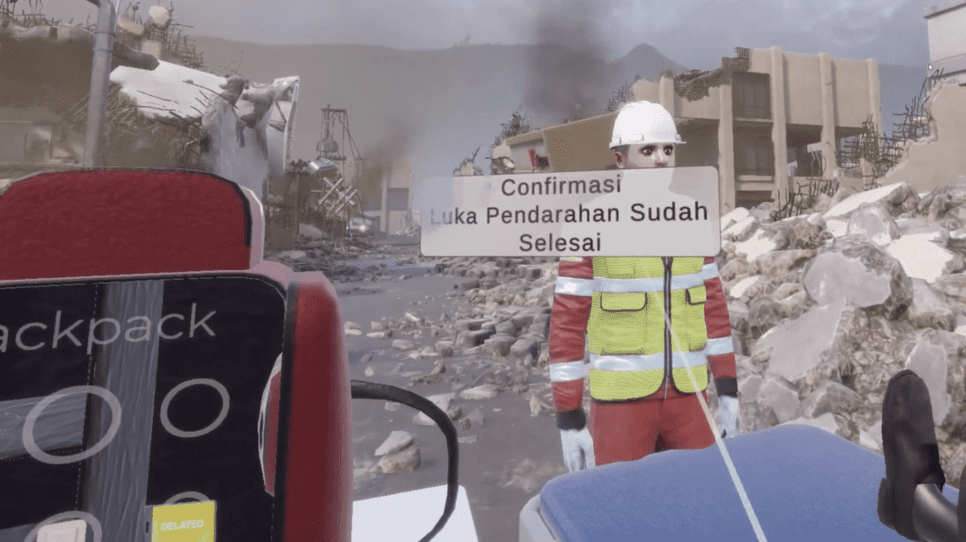
Disasters don’t give warnings. When an emergency hits—on a construction site, a factory floor, or a disaster zone—panic kills theory. Relying on traditional HSE training with plastic dummies in air-conditioned rooms is a failure of preparation. It doesn’t prep the mind for the chaos, the blood, or the extreme time pressure of a real casualty.
VGLANT (by VIRTU) addresses this gap with the VR HSE First Aid & Disaster Response module. We pull trainees out of their comfort zones and drop them into a high-stakes crisis. It forces clear thinking and decisive action in a safe-to-fail virtual environment.
The Scenario: Medical Logistics in a Disaster Zone
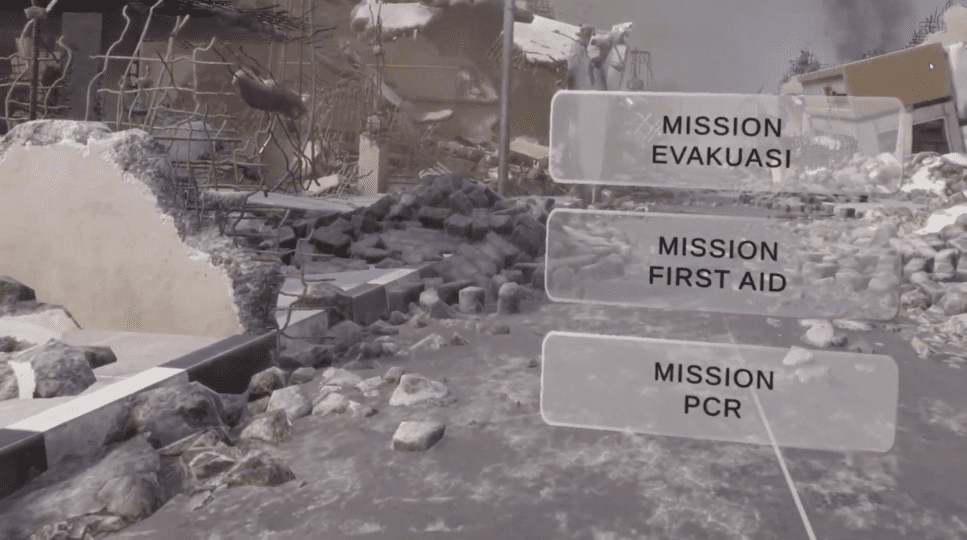
The module drops users into a high-fidelity, post-disaster environment—rubble, collapsed structures, and high tension. Trainees face immediate tactical choices: Evacuation, First Aid, or advanced medical procedures. Once the First Aid mission starts, the focus is singular: stabilize a severely injured victim before they expire.
Step-by-Step Life-Saving: The Tactical Workflow
VGLANT prioritizes muscle memory over theory. Trainees must execute medical actions with surgical precision:
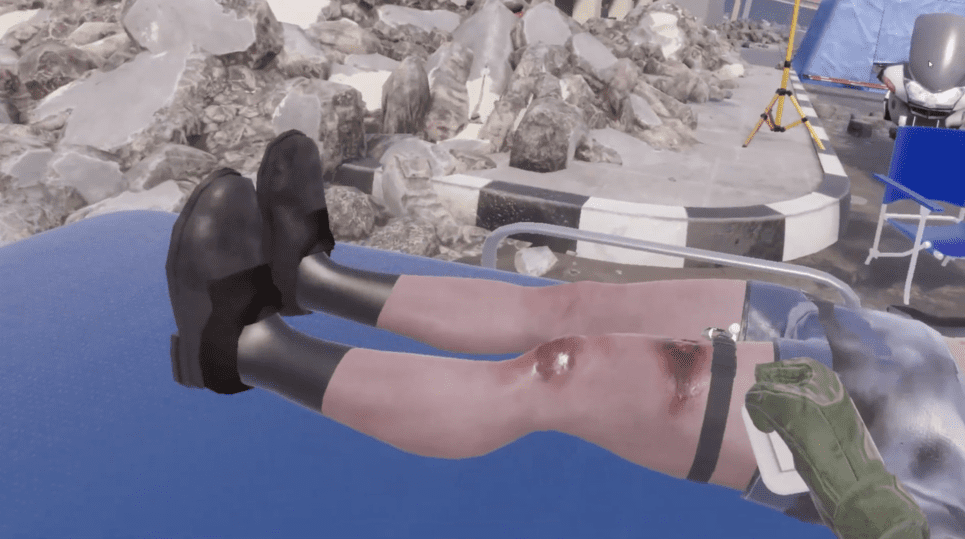
1. Triage and Victim Assessment The trainee approaches a victim on a stretcher. This isn’t a pristine dummy. The virtual patient displays realistic physical trauma—specifically, a severe laceration with heavy bleeding on the knee and thigh. The trainee must bypass the initial shock and conduct a visual assessment before the patient’s vitals deteriorate.
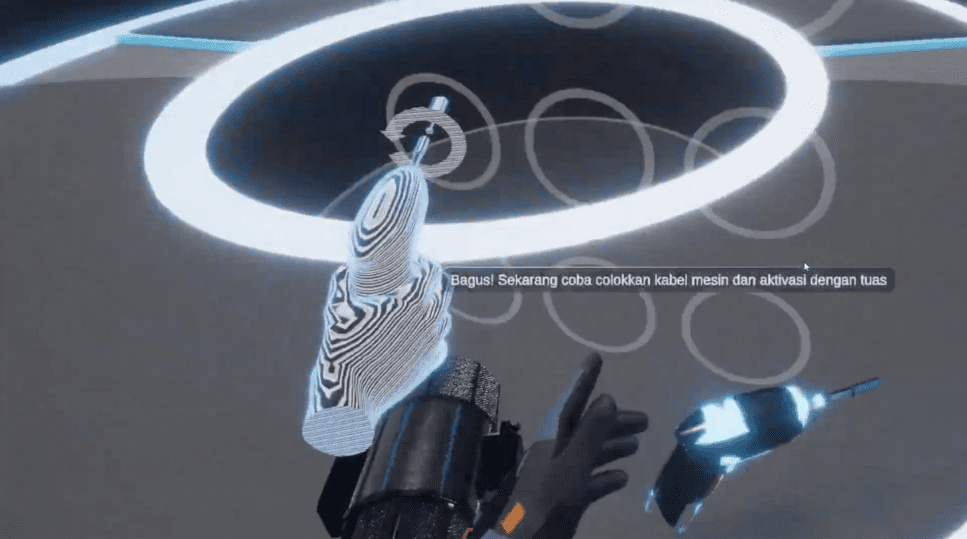
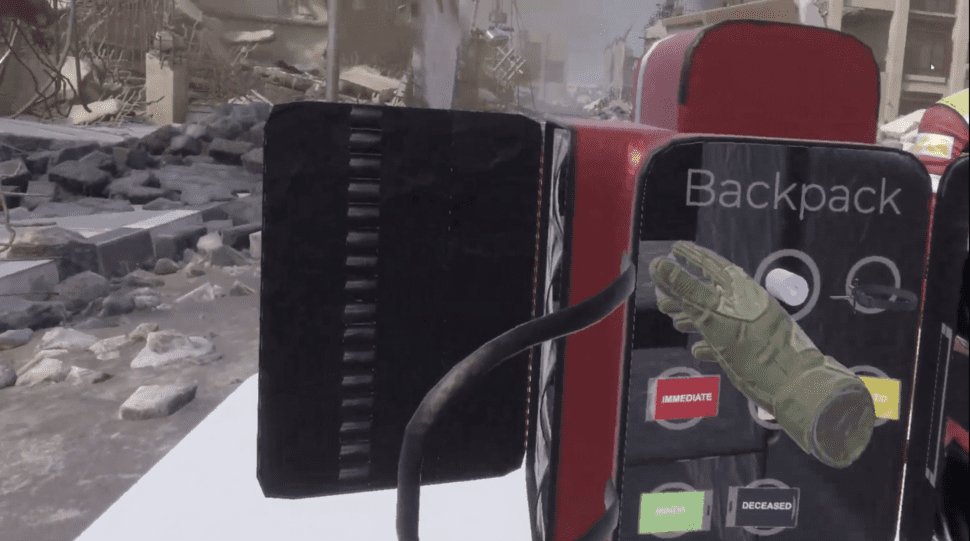
2. Medical Backpack Interaction Panic makes people fumble. The simulation uses an interactive, fully stocked medical backpack. Using VR controllers, the trainee physically opens the bag, navigates compartments, and selects specific tools—medical scissors, triage tags (Immediate, Delayed, Minor, Deceased), and gauze. This drills tool recognition under a ticking clock.
3. Kinetic Wound Treatment Retrieving the bandage is only half the job; the trainee has to apply it. The user must physically wrap the gauze directly onto the bleeding wound. The VR system tracks hand movement and positioning to ensure the dressing hits the correct pressure point. This kinetic experience hardwires the procedure as an automatic reflex.
Why VGLANT is Redefining HSE Standards
VGLANT’s mission is the human impact—empowering people to act when it matters. We turn knowledge into a reflex through three core benefits:
- Zero-Risk Exposure: HSE teams practice managing arterial bleeding and disaster trauma without real-world risks or wasted physical supplies. You fail in the virtual world so you can be flawless in the field.
- Unlimited Spaced Repetition: Medical skills rot without practice. Our system allows for unlimited, cost-effective repetition, slashing the operational cost of hiring live instructors throughout the year.
- Detailed Tracked Data Records: The system is an uncompromising evaluator. From reaction times to tool selection and procedural sequencing, every metric is logged. HSE managers get objective data on exactly who is field-ready.
Stop waiting for a fatal incident to find out your team was only prepared on paper. Upgrade your safety protocols and turn HSE compliance into genuine survival readiness.
Enhance work-at-height safety with immersive VR training solutions from VGLANT. This cutting-edge technology helps workers recognize real-world hazards, improve reaction time, and significantly reduce the risk of accidents. Visit VGLANT to learn how VR training can elevate your company’s safety standards.