



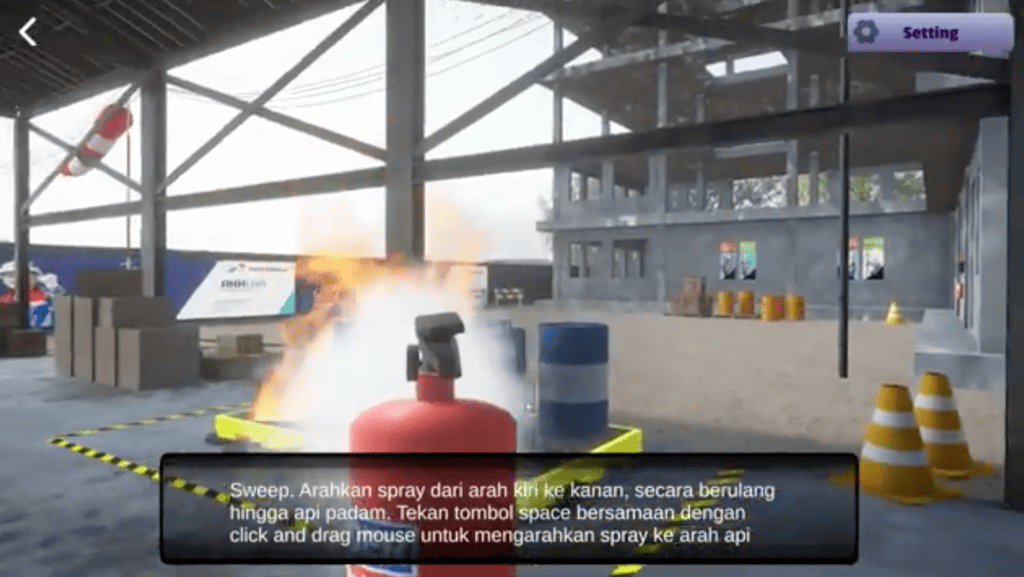
One of the biggest mistakes anyone can make during a sudden fire outbreak is simply grabbing the nearest extinguisher and pulling the pin. Spraying water on an electrical fire or a liquid gas spill will immediately turn a manageable situation into an absolute disaster. This is exactly why understanding proper fire extinguisher classification is not just a regulatory checkmark—it is a fundamental survival skill.
To prevent these fatal errors, effective safety training needs to be highly contextual. Sitting in a classroom reading about different types of fires rarely translates to the correct physical response under pressure.
Identifying the Threat in Real-World Scenarios
When a user enters a virtual training scenario, they are dropped into a highly realistic environment. Whether the setting is a daily public space like a gas station or a busy kitchen, or a complex industrial area like a mining site, factory, or construction zone, the first step is always observation.
Trainees have to actively identify what is actually burning. Is the fuel source ordinary wood, compromised electronics, liquid gas, or combustible metal? Based on that immediate assessment, they must apply their knowledge of fire extinguisher classification to select the correct APAR (fire extinguisher) agent, such as FOAM or dry chemical powder.
But contextual learning doesn’t stop at choosing the right canister. Modern digital reality training forces users to look up and check the wind shock before they even think about spraying. It is these granular, environmental details that make a life-saving difference in the real world.
Fire Training: Immersive Realism and Specialized Gear
To make this decision-making process feel as authentic as possible, VGLANT deploys a highly portable solution known as the All-in-One Pelican Case. This robust setup includes a high-spec PC, a built-in HD monitor, integrated audio, and a charging station.
To build true physical readiness, trainees are equipped with VR headsets and appropriate safety gear relevant to the scenario, including hard hats, reflective vests, and safety harnesses. They hold specialized equipment like the Tube VR Control Set, which is specifically designed to feel like a real fire extinguisher. This ensures that when they evaluate the wind and select their extinguisher, they are also physically preparing to fight the fire.
Clean Interfaces and Actionable Data
While the trainee focuses on the simulated fire, the platform ensures an optimal user experience. The visual content is framed cleanly, ensuring outer edges and unnecessary backgrounds are cleaned up. The interface maintains a professional, modern, and high-tech tone by utilizing the primary brand colors of White, Black, and Orange, with the VGLANT logo smartly anchored in the top left corner.
Because every scenario offers zero safety incidents during training, users can safely make mistakes and learn from them. Every decision—from evaluating the wind direction to choosing the correct agent—is logged into detailed Tracked Data Records. Safety managers can easily review an administrator dashboard to monitor spraying behavior, accuracy, and procedure compliance.
At VGLANT, we believe that mastering fire extinguisher classification shouldn’t happen during a real emergency. By combining contextual learning with immersive technology, we empower individuals to transform knowledge into life-saving action.