


Fire safety training at most Indonesian industrial facilities follows a familiar pattern. Annual live fire drills using controlled propane trays. Classroom sessions covering fire classes and extinguisher types. A written assessment. Attendance signatures. Then everyone returns to work until the next annual cycle.
This pattern has produced workers who know what a Class A fire is, can name the appropriate extinguisher, and can recite the PASS technique (Pull, Aim, Squeeze, Sweep). What it doesn’t reliably produce is workers who respond correctly when an actual fire breaks out. The gap between classroom knowledge and operational reflex is where most fire response failures originate.
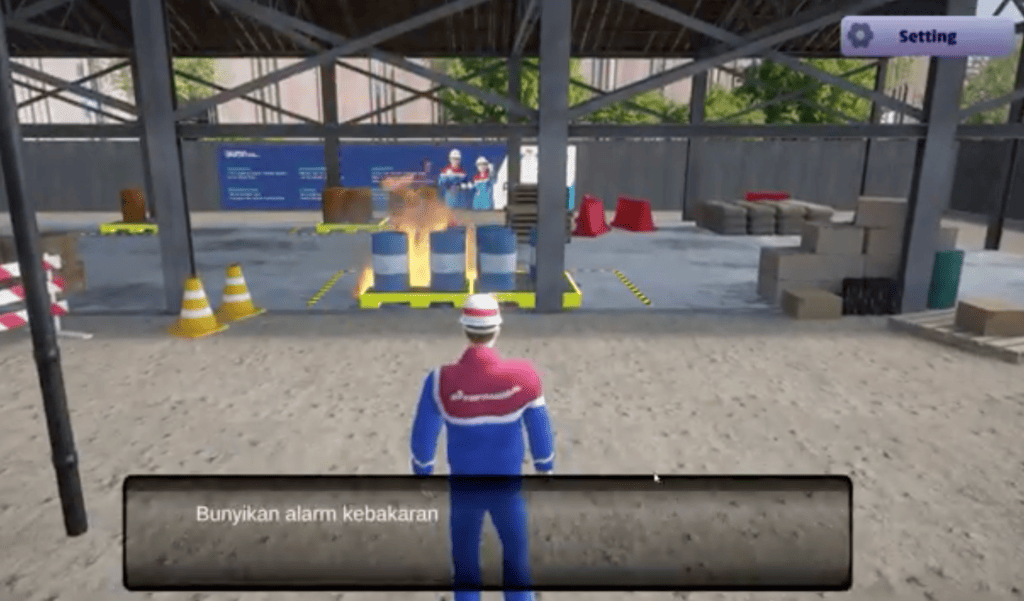
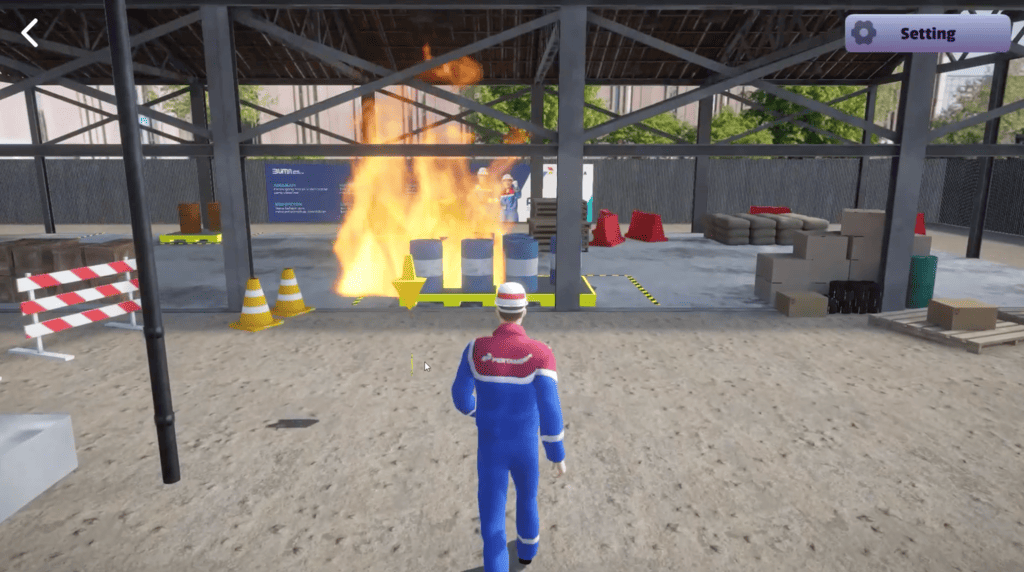
VR fire safety training addresses this gap by changing what practice looks like. Instead of once-a-year exposure to a controlled training fire, workers can practice fire response scenarios multiple times per month. Instead of one standardized fire type, workers face varied scenarios — Class A, B, C, and combined fires in different environments with different fuel sources.
What Repetition Actually Builds
The core benefit of VR-based fire training is repetition volume. A worker can run ten fire response scenarios in a single 30-minute session. Repeat that monthly, and the annual repetition count reaches over a hundred correctly-executed sequences. This is the volume neurological research indicates is required for procedural memory to actually form.
Procedural memory matters because emergencies degrade cognitive capacity. Under stress, workers rely on automatic responses rather than conscious step-by-step thinking. If the correct fire response sequence hasn’t been proceduralized through repetition, workers either freeze or execute the wrong sequence. Both failures show up in incident investigations across industries.
Scenario variety builds adaptable competency. A worker who has practiced only one type of fire response develops rigid patterns that fail when the real fire differs from training. Practicing across varied scenarios — different fire sizes, different locations, different equipment availability — builds flexible response capability that transfers to whatever the actual emergency looks like.
The Wrong-Action Practice That Matters Most
Some of the most consequential fire response failures involve wrong actions rather than absent actions. Using water on an electrical fire. Opening a door with fire behind it. Attempting to fight a fire that’s already too large. Ignoring evacuation cues.
Physical training cannot safely drill wrong-action responses. You can’t realistically let a trainee spray water on an actual energized panel to demonstrate the consequences. VR can create these scenarios with realistic consequences, letting trainees experience the outcome of wrong choices without physical harm. Over repetitions, correct responses become reflexive and wrong-response impulses get worked through in simulation rather than during actual emergencies.
What Physical Training Still Does
VR-based fire training doesn’t replace physical drill entirely. The actual weight of an extinguisher, the discharge sensation, and the physical calibration to real equipment all matter and can only be developed through periodic hands-on practice with actual gear.
The effective program combines both. VR delivers the repetition volume that builds procedural memory. Physical drill provides the sensory calibration that VR cannot fully replicate. Neither approach alone produces the readiness level that both together achieve.
Data That Shows Whether Training Works
VR training systems track performance data that physical training cannot capture at scale. Response times across the workforce. Decision accuracy on specific fire types. Procedural compliance under time pressure. Individual consistency across repetitions.
For HSE teams, this data changes how training decisions get made. Instead of assuming trained workers are ready, teams can identify which workers have actually developed reliable fire response capability and which need targeted refresher. The distinction predicts actual field performance during real events.
VGLANT Fire Training Modules
VGLANT, built by PT Virtu Digital Kusuma, includes comprehensive fire safety scenarios developed for Indonesian industrial contexts. Coverage spans hot work fire response, electrical panel fires, combustible dust scenarios, flammable liquid handling, lithium-ion battery fires, and multi-bay evacuation. The scenarios align with Permenaker 4/1980 (APAR), Kepmenaker 186/1999 (fire response teams), and Permenaker 5/2018 (workplace environment).
Content runs on standalone headsets with the broader VGLANT K3 catalog covering working at height, confined space, first aid, and hazardous material response — enabling operations to build comprehensive safety training on unified infrastructure rather than fragmented single-purpose systems.
Fire response is one of the safety competencies where the gap between classroom knowledge and operational reflex has the most serious consequences. VR-based training closes that gap in ways conventional methods cannot.