

Four minutes. That’s the average window a lay responder has before permanent brain damage begins to set in for a cardiac arrest victim. After six minutes without intervention, survival odds drop sharply. After ten minutes, there’s almost nothing left to be done.
Most first aid training programs in Indonesia don’t truly prepare employees for time pressure this short. Material gets delivered at classroom pace. Chest compression practice on a manikin happens without any sense of emergency. Participants memorize the sequence, but they’ve never lived through the seconds where every decision must be made before the next breath is even drawn.
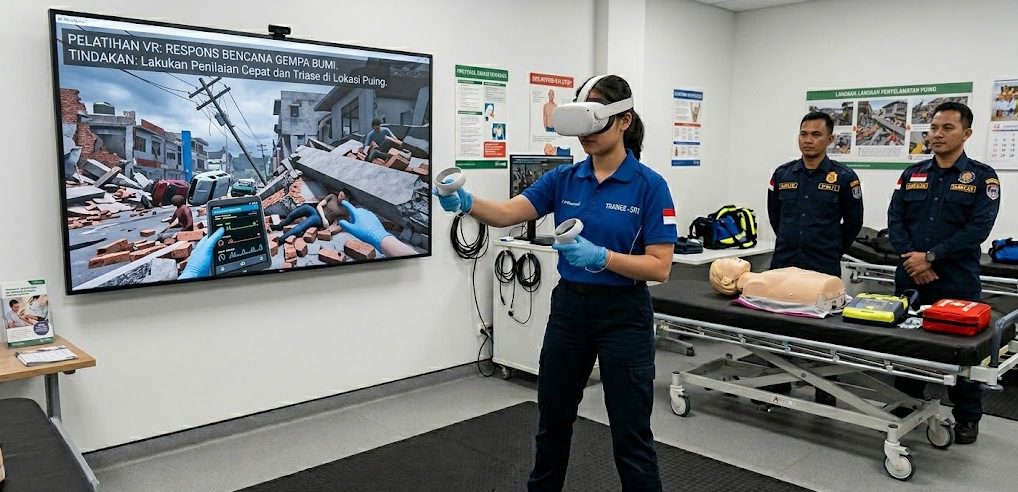
This is the gap that VR-based first aid training closes — not by adding more material, but by compressing training conditions so they come closer to the reality of that critical window.
How the Human Brain Works Under Acute Stress
In normal conditions, people remember procedures well enough. Under acute stress — adrenaline spiking, victim collapsed in front of you, coworkers panicking — the way the brain processes information shifts. Complex procedural memory often goes blank. What remains is whatever has been automated through repetition.
This phenomenon has been studied extensively in military and emergency medical training. The conclusion holds steady: the skills that surface during a crisis are the skills that were rehearsed under conditions resembling a crisis. Calm training doesn’t produce fast responses. Only pressured training produces responses that hold up when the pressure arrives.
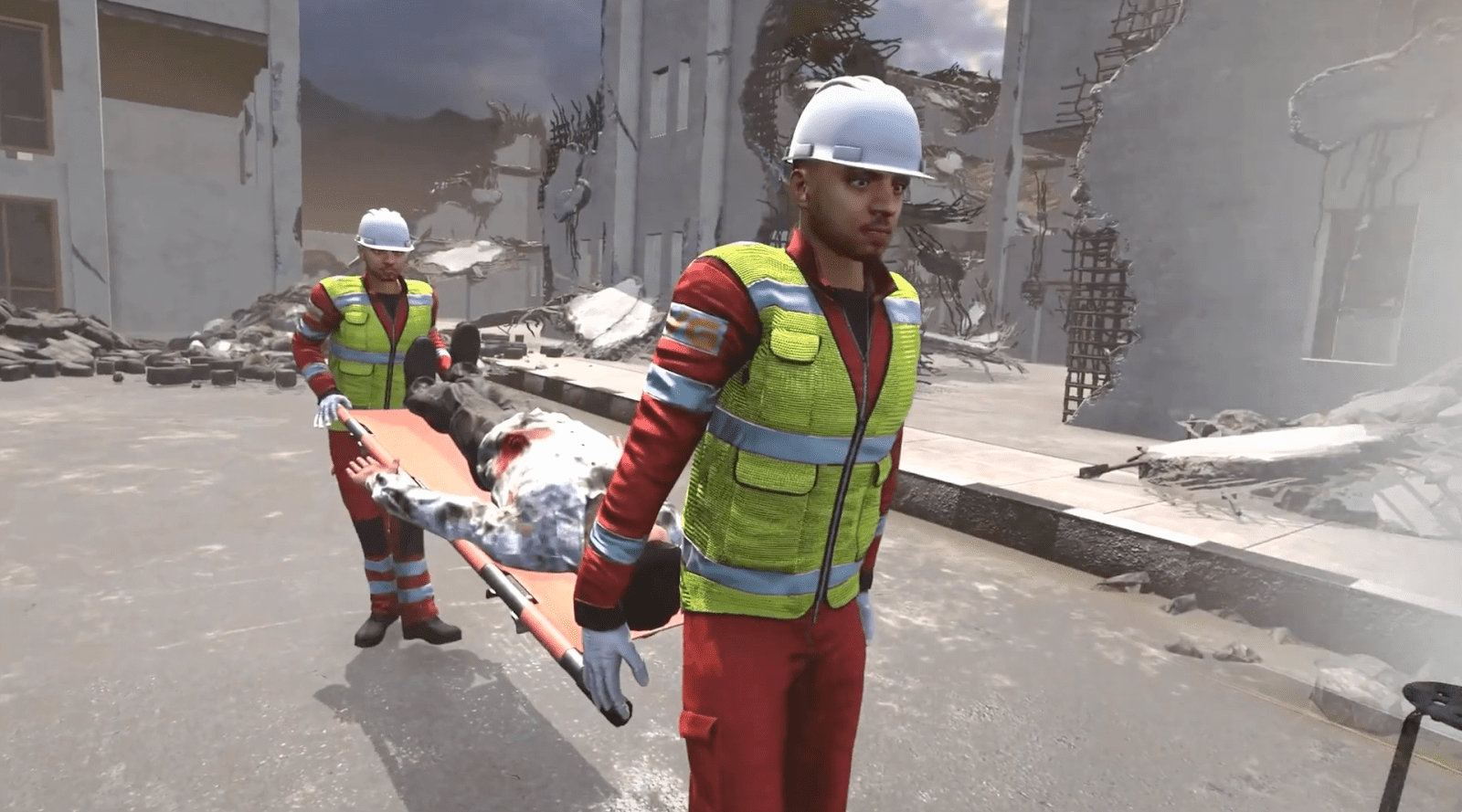
A classroom manikin doesn’t deliver that pressure. VR — with the visual of a collapsed victim, ambient sound, and a running timer — does.
What Changes When Training Moves to an Immersive Environment
In conventional training, participants know when the session begins. They know the manikin is a manikin. The brain registers this as practice, and the stress response stays dormant.
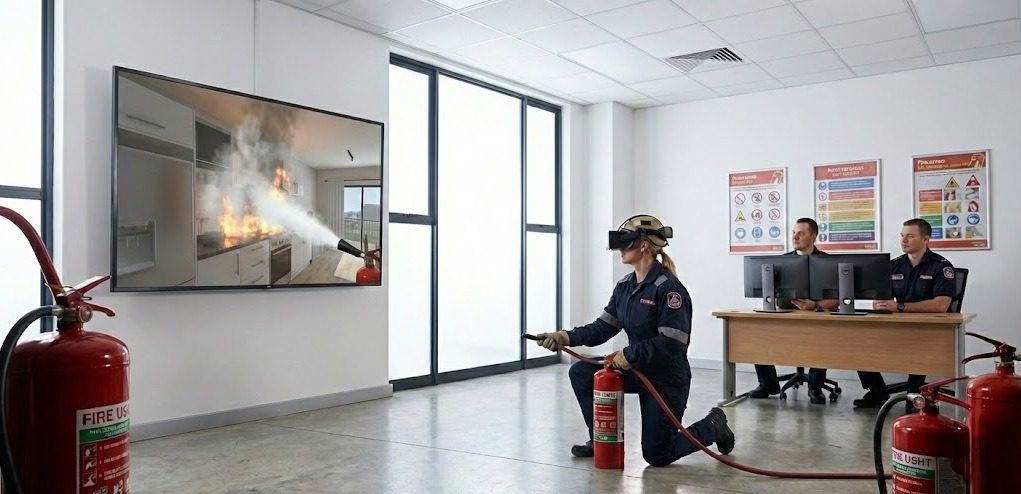
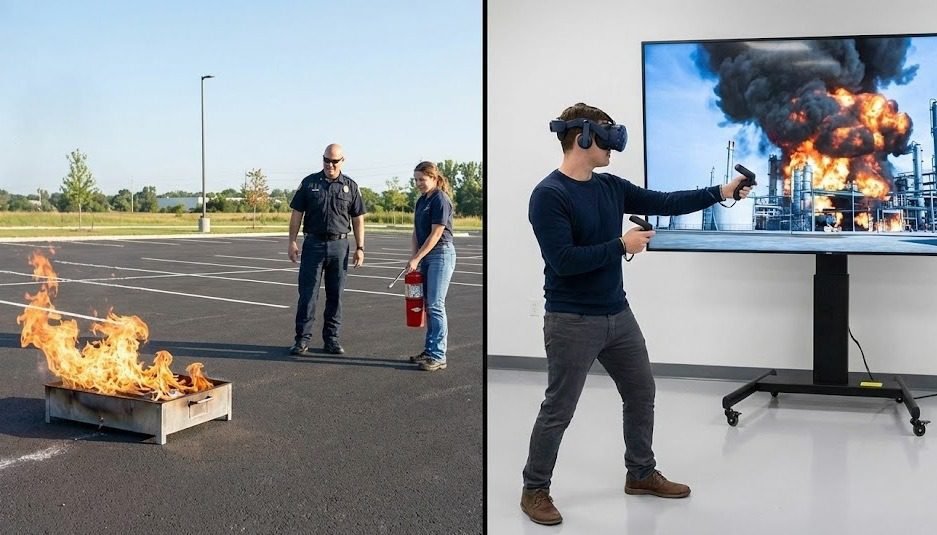
In well-designed VR, the brain is partially fooled. Not entirely fooled — the participant still knows it’s a simulation. But fooled enough for basic physiological responses to kick in: heart rate climbs, attention narrows, decisions need to come quickly. This is what training conditions close to reality actually look like.
The implications for first aid are significant. Participants stop simply reciting “check breathing, check pulse, start compressions”. They practice carrying out that sequence with hands shaking, while deciding whether to call for help first or start compressions immediately, while managing the hesitation that surfaces before the first action.
Three Scenarios That Are Hard to Practice Any Other Way
Cardiac arrest in a meeting room. Common scenario, rarely trained: a colleague suddenly collapses mid-meeting. A few people panic, one fumbles for a phone, one just stands frozen. The responder has to take charge of the situation, delegate tasks, and start BLS — all within the first two minutes. A classroom manikin doesn’t reproduce this kind of social complexity.
Choking in the cafeteria. Choking is a cause of death that often slips through training programs. The victim can’t speak, may panic, may run to the bathroom. The responder needs to recognize the signs of choking, decide between back blows and abdominal thrusts, and act before oxygen deprivation causes collapse.
Head injury with a semi-conscious victim. This condition demands a combination of careful observation and limited intervention. You can’t move the victim freely, but you can’t stand there waiting either. The responder has to monitor breathing, keep the airway open, and prepare information for paramedics. Scenarios like this are nearly impossible to practice with a standard manikin.
Where VR Sits Within First Aid Certification
First aid certification in Indonesia — whether from PMI, Kemnaker, or international bodies — still requires hands-on practice with a qualified instructor. VR doesn’t replace that.
What it adds is a layer of situational practice that complements basic certification. Many companies run the following model: employees earn formal certification according to the standard, then go through periodic VR simulations to keep their readiness sharp. Certification validates baseline knowledge. VR keeps the skill from going dull between certification cycles.
This approach is especially relevant in workplaces far from medical facilities — remote construction projects, offshore oil and gas platforms, mining sites. In these places, the lay responder is the only medical intervention available during the first four-minute window. Their capability is the single boundary between a victim’s life and death.
Closing
Effective first aid training comes down to a simple question: if cardiac arrest happened at the office next week, would any employee actually act correctly in the first four minutes?
The answer “yes, they took the training” often isn’t enough. What’s needed is real confidence that the employee has rehearsed under conditions close enough to a crisis. VR isn’t the only path to building that confidence, but it’s currently one of the most scalable for companies with many employees and many locations.
The four-minute window doesn’t wait for anyone. Training that prepares employees for that window is the kind of investment whose true value is never visible — except on the day someone goes home to their family because a colleague knew what to do.
Enhance work-at-height safety with immersive VR training solutions from VGLANT. This cutting-edge technology helps workers recognize real-world hazards, improve reaction time, and significantly reduce the risk of accidents. Visit VGLANT to learn how VR training can elevate your company’s safety standards.