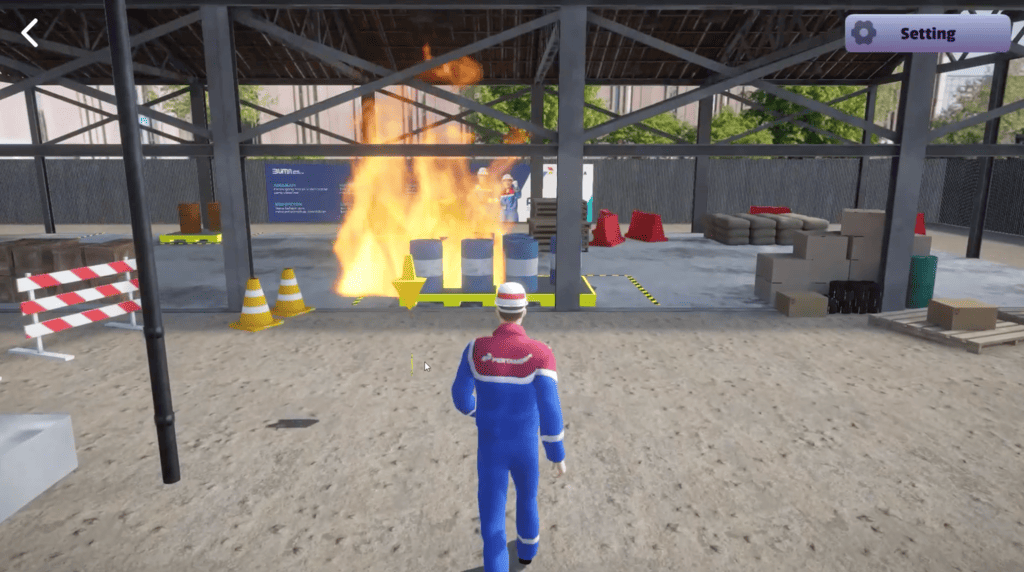


Fire safety and working-at-height training share a structural advantage that first aid training doesn’t: nobody is lying on the floor waiting for you to get it right. First aid is different. The scenarios worth training for — cardiac arrest, severe bleeding, choking, someone who’s stopped responding — put a real human life on the other end of the decision. And yet most of what workers practice against is a static mannequin or a colleague pretending to be unconscious, neither of which behaves anything like a real emergency.
That gap shows up at the worst possible moment. A worker who nails chest compressions on a training dummy can freeze completely when the person on the floor is someone they’ve had lunch with for three years. Someone who executes a flawless recovery position with a coworker play-acting the victim can lose the sequence entirely once their hands start shaking and the person in front of them genuinely isn’t responding.
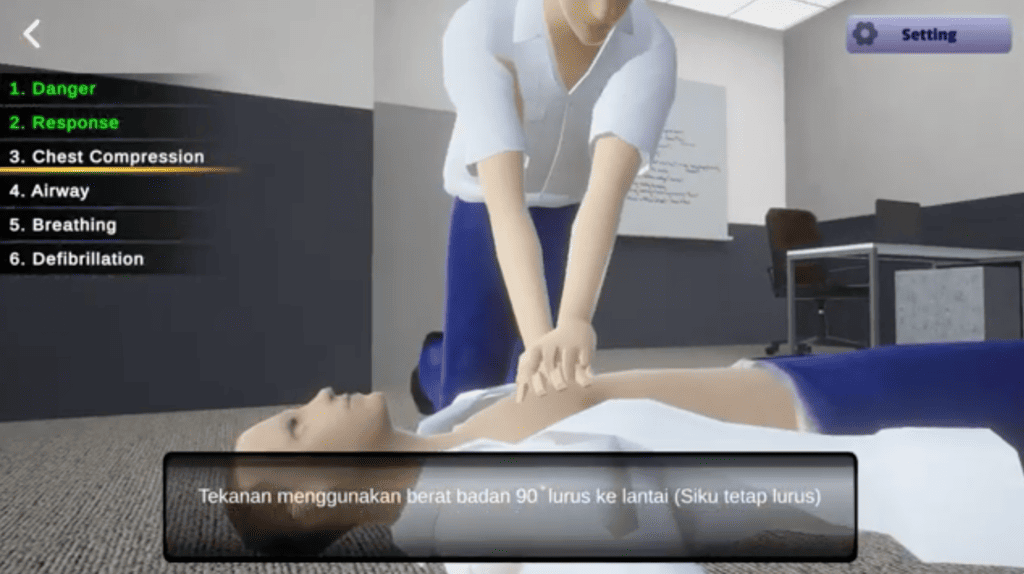
VR-based first aid training exists to close that specific gap — not the skills gap, the psychological one. It can put a worker through patient responses, environmental noise, and time pressure that a classroom role-play was never built to replicate.
Certification Doesn’t Prevent Skill Decay
Most workplace first aid certification runs on a two-year renewal cycle. In between, a worker might use what they learned once, or not at all. That’s more than enough time for the skill to fade — so by the time an actual emergency happens eighteen months into the cycle, the certificate on file says a lot less about actual readiness than anyone assumes.
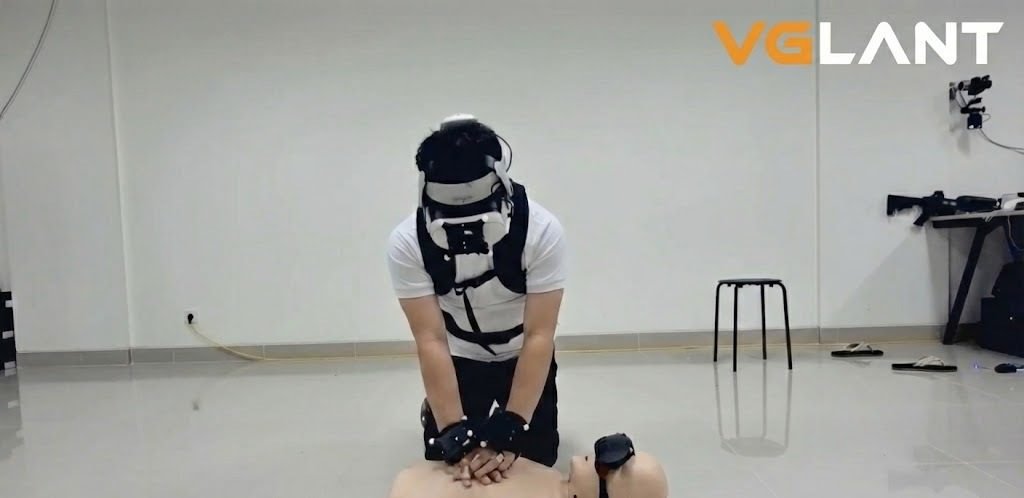
Quarterly or even monthly refreshers would fix this, in theory. In practice, booking a mannequin classroom and an instructor every few months isn’t something most operations do, because it’s expensive and hard to schedule. A VR headset removes that constraint — a worker can run through a CPR scenario during a fifteen-minute break without anyone else in the room.
What that repetition actually builds is procedural memory: compression depth, rate, hand placement, how many breaths, in what order. Under real stress, people don’t consciously recall a training manual — they fall back on whatever motor pattern is most recently and frequently reinforced. Annual certification alone doesn’t reinforce anything. Frequent practice does.
Scenarios Physical Training Was Never Going to Handle Well
Some first aid situations are just hard to rehearse with real people and real equipment, and not always for reasons of cost.
Multi-casualty triage is the clearest case — there’s no ethical way to stage several simultaneous injuries and have a trainee make real triage calls with real consequences. A simulation can. Confined spaces, elevated platforms, and active machinery present a similar problem: building a realistic version of that environment for a single training session is expensive enough that most programs just skip it, while a VR scenario can put a worker inside a mock confined space or an elevated platform without anyone actually climbing anything.
Then there’s the category of emergencies that role-players simply can’t fake convincingly — an overdose, a severe allergic reaction, a seizure. A person pretending to seize doesn’t teach a worker to recognize one. And workplace-specific injuries — burns from a particular chemical in use on-site, trauma from a specific piece of equipment — rarely make it into generic first aid curricula at all, because building that content for one facility isn’t worth the cost for a physical program. It’s much cheaper to build in VR.
Skill Isn’t the Only Thing That’s Missing
Technical competence isn’t the whole story. Plenty of workers who hold a valid first aid card still hesitate when something actually happens — worried about doing more harm than good, unsure whether they’re really capable, waiting for someone with more authority or more training to step in.
That hesitation is where VR earns its keep in a way mannequins mostly can’t. A worker who has already been through dozens of simulated emergencies, made the calls, and seen the outcomes tends to act faster in the real thing, because the decision doesn’t feel unfamiliar anymore. They’re less likely to freeze, and less likely to defer to someone who isn’t actually more prepared than they are.
In a workplace setting, that confidence gap is arguably as consequential as the skill gap. The person who moves immediately when a colleague collapses is the one who changes the outcome. The person who hesitates while looking around for someone more qualified is the one who costs the minutes that matter most.
What VGLANT’s First Aid Modules Cover
VGLANT, developed by PT Virtu Digital Kusuma, builds first aid scenarios specifically for Indonesian workplace conditions — CPR and AED use, severe bleeding control, choking response, assessing an unresponsive patient, burn management, and injury scenarios drawn from specific industrial sectors.
These modules follow Indonesian first aid standards and are built to sit alongside formal certification, not replace it. Certification establishes the baseline competency; VR training is what keeps that competency from decaying between renewal cycles.
Within VGLANT’s broader K3 catalog, first aid sits next to fire safety, working at height, confined space entry, and hazardous material response — all running on the same platform, which means an operation can build out its full emergency response training program without treating first aid as a separate system bolted onto everything else.
Readiness to respond in a real emergency comes down to two things: knowing what to do, and being willing to do it under pressure. Mannequins and role-play can teach the first. They were never going to teach the second — and that’s the piece VR is actually built for.