

Let’s be honest about the current state of industrial safety training. In too many organizations, emergency drills have become little more than “safety theater.” Employees gather at a muster point, names are checked off a list, and management considers the box ticked.
But what happens when the real alarm sounds? When thick black smoke kills visibility and the deafening roar of machinery makes communication impossible? All too often, that perceived “readiness” collapses instantly.
Here is the brutal reality that is often ignored: Reading an SOP manual is not the same as possessing the skill to survive.
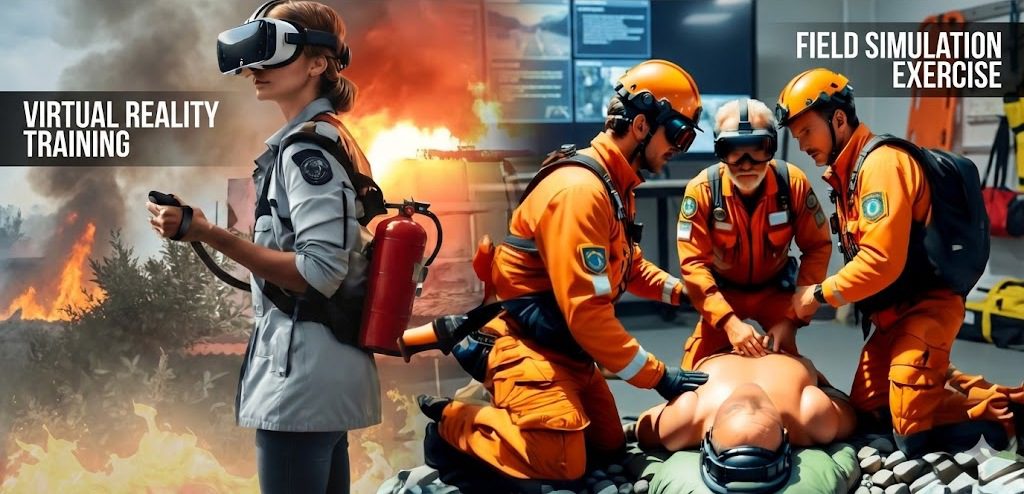
Disaster Simulator technology, such as the Virtual Reality (VR) ecosystem built by VGLANT, is not just a visual aid. It is a “reflex engine.” It fundamentally changes how the human brain processes danger.
Here are 5 concrete ways—minus the fluff—that disaster simulators transform preparedness from theoretical knowledge into survival instinct.
1. Combatting the “Brain Freeze” Effect
In a life-or-death situation, your worst enemy isn’t the fire or the toxic gas—it is your own brain. Under panic, humans suffer from cognitive overload. We “freeze.” We forget the location of the emergency exit we walk past every single day.
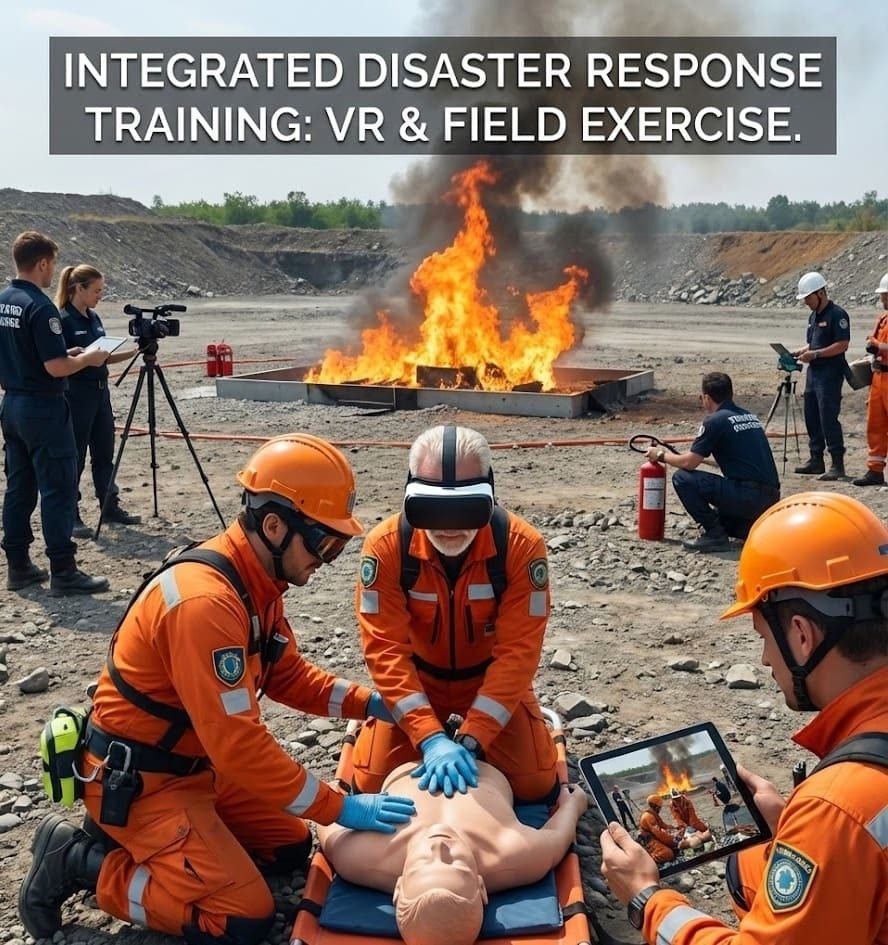
Disaster simulators don’t just teach theory; they provide Stress Inoculation. By repeatedly exposing employees to simulated, intense audio-visual chaos, the brain becomes desensitized to the shock of fear. The result? When a real crisis hits, your people don’t panic. They bypass the freeze response and go straight into execution mode. They act, they don’t just think.
2. The “Safe-to-Fail” Laboratory
How do you train a team to handle a high-pressure gas pipe explosion? You can’t blow up a real factory just for practice. Consequently, we rarely physically train for these worst-case scenarios.
In the digital realm, we can achieve the impossible: Failure without consequence. VGLANT simulators allow personnel to make fatal mistakes, witness the virtual explosion caused by that error, and feel the urgency—all while remaining physically safe. Learning from a fatal error in the virtual world is the single best way to ensure that error never happens in the real world.
3. Telemetry Data: The Hard Truth
Human instructor assessment is inherently biased. “I think he moved fast enough” is not data. It is an opinion.
The digital world is black and white. The simulator system tracks every millisecond of hesitation.
- Did the operator hesitate for 5 seconds before hitting the emergency shutdown?
- Did they select the wrong class of fire extinguisher for an electrical fire?
- Was their gaze focused on the wrong pressure indicator?
This telemetry data provides a “forensic report” on your team’s competence before a disaster strikes. It allows you to patch specific skill gaps with precision, rather than guessing.
4. Mastery is Born from Thousands of Repetitions
Bruce Lee famously said he didn’t fear the man who practiced 10,000 kicks once, but the man who practiced one kick 10,000 times. Consistency is the key to muscle memory.
The problem is, physical training is expensive and disrupts production. You can’t shut down the plant every day for drills. Disaster simulators remove this cost barrier. An employee can practice a fire suppression procedure 50 times during a lunch break with zero material cost. This frictionless repetition is what converts a written procedure into an automatic reflex.
5. Democratizing Competence Standards
In multinational companies or those with remote operations, a “competence gap” often emerges. The team at HQ in Jakarta might be highly trained, but what about the team at a remote mining site? They often lag behind due to a lack of quality on-site instructors.
Disaster simulators democratize training quality. The exact same scenarios, the same rigorous scoring standards, and the same simulated pressure are distributed digitally to every location. It doesn’t matter where your employee is stationed; they are tested against the same high VGLANT standard. This ensures a single, non-negotiable corporate safety standard.
Don’t Wait Until It’s Too Late
Investing in a disaster simulator is not just about buying software. It is an investment in business resilience. In an era where industrial risks are becoming increasingly complex, relying on 20th-century training methods is a gamble you cannot afford to take.
Technical Reference: https://vglant.xyz/disaster.html
Contact Us
If you are ready to move your risk management from “hoping for the best” to “knowing you are ready,” it is time to talk to us.
Email: enquiry@vglant.com
Call / WhatsApp: +62 812 9696 7887
Website: https://www.vglant.com/
https://vglant.xyz/